Euphorbiaceae
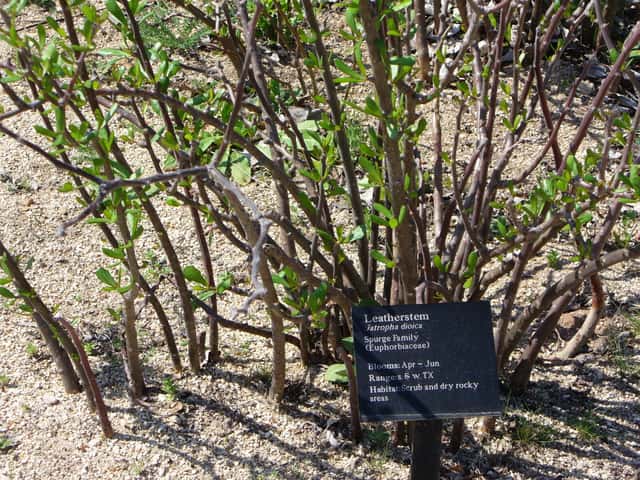
Leatherstem (Jatropha dioica)
Jatropha dioica
An extremely low-maintenance, drought-tolerant xeriscape plant. Give it full sun to light shade, sharp drainage, and minimal water; it thrives on neglect and rots quickly if kept wet. Not suited as a typical houseplant - best grown outdoors in warm, arid climates or in a bright, dry greenhouse.
Every 14 days
Bright indirect
5° - 40°C
20% - 40%
Categories
What is Leatherstem?
Leatherstem (Jatropha dioica) is a easy-care plant from the Euphorbiaceae family. Leatherstem (Jatropha dioica) is a small succulent shrub in the spurge family (Euphorbiaceae), native to dry, rocky terrain from Texas south through Mexico to Oaxaca. Its arching, leathery, nearly leafless stems reach 30-90 cm tall and are flexible enough to be tied in a knot without snapping. The p...
Leatherstem grows up to 90cm, spread of 180cm, watering every 14 days, 5°C – 40°C, 20–40% humidity. It is not suitable for indoor environments and not safe for pets.
Unlike many tropical plants, Leatherstem tolerates watering mistakes. Best for beginners. Without precautions, ingestion can cause irritation in pets. Keep out of reach of cats and dogs.
How to Care for Leatherstem?
TLDR: Leatherstem needs Bright indirect, watering every 14 days, and temperatures between 5-40°C with 20-40% humidity.
How Often Should You Water Leatherstem?
Water deeply only after the soil has dried out completely, roughly every 2 weeks in the growing season and far less in winter. Overwatering is the single most common cause of death.
How Much Light Does Leatherstem Need?
Provide full sun to partial shade. Plants grown in too little light become leggy and flower poorly.
What Is the Best Soil for Leatherstem?
Use a fast-draining, gritty or sandy soil, such as a cactus/succulent mix. Good drainage is essential - the plant naturally grows on gravelly bluffs and rocky slopes.
What Pot Should You Use for Leatherstem?
Unglazed terracotta or clay pot with a large drainage hole, to help excess moisture evaporate quickly.
What Is Leatherstem and Where Does It Come From?
Leatherstem (Jatropha dioica) is a small succulent shrub in the spurge family (Euphorbiaceae), native to dry, rocky terrain from Texas south through Mexico to Oaxaca. Its arching, leathery, nearly leafless stems reach 30-90 cm tall and are flexible enough to be tied in a knot without snapping. The plant spreads slowly into low colonies via underground runners and produces small white flowers in spring and early summer. Its most distinctive trait is the milky sap, which is clear to pale yellow but turns blood red on contact with air, giving rise to the Spanish name "sangre de drago" (dragon's blood).
How to Propagate Leatherstem?
Stem cutting
Avoid overwatering the cutting - it is prone to rot before roots form. Wear gloves, as the sap can irritate skin and eyes.
- 1 Cut a healthy stem section 10-15 cm long using clean, sharp shears
- 2 Let the cut end callus over in a dry, shaded spot for 3-5 days
- 3 Insert the callused end into a well-draining cactus mix
- 4 Water very sparingly until roots establish
Materials needed:
Colony division
Best done on established colonies that have spread via runners.
- 1 Carefully dig up a rooted offset connected to the parent by an underground runner
- 2 Sever the runner with a clean cut, keeping some roots attached to the offset
- 3 Replant immediately in fast-draining soil
Materials needed:
How Big Does Leatherstem Grow?
TLDR: Leatherstem can reach up to 90cm tall with Slow growth rate.
Max height
90cm
Spread
1.8m
Growth rate
Slow
Foliage
Deciduous
Warning: Toxic Plant
This plant can be toxic if ingested. Keep out of reach of:
Plant Uses
Ornamental
Great for decoration
Medicinal
Medicinal properties
Medicinal Uses
- Traditionally used as an astringent for gingivitis and toothache
- Root extracts studied for antimicrobial properties
Is your plant showing symptoms?
Click on the symptom to discover possible causes:
What Diseases Commonly Affect Leatherstem?
TLDR: Leatherstem is susceptible to 6 known diseases. Monitor regularly for early detection.
Root Rot
Root rot is a serious fungal disease that affects the root system of plants, causing them to decay and die. It is primarily caused by overwatering, poor drainage, or soil-borne fungi such as Pythium, Phytophthora, Rhizoctonia, and Fusarium. The disease thrives in waterlogged conditions where roots are deprived of oxygen, making them susceptible to fungal infection.
Mealybugs
Mealybugs are small, soft-bodied insects covered with a white, waxy, cottony material. They are common pests of houseplants and outdoor plants in mild climates. These sap-sucking insects feed on plant tissue, causing damage, stunted growth, and can lead to plant death if left untreated. They produce sticky honeydew which attracts sooty mold.
Spider Mites
Spider mites are tiny arachnids (less than 1/20 inch long) related to spiders and ticks that feed on plant sap. They thrive in hot, dry conditions and can cause significant damage to ornamental and vegetable plants. During severe infestations, crop losses can reach 14% or higher as these pests disrupt vital plant processes including photosynthesis, carbon dioxide absorption, and transpiration.
Aphids
Aphids are small, soft-bodied, pear-shaped insects (1/16 to 1/8 inch long) that feed by sucking nutrient-rich sap from plants. They reproduce rapidly and can quickly weaken plants, causing distorted growth and transmitting plant viruses. Aphids come in various colors including green, black, red, yellow, brown, and gray. They secrete honeydew, a sticky substance that attracts ants and encourages sooty mold growth.
Meaning & Symbolism
Not tied to a widely documented symbolic tradition, but its blood-red sap has long linked it, in Mexican and Aztec folk use, with themes of healing and protection.
Fun Facts
Its sap turns from clear-yellow to blood red within seconds of contact with air
The stems are so flexible they can be tied into a knot without breaking
Aztecs called the plant "Tlapelex Ptali" and used it as a traditional astringent
Frequently asked questions
Is Jatropha dioica toxic?
How often should I water Leatherstem?
Can I grow Leatherstem indoors?
Why does the sap turn red?
Compare with similar plants
| Attribute | Difficulty | Light | Watering | Pet Safe |
|---|---|---|---|---|
| Field Maple | Easy | Bright indirect | 14d | ✓ |
| Silver Birch | Easy | Direct sun | 14d | ✓ |
| Common Blanketflower | Easy | Direct sun | 10d | ✓ |
| Cushion Bush | Easy | Direct sun | 14d | ✓ |





