Pinaceae
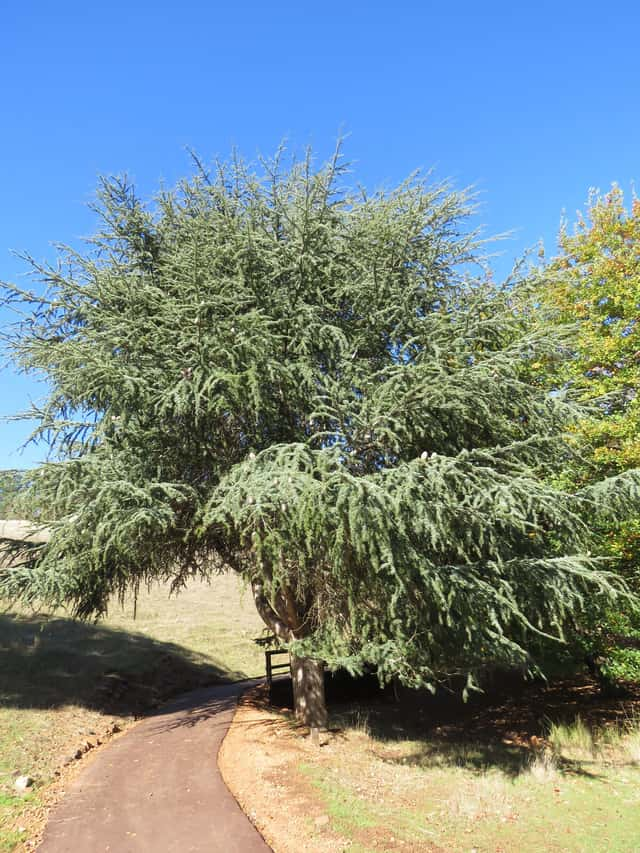
Lebanon Cedar (Cedrus libani)
Cedrus libani
An outdoor tree for full sun and very well-drained soil. Once established it tolerates drought and hard frost, but it will not cope with waterlogging, shade or heavy air pollution. Water regularly only in the first years, feed with organic matter in spring and prune only to remove dead branches.
Every 14 days
Direct sun
-20° - °C
% - %
Categories
What is Lebanon Cedar?
Lebanon Cedar (Cedrus libani) is a medium-care plant from the Pinaceae family. The Lebanon cedar (Cedrus libani) is a large evergreen conifer in the pine family (Pinaceae), native to the mountains of the Eastern Mediterranean — Lebanon, western Syria and southern Turkey — where it grows at 1,300 to 3,000 m. Young trees are pyramidal; with age they develop the classic flat-topp...
Lebanon Cedar grows up to 18.0m, spread of 1500cm, watering every 14 days. It is not suitable for indoor environments and safe for pets.
Unlike many popular species, Lebanon Cedar is safe to keep around pets.
How to Care for Lebanon Cedar?
TLDR: Lebanon Cedar needs Direct sun, watering every 14 days, and temperatures between -20-30°C with 40-70% humidity.
How Often Should You Water Lebanon Cedar?
For the first 3–4 years, water deeply every 1–2 weeks in dry weather, letting the surface dry between waterings. Mature trees are drought tolerant and only need water during long dry spells. Never leave the soil soggy.
How Much Light Does Lebanon Cedar Need?
Full sun, with at least 6 hours of direct light a day. It does not tolerate shade and needs open space to develop its broad crown.
What Is the Best Soil for Lebanon Cedar?
Grows in sandy, loamy or clay soils from acidic to alkaline (it likes chalky ground), as long as drainage is excellent. Heavy, wet soil invites root rot.
What Pot Should You Use for Lebanon Cedar?
Best planted in the ground. Young trees can spend a few years in a large, deep terracotta or wooden container with drainage holes; it is also grown as bonsai.
Care Schedule
Fertilize
Every 365 days
What Is Lebanon Cedar and Where Does It Come From?
The Lebanon cedar (Cedrus libani) is a large evergreen conifer in the pine family (Pinaceae), native to the mountains of the Eastern Mediterranean — Lebanon, western Syria and southern Turkey — where it grows at 1,300 to 3,000 m. Young trees are pyramidal; with age they develop the classic flat-topped crown of wide, horizontal tiers. Short, stiff dark green to blue-green needles grow in tufts of 15 to 35, and upright barrel-shaped cones take about a year to ripen. In gardens it usually reaches 12–18 m, but wild trees exceed 40 m and live for centuries.
How to Propagate Lebanon Cedar?
Seed
Seedlings are very prone to damping off: use fresh compost, avoid overwatering and keep air moving. Plant out while still small, as larger trees establish poorly.
- 1 Collect ripe cones in winter and keep them somewhere warm until they open.
- 2 Soak the seeds in water for 24 hours.
- 3 Cold-stratify them in the fridge for about 4 weeks.
- 4 Sow in clean, free-draining seed compost and cover lightly.
- 5 Keep moist and well ventilated; pot seedlings on individually once they can be handled.
Materials needed:
How Big Does Lebanon Cedar Grow?
TLDR: Lebanon Cedar can reach up to 18.0m tall with Slow growth rate.
Max height
18.0m
Spread
15.0m
Growth rate
Slow
Foliage
Evergreen
Plant Uses
Ornamental
Great for decoration
Aromatic
Pleasant fragrance
Medicinal
Medicinal properties
Medicinal Uses
- Resin and oil traditionally used as an antiseptic and expectorant
Is your plant showing symptoms?
Click on the symptom to discover possible causes:
What Diseases Commonly Affect Lebanon Cedar?
TLDR: Lebanon Cedar is susceptible to 5 known diseases. Monitor regularly for early detection.
Root Rot
Root rot is a serious fungal disease that affects the root system of plants, causing them to decay and die. It is primarily caused by overwatering, poor drainage, or soil-borne fungi such as Pythium, Phytophthora, Rhizoctonia, and Fusarium. The disease thrives in waterlogged conditions where roots are deprived of oxygen, making them susceptible to fungal infection.
Damping Off
Damping off is a soil-borne fungal disease that affects seeds and young seedlings, causing rotting of stem and root tissues at and below the soil line. It is caused by several fungi including Pythium, Rhizoctonia, Fusarium, and Phytophthora. The disease thrives in cold, wet conditions with poor air circulation.
Scale Insects
Scale insects are small sap-sucking pests that appear as brown, shell-like bumps on plant stems and leaves. There are over 25 species, divided into armored (hard) and unarmored (soft) scales. They feed by piercing plant tissue and extracting sap, which weakens the plant and can lead to yellowing, stunted growth, and even death if left untreated. They also excrete honeydew, which attracts ants and promotes sooty mold growth.
Aphids
Aphids are small, soft-bodied, pear-shaped insects (1/16 to 1/8 inch long) that feed by sucking nutrient-rich sap from plants. They reproduce rapidly and can quickly weaken plants, causing distorted growth and transmitting plant viruses. Aphids come in various colors including green, black, red, yellow, brown, and gray. They secrete honeydew, a sticky substance that attracts ants and encourages sooty mold growth.
Meaning & Symbolism
National emblem of Lebanon, featured on its flag and coat of arms. In the Bible and ancient Near Eastern literature it stands for strength, majesty, longevity and righteousness — "the righteous shall grow like a cedar in Lebanon" (Psalm 92).
Fun Facts
Some wild trees are more than a thousand years old.
The Phoenicians used its wood to build ships.
It only starts producing cones at 20 to 40 years old.
Frequently asked questions
How often should I water a Lebanon cedar?
Is Lebanon cedar toxic to pets?
Can I grow a Lebanon cedar in a pot?
Is it cold hardy?
Compare with similar plants
| Attribute | Difficulty | Light | Watering | Pet Safe |
|---|---|---|---|---|
| Dark Fieldcap | Medium | Low light | 2d | ⚠️ |
| Azalea | Medium | Partial shade | 3d | ⚠️ |
| Muriel's Bamboo | Medium | Partial shade | 3d | ✓ |
| Bougainvillea | Medium | Direct sun | 7d | ⚠️ |




