Asparagaceae
Silver Squill (Ledebouria): How to Care
Ledebouria
Easy to grow: bright indirect light, drought-tolerant watering that lets soil dry between sessions, well-draining sandy/succulent mix, and frost protection.
Every 10 days
Bright indirect
10° - 29°C
% - %
Categories
What is Silver Squill?
Silver Squill (Ledebouria) is a easy-care plant from the Asparagaceae family. Ledebouria is a genus of roughly 65 species of bulbous perennial herbs in the subfamily Scilloideae (family Asparagaceae), most of which were formerly classified within Scilla. Native mainly to sub-Saharan Africa, with South Africa as the center of diversity, these geophytes form basal rosettes of l...
Silver Squill grows up to 25cm, spread of 25cm, watering every 10 days, 10°C – 29°C. It is suitable for indoor environments and not safe for pets.
Unlike many tropical plants, Silver Squill tolerates watering mistakes. Best for beginners. Without precautions, ingestion can cause irritation in pets. Keep out of reach of cats and dogs. Without adequate drainage, root rot can develop within 20 days.
How to Care for Silver Squill?
TLDR: Silver Squill needs Bright indirect, watering every 10 days, and temperatures between 10-29°C with 40-70% humidity.
How Often Should You Water Silver Squill?
Allow the top inch of soil to dry out before watering again; water even less in winter, when the plant rests.
How Much Light Does Silver Squill Need?
Thrives in bright, indirect light to partial shade; too much direct sun can scorch the leaves.
What Is the Best Soil for Silver Squill?
Use a well-draining, humus-rich, sandy mix such as a cactus or succulent potting blend, in a pot with drainage holes.
What Pot Should You Use for Silver Squill?
Terracotta pot with drainage holes, which helps the soil dry out faster.
What Is Silver Squill and Where Does It Come From?
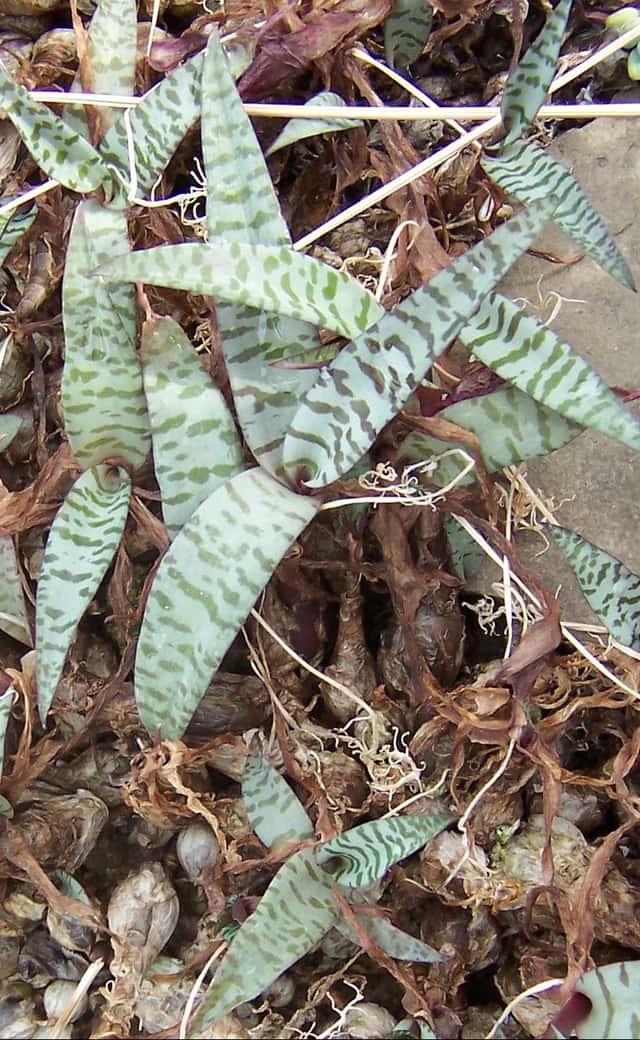
Ledebouria is a genus of roughly 65 species of bulbous perennial herbs in the subfamily Scilloideae (family Asparagaceae), most of which were formerly classified within Scilla. Native mainly to sub-Saharan Africa, with South Africa as the center of diversity, these geophytes form basal rosettes of lance-shaped leaves, frequently patterned with silver, purple, or green mottling, growing from teardrop-shaped bulbs that sit partly above the soil surface. The most widely cultivated species, Ledebouria socialis (silver squill/leopard lily), is prized as a low-maintenance houseplant for its decorative variegated foliage.
How to Propagate Silver Squill?
Bulb division
Use clean tools and avoid overwatering right after separation to prevent the newly divided bulb from rotting.
- 1 Remove the plant from its pot and gently separate the bulb offsets from the mother bulb
- 2 Choose offsets at least 1cm in diameter that already have roots
- 3 Plant each bulb in its own pot with well-draining mix, leaving the top of the bulb slightly exposed
- 4 Water lightly and keep in bright indirect light until rooted
Materials needed:
Separating side offsets
Mature offsets detach easily; avoid forcing off bulbs that are still small or rootless.
- 1 Identify the small bulbs growing around the mother plant
- 2 Carefully dig up and separate them keeping some roots intact
- 3 Plant immediately in well-draining soil
- 4 Keep lightly moist until new growth appears
Materials needed:
How Big Does Silver Squill Grow?
TLDR: Silver Squill can reach up to 25cm tall with Fast growth rate.
Max height
25cm
Spread
25cm
Growth rate
Fast
Foliage
Evergreen
Warning: Toxic Plant
This plant can be toxic if ingested. Keep out of reach of:
Plant Uses
Ornamental
Great for decoration
Ground Cover
Soil coverage
Is your plant showing symptoms?
Click on the symptom to discover possible causes:
What Diseases Commonly Affect Silver Squill?
TLDR: Silver Squill is susceptible to 10 known diseases. Monitor regularly for early detection.
Root Rot
Root rot is a serious fungal disease that affects the root system of plants, causing them to decay and die. It is primarily caused by overwatering, poor drainage, or soil-borne fungi such as Pythium, Phytophthora, Rhizoctonia, and Fusarium. The disease thrives in waterlogged conditions where roots are deprived of oxygen, making them susceptible to fungal infection.
Leaf Spot
Leaf spot is a common fungal disease caused by various pathogens including Alternaria, Ascochyta, Colletotrichum, Septoria, and Venturia. It primarily affects leaves, causing discolored spots that can lead to premature leaf drop if left untreated.
Grey Mould
Rust
Rust is a common fungal disease caused by fungi in the order Pucciniales that affects a wide variety of plants. The disease gets its name from the characteristic orange, yellow, or reddish-brown pustules that appear on leaves, resembling metal rust. This obligate fungal parasite requires living plants to survive and can cause significant economic losses in agricultural crops.
Fun Facts
The genus contains about 65 species, most originally classified as Scilla.
Its bulbs grow partly above the soil surface, storing water to survive dry spells.
The silver-and-green mottled leaves of Ledebouria socialis resemble a leopard's coat, inspiring the common name leopard lily.
Frequently asked questions
Is silver squill toxic to cats and dogs?
How often should I water my Ledebouria?
How do I propagate silver squill?
Why are my Ledebouria leaves mushy or rotting?
Compare with similar plants
| Attribute | Difficulty | Light | Watering | Pet Safe |
|---|---|---|---|---|
| Field Maple | Easy | Bright indirect | 14d | ✓ |
| Silver Birch | Easy | Direct sun | 14d | ✓ |
| Common Blanketflower | Easy | Direct sun | 10d | ✓ |
| Cushion Bush | Easy | Direct sun | 14d | ✓ |
Choose & Compare
Sources & References
- Ledebouria socialis - NC State Extension Gardener Plant Toolbox
- Silver Squill Care: All About Growing Ledebouria Socialis
- Ledebouria - Wikipedia
- The COMPLETE Guide for Growing Silver Squills
- How to Grow and Care for a Silver Squill - World of Succulents
- Ledebouria socialis - Pacific Bulb Society
- Ledebouria socialis o Escila plateada
- Ledebouria socialis: caracteristicas e cuidados





