Asteraceae
Lesser burdock (Arctium minus)
Arctium minus
A tough, self-sufficient plant that grows in almost any sunny or half-shaded spot with moist, fertile soil. It needs no feeding or pruning. Cut the flower heads before the burs ripen if you do not want it to spread.
Every 10 days
Bright indirect
-30° - 32°C
% - %
Categories
What is Lesser burdock?
Lesser burdock (Arctium minus) is a easy-care plant from the Asteraceae family. Arctium minus is a biennial herb in the Asteraceae (daisy) family, native to Europe and western Asia and now a common weed across North and South America and Australia. In its first year it forms a low rosette of huge heart-shaped leaves, up to 50 cm long, dark green above and woolly underneath. In...
Lesser burdock grows up to 1.8m, spread of 100cm, watering every 10 days, -30°C – 32°C. It is not suitable for indoor environments and safe for pets.
Unlike many tropical plants, Lesser burdock tolerates watering mistakes. Best for beginners. Unlike many popular species, Lesser burdock is safe to keep around pets.
How to Care for Lesser burdock?
TLDR: Lesser burdock needs Bright indirect, watering every 10 days, and temperatures between -30-32°C with 40-70% humidity.
How Often Should You Water Lesser burdock?
Water every 10 days or so in dry spells; established plants with their deep taproot cope with short droughts. For tender roots to harvest, keep the soil evenly moist.
How Much Light Does Lesser burdock Need?
Full sun to partial shade. It grows best with at least 6 hours of sun but also does well at woodland edges.
What Is the Best Soil for Lesser burdock?
Deep, loamy, fertile soil that holds some moisture, pH 6 to 8. Loose soil without stones lets the taproot grow straight if you want to harvest it.
What Pot Should You Use for Lesser burdock?
Not suited to pots: the taproot goes 30 cm deep or more. If needed, use a container at least 45 cm deep with good drainage.
What Is Lesser burdock and Where Does It Come From?
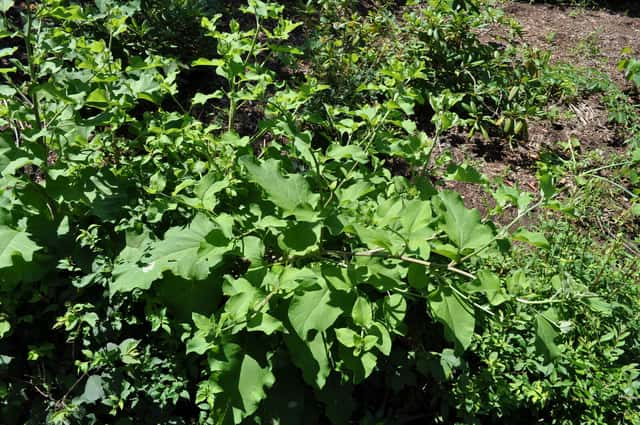
Arctium minus is a biennial herb in the Asteraceae (daisy) family, native to Europe and western Asia and now a common weed across North and South America and Australia. In its first year it forms a low rosette of huge heart-shaped leaves, up to 50 cm long, dark green above and woolly underneath. In the second year it sends up a branched stem 1 to 1.8 m tall and opens small pink to purple thistle-like flower heads from midsummer to early autumn. The bracts around each head end in tiny hooks, so the dry heads become burs that stick to fur and clothing. It has a deep taproot, edible when young.
How to Propagate Lesser burdock?
Sowing seeds
Sow where it will grow, since the long taproot dislikes transplanting. Seeds germinate better after a cold winter outdoors.
- 1 Collect ripe burs in autumn and pull out the seeds
- 2 Sow directly outdoors in spring or autumn, about 1 cm deep
- 3 Keep the soil moist until the seedlings appear
- 4 Thin plants to 60-90 cm apart
Materials needed:
How Big Does Lesser burdock Grow?
TLDR: Lesser burdock can reach up to 1.8m tall with Fast growth rate.
Max height
1.8m
Spread
1.0m
Growth rate
Fast
Foliage
Deciduous
Plant Uses
Edible
Can be consumed
Medicinal
Medicinal properties
Medicinal Uses
- Root used in traditional Western and Chinese herbal medicine as a depurative and mild diuretic
- Leaf poultices used traditionally on skin complaints
Culinary Uses
- First-year root, peeled and boiled or stir-fried
- Young leaf stalks and peeled flowering stems, cooked like celery or asparagus
- Roasted root as a coffee substitute
Is your plant showing symptoms?
Click on the symptom to discover possible causes:
What Diseases Commonly Affect Lesser burdock?
TLDR: Lesser burdock is susceptible to 6 known diseases. Monitor regularly for early detection.
Powdery Mildew
Powdery mildew is a common fungal disease caused by various fungi species including Erysiphe, Podosphaera, Oïdium, and Leveillula. It affects over 10,000 plant species worldwide. The disease thrives in warm, dry climates with high humidity and appears as a distinctive white powdery coating on plant surfaces.
Aphids
Aphids are small, soft-bodied, pear-shaped insects (1/16 to 1/8 inch long) that feed by sucking nutrient-rich sap from plants. They reproduce rapidly and can quickly weaken plants, causing distorted growth and transmitting plant viruses. Aphids come in various colors including green, black, red, yellow, brown, and gray. They secrete honeydew, a sticky substance that attracts ants and encourages sooty mold growth.
Caterpillars
Caterpillars are the larval stage of moths and butterflies that feed voraciously on plant foliage, stems, flowers, and fruits. Common species include cabbage loopers, tomato hornworms, armyworms, and cutworms. These pests can cause extensive damage by consuming large amounts of plant tissue in a short time. They vary in size from small (1/4 inch) to large (5 inches), with colors ranging from green to brown, often featuring stripes or spots. Caterpillars are highly mobile and can quickly spread throughout gardens, making them one of the most destructive common pests.
Leaf Spot
Leaf spot is a common fungal disease caused by various pathogens including Alternaria, Ascochyta, Colletotrichum, Septoria, and Venturia. It primarily affects leaves, causing discolored spots that can lead to premature leaf drop if left untreated.
Fun Facts
Its hooked burs are said to have inspired the invention of Velcro.
It only flowers in its second year, then dies after setting seed.
Bumblebees and butterflies visit its flowers for nectar.
Frequently asked questions
What is the difference between lesser burdock and greater burdock?
Is lesser burdock edible?
Is burdock dangerous for dogs?
How do I stop burdock from spreading?
Compare with similar plants
| Attribute | Difficulty | Light | Watering | Pet Safe |
|---|---|---|---|---|
| Field Maple | Easy | Bright indirect | 14d | ✓ |
| Iberian Houseleek | Easy | Direct sun | 14d | ✓ |
| Silver Birch | Easy | Direct sun | 14d | ✓ |
| Common Blanketflower | Easy | Direct sun | 10d | ✓ |





