Apocynaceae
Lesser Periwinkle — Complete Care Guide
Vinca minor
Lesser periwinkle is a low-maintenance plant. Provide partial shade to filtered sun, well-draining soil, and moderate watering. Once established it is drought tolerant. Fertilize twice a year with a balanced fertilizer and trim occasionally to keep it tidy.
Every 10 days
Partial shade
-20° - 32°C
40% - 70%
Categories
What is Lesser Periwinkle?
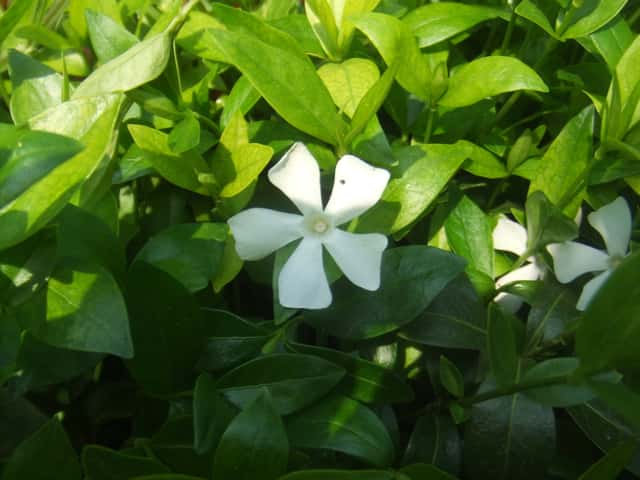
Lesser Periwinkle (Vinca minor) is a easy-care plant from the Apocynaceae family. Lesser periwinkle (Vinca minor) is a low-growing, evergreen perennial ground cover native to central and southern Europe. It produces charming star-shaped flowers in shades of violet-blue, lavender, or white atop a dense mat of glossy dark-green leaves. Thriving in shaded spots where few other plant...
Lesser Periwinkle grows up to 20cm, spread of 150cm, watering every 10 days, -20°C – 32°C, 40–70% humidity. It is not suitable for indoor environments and not safe for pets.
Unlike many tropical plants, Lesser Periwinkle tolerates watering mistakes. Best for beginners. Without precautions, ingestion can cause irritation in pets. Keep out of reach of cats and dogs.
How to Care for Lesser Periwinkle?
TLDR: Lesser Periwinkle needs Partial shade, watering every 10 days, and temperatures between -20-32°C with 40-70% humidity.
How Often Should You Water Lesser Periwinkle?
Water deeply once a week during the first growing season to help roots establish. Once the plant is established, reduce watering to every 10–14 days. Avoid waterlogging, as consistently wet soil promotes root rot and stem blight.
How Much Light Does Lesser Periwinkle Need?
Lesser periwinkle thrives in partial shade to dappled sunlight. It tolerates deep shade better than most ornamental ground covers. In cooler climates it handles full sun, but in warm regions afternoon shade is beneficial to prevent leaf scorch.
What Is the Best Soil for Lesser Periwinkle?
Plant in well-draining soil with a pH of 6.0–8.0. Lesser periwinkle tolerates a wide range of soil types including sandy, loamy, and clay soils. Amend with organic compost at planting to improve structure and moisture retention.
What Pot Should You Use for Lesser Periwinkle?
Wide, shallow pots with ample drainage holes work best if growing in containers. For garden use as ground cover, no pot is needed.
Care Schedule
Fertilize
Every 60 days
What Is Lesser Periwinkle and Where Does It Come From?
Lesser periwinkle (Vinca minor) is a low-growing, evergreen perennial ground cover native to central and southern Europe. It produces charming star-shaped flowers in shades of violet-blue, lavender, or white atop a dense mat of glossy dark-green leaves. Thriving in shaded spots where few other plants succeed, it is a staple of woodland gardens, slopes, and areas under trees. The plant contains vinca alkaloids (including vincamine) that are toxic if ingested by humans, cats, or dogs, though it is generally safe to handle.
How Big Does Lesser Periwinkle Grow?
TLDR: Lesser Periwinkle can reach up to 20cm tall with Medium growth rate.
Max height
20cm
Spread
1.5m
Growth rate
Medium
Foliage
Evergreen
Warning: Toxic Plant
This plant can be toxic if ingested. Keep out of reach of:
Plant Uses
Ornamental
Great for decoration
Ground Cover
Soil coverage
Is your plant showing symptoms?
Click on the symptom to discover possible causes:
What Diseases Commonly Affect Lesser Periwinkle?
TLDR: Lesser Periwinkle is susceptible to 10 known diseases. Monitor regularly for early detection.
Root Rot
Root rot is a serious fungal disease that affects the root system of plants, causing them to decay and die. It is primarily caused by overwatering, poor drainage, or soil-borne fungi such as Pythium, Phytophthora, Rhizoctonia, and Fusarium. The disease thrives in waterlogged conditions where roots are deprived of oxygen, making them susceptible to fungal infection.
Phytophthora Root Rot
Disease caused by fungus-like organisms (oomycetes) that live in soil and can survive for years. It affects roots, stem, and crown of plants, being especially severe in waterlogged or poorly drained soils. It is the second most common cause of root rot in trees and shrubs.
Gray Mold (Botrytis Blight)
Gray mold, caused by the fungus Botrytis cinerea, is one of the most common fungal diseases in plants. It affects over 200 plant species, including ornamentals, vegetables, fruits, and houseplants. The disease thrives in cool, humid conditions with poor air circulation, causing grayish spots and soft rot on infected tissues.
Aphids
Aphids are small, soft-bodied, pear-shaped insects (1/16 to 1/8 inch long) that feed by sucking nutrient-rich sap from plants. They reproduce rapidly and can quickly weaken plants, causing distorted growth and transmitting plant viruses. Aphids come in various colors including green, black, red, yellow, brown, and gray. They secrete honeydew, a sticky substance that attracts ants and encourages sooty mold growth.
Meaning & Symbolism
In the Victorian language of flowers, lesser periwinkle represents tender recollections and eternal friendship. Across European folklore it symbolizes fidelity and immortality, and has long been planted in churchyards as a symbol of everlasting life.
Fun Facts
Vinca minor can spread to cover large areas thanks to trailing stems that root naturally at the nodes.
The alkaloid vincamine found in Vinca minor has been studied for its potential neuroprotective properties.
It is one of the few ground covers that flowers reliably in deep shade.
Lesser periwinkle has been used in European folk medicine since the Middle Ages, despite its toxicity when ingested.
Frequently asked questions
Is lesser periwinkle toxic to cats and dogs?
Does lesser periwinkle grow in shade?
How often should I water lesser periwinkle?
Compare with similar plants
| Attribute | Difficulty | Light | Watering | Pet Safe |
|---|---|---|---|---|
| Field Maple | Easy | Bright indirect | 14d | ✓ |
| Silver Birch | Easy | Direct sun | 14d | ✓ |
| Common Blanketflower | Easy | Direct sun | 10d | ✓ |
| Cushion Bush | Easy | Direct sun | 14d | ✓ |





