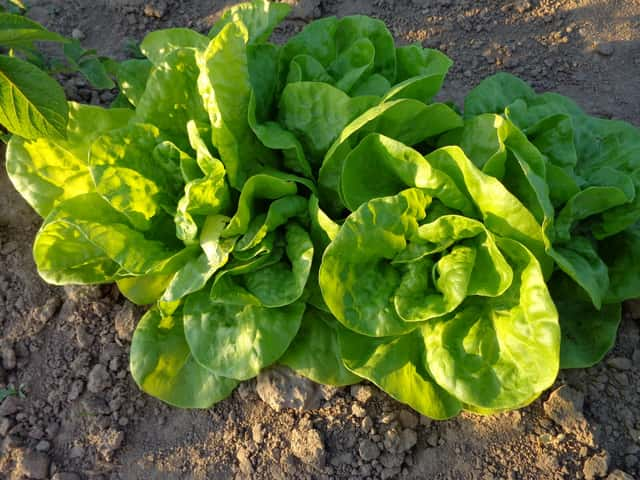
Asteraceae
Lettuces: how to grow plants of the genus Lactuca
Lactuca
An easy cool-season vegetable: sun, loose rich soil, steady watering and harvest before it flowers. Hot weather makes lettuce bolt and turn bitter.
Every 3 days
Bright indirect
° - °C
% - %
Categories
What is Lettuces?
Lettuces (Lactuca) is a easy-care plant from the Asteraceae family. Lactuca is the lettuce genus, in the daisy family (Asteraceae), with more than a hundred species, mostly from temperate Europe and Asia. They are annual, biennial or perennial herbs with milky sap and small yellow or bluish flower heads. The best-known species is garden lettuce (L. sativa), with typ...
Lettuces grows up to 30cm, watering every 3 days. It is suitable for indoor environments and safe for pets.
Unlike many tropical plants, Lettuces tolerates watering mistakes. Best for beginners. Unlike many popular species, Lettuces is safe to keep around pets. Without adequate drainage, root rot can develop within 7 days.
How to Care for Lettuces?
TLDR: Lettuces needs Bright indirect, watering every 3 days, and temperatures between 15-30°C with 40-70% humidity.
How Often Should You Water Lettuces?
Keep the soil evenly moist with deep watering in the morning, at soil level, so the leaves dry before night. Drought or uneven watering makes lettuce bitter and causes tipburn.
How Much Light Does Lettuces Need?
Full sun in cool weather; in hot spells, shade during the hottest hours helps delay bolting. Indoors it only does well right next to a very bright window.
What Is the Best Soil for Lettuces?
Loose, well-drained soil rich in organic matter, with a pH of 6.0 to 7.0. Lettuce does not tolerate salty soil.
What Pot Should You Use for Lettuces?
Pot or window box at least 15 to 20 cm deep with drainage holes.
What Is Lettuces and Where Does It Come From?
Lactuca is the lettuce genus, in the daisy family (Asteraceae), with more than a hundred species, mostly from temperate Europe and Asia. They are annual, biennial or perennial herbs with milky sap and small yellow or bluish flower heads. The best-known species is garden lettuce (L. sativa), with types such as leaf, butterhead, crisphead and romaine. Several wild species, such as prickly lettuce (L. serriola) and wild lettuce (L. virosa), grow as weeds on dry ground and reach about 2 m when flowering.
How to Propagate Lettuces?
Sowing
Sow every two or three weeks for a steady supply. In summer, choose slow-bolting varieties.
- 1 Sow shallow, about 0.5 cm deep, in a seed tray or directly in the bed.
- 2 Keep the soil moist until germination; seed will not sprout above 35 °C.
- 3 Thin or transplant seedlings at 4 to 5 leaves, leaving 20 to 30 cm between plants.
- 4 Pick outer leaves as they grow or cut the whole plant before it bolts.
Materials needed:
How Big Does Lettuces Grow?
TLDR: Lettuces can reach up to 30cm tall with Fast growth rate.
Max height
30cm
Growth rate
Fast
Plant Uses
Edible
Can be consumed
Medicinal
Medicinal properties
Medicinal Uses
- Dried latex of wild lettuce (L. virosa), called lactucarium, historically used as a mild sedative
Culinary Uses
- Raw leaves in salads and sandwiches
- Leaves braised or added to soups in some cuisines
Is your plant showing symptoms?
Click on the symptom to discover possible causes:
What Diseases Commonly Affect Lettuces?
TLDR: Lettuces is susceptible to 9 known diseases. Monitor regularly for early detection.
Downy Mildew
Downy mildew is a fungal-like disease caused by oomycetes (water molds) that thrives in cool, wet conditions. It affects a wide range of plants, causing yellowing leaves with fuzzy white-gray growth underneath, leading to defoliation and reduced yields if left untreated.
Slugs and Snails
Slugs and snails are mollusks that feed on plant tissue, causing irregular holes in leaves and damage to young seedlings. They are most active at night and in moist conditions, leaving characteristic silvery slime trails. These pests can quickly devastate gardens, especially during wet seasons.
Aphids
Aphids are small, soft-bodied, pear-shaped insects (1/16 to 1/8 inch long) that feed by sucking nutrient-rich sap from plants. They reproduce rapidly and can quickly weaken plants, causing distorted growth and transmitting plant viruses. Aphids come in various colors including green, black, red, yellow, brown, and gray. They secrete honeydew, a sticky substance that attracts ants and encourages sooty mold growth.
Caterpillars
Caterpillars are the larval stage of moths and butterflies that feed voraciously on plant foliage, stems, flowers, and fruits. Common species include cabbage loopers, tomato hornworms, armyworms, and cutworms. These pests can cause extensive damage by consuming large amounts of plant tissue in a short time. They vary in size from small (1/4 inch) to large (5 inches), with colors ranging from green to brown, often featuring stripes or spots. Caterpillars are highly mobile and can quickly spread throughout gardens, making them one of the most destructive common pests.
Fun Facts
The name Lactuca comes from the Latin lac, milk, after the milky sap of the cut stem.
In ancient Egypt lettuce was associated with Min, the god of fertility.
Prickly lettuce (L. serriola) is considered the wild ancestor of garden lettuce.
Frequently asked questions
Why did my lettuce turn bitter?
What is lettuce tipburn?
Can I grow lettuce in a pot?
Is wild lettuce the same as garden lettuce?
Compare with similar plants
| Attribute | Difficulty | Light | Watering | Pet Safe |
|---|---|---|---|---|
| Field Maple | Easy | Bright indirect | 14d | ✓ |
| Iberian Houseleek | Easy | Direct sun | 14d | ✓ |
| Silver Birch | Easy | Direct sun | 14d | ✓ |
| Common Blanketflower | Easy | Direct sun | 10d | ✓ |





