Magnoliaceae
Lily Magnolia (Magnolia liliiflora) Care Guide
Magnolia liliiflora
Plant in full sun to partial shade with well-draining, slightly acidic soil. Water regularly but avoid soggy conditions, as the shallow roots are prone to rot. Hardy in USDA zones 5-9, it needs little pruning beyond removing dead or crossing branches after flowering.
Every 7 days
Bright indirect
-26° - 35°C
30% - 60%
Categories
What is Lily Magnolia?
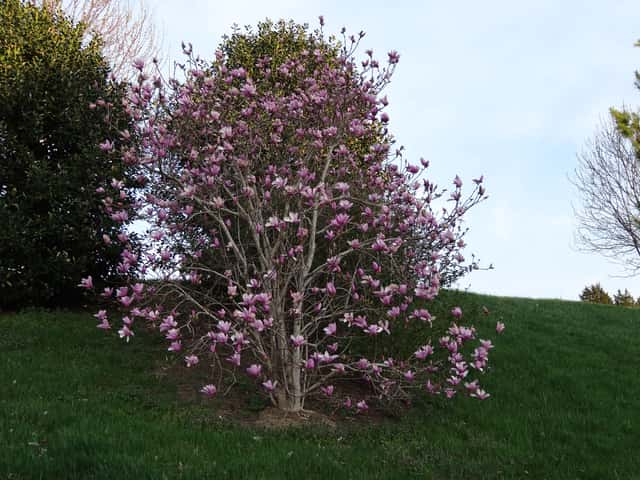
Lily Magnolia (Magnolia liliiflora) is a medium-care plant from the Magnoliaceae family. Magnolia liliiflora, commonly known as Lily Magnolia or Mulan Magnolia, is a deciduous flowering shrub native to southwestern China (Sichuan and Yunnan). It grows as a bushy, multi-trunked shrub up to 4 meters tall, producing large, goblet-shaped pink-to-purple flowers with a light citrus fragrance...
Lily Magnolia grows up to 4.0m, spread of 400cm, watering every 7 days, -26°C – 35°C, 30–60% humidity. It is not suitable for indoor environments and safe for pets.
Unlike many popular species, Lily Magnolia is safe to keep around pets.
How to Care for Lily Magnolia?
TLDR: Lily Magnolia needs Bright indirect, watering every 7 days, and temperatures between -26-35°C with 30-60% humidity.
How Often Should You Water Lily Magnolia?
Water new plantings every 2-3 days for the first six months, then about 1 inch weekly once established; let the soil surface dry slightly between waterings to prevent root rot.
How Much Light Does Lily Magnolia Need?
Provide 6-8 hours of direct sun for the best flowering, though afternoon shade helps in hot climates to prevent leaf scorch.
What Is the Best Soil for Lily Magnolia?
Use loamy, well-draining soil with a slightly acidic to neutral pH (5.5-6.5); avoid heavy, waterlogged clay and coastal salty soils.
What Pot Should You Use for Lily Magnolia?
Best planted directly in garden soil; if container-grown while young, use a large (15+ gallon) pot with excellent drainage holes.
Care Schedule
Fertilize
Every 180 days
What Is Lily Magnolia and Where Does It Come From?
Magnolia liliiflora, commonly known as Lily Magnolia or Mulan Magnolia, is a deciduous flowering shrub native to southwestern China (Sichuan and Yunnan). It grows as a bushy, multi-trunked shrub up to 4 meters tall, producing large, goblet-shaped pink-to-purple flowers with a light citrus fragrance in early spring, before its leaves emerge. It is one of the parent species behind the widely planted Saucer Magnolia hybrid.
How to Propagate Lily Magnolia?
Softwood Stem Cutting
Keep the cutting warm and out of direct sun; cuttings can bloom in as little as two years, unlike seed-grown plants which take much longer.
- 1 Take a 6 to 8-inch softwood to semi-hardwood cutting from late spring through early summer.
- 2 Remove the lower leaves and dip the cut end in rooting hormone powder.
- 3 Insert the cutting into a well-draining potting mix and water thoroughly.
- 4 Cover with a plastic bag or place in a humid, shaded spot until roots form.
Materials needed:
How Big Does Lily Magnolia Grow?
TLDR: Lily Magnolia can reach up to 4.0m tall with Slow growth rate.
Max height
4.0m
Spread
4.0m
Growth rate
Slow
Foliage
Deciduous
Plant Uses
Ornamental
Great for decoration
Is your plant showing symptoms?
Click on the symptom to discover possible causes:
What Diseases Commonly Affect Lily Magnolia?
TLDR: Lily Magnolia is susceptible to 7 known diseases. Monitor regularly for early detection.
Root Rot
Root rot is a serious fungal disease that affects the root system of plants, causing them to decay and die. It is primarily caused by overwatering, poor drainage, or soil-borne fungi such as Pythium, Phytophthora, Rhizoctonia, and Fusarium. The disease thrives in waterlogged conditions where roots are deprived of oxygen, making them susceptible to fungal infection.
Powdery Mildew
Powdery mildew is a common fungal disease caused by various fungi species including Erysiphe, Podosphaera, Oïdium, and Leveillula. It affects over 10,000 plant species worldwide. The disease thrives in warm, dry climates with high humidity and appears as a distinctive white powdery coating on plant surfaces.
Leaf Spot
Leaf spot is a common fungal disease caused by various pathogens including Alternaria, Ascochyta, Colletotrichum, Septoria, and Venturia. It primarily affects leaves, causing discolored spots that can lead to premature leaf drop if left untreated.
Phytophthora Root Rot
The Phytophthora genus consists of soil-borne oomycetes (water molds) that act as plant pathogens, primarily affecting trees and woody plants. It typically spreads through the root system, leading to systemic decline and eventual plant collapse.
Meaning & Symbolism
Symbol of nobility, perseverance, and feminine beauty in Chinese culture; historically associated with purity, love, and renewal, blooming boldly before its leaves emerge each spring.
Fun Facts
Lily Magnolia is one of the parent species of the popular Saucer Magnolia (Magnolia x soulangeana) hybrid.
Its goblet-shaped, citrus-scented flowers open before the leaves emerge each spring.
Cuttings can bloom in as little as two years, while seed-grown plants may take a decade or more.
Frequently asked questions
How often should I water my Lily Magnolia?
Is Magnolia liliiflora toxic to pets?
What USDA zones does Lily Magnolia grow in?
Why isn't my Lily Magnolia flowering?
How do I prevent root rot in Lily Magnolia?
Compare with similar plants
| Attribute | Difficulty | Light | Watering | Pet Safe |
|---|---|---|---|---|
| Dark Fieldcap | Medium | Low light | 2d | ⚠️ |
| Azalea | Medium | Partial shade | 3d | ⚠️ |
| Muriel's Bamboo | Medium | Partial shade | 3d | ✓ |
| Bougainvillea | Medium | Direct sun | 7d | ⚠️ |




