Begoniaceae
Lily Pad Begonia (Begonia nelumbiifolia)
Begonia nelumbiifolia
Part shade or shade, rich soil kept slightly moist and humid air. It cannot take soggy soil or frost: below 0 °C the leaves die back, though the rhizome can resprout. Feed with slow-release fertilizer once a season.
Every 4 days
Partial shade
0° - °C
50% - %
Categories
What is Lily pad begonia?
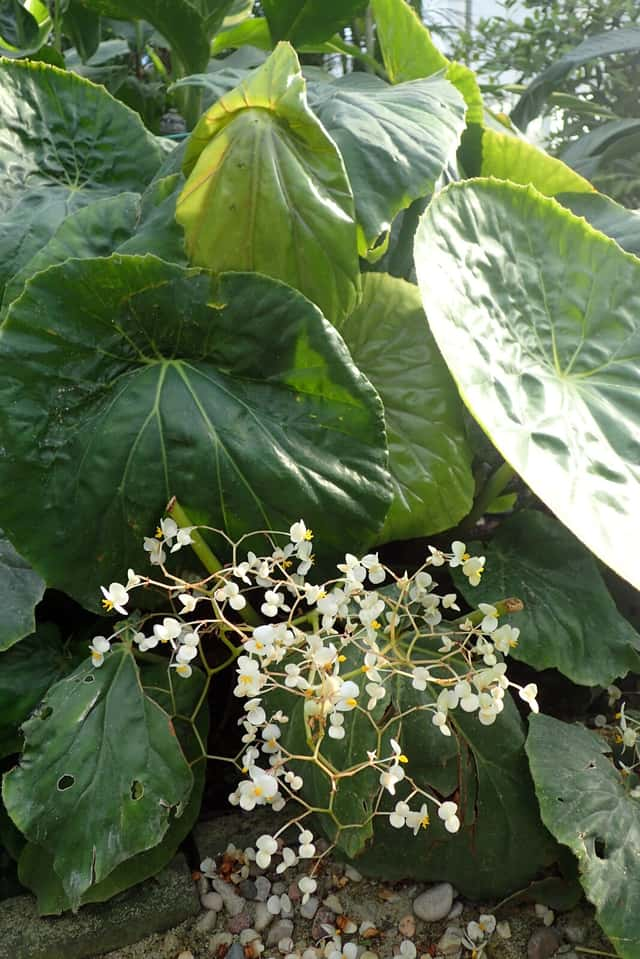
Lily pad begonia (Begonia nelumbiifolia) is a medium-care plant from the Begoniaceae family. Lily pad begonia (Begonia nelumbiifolia) is a rhizomatous begonia from southern Mexico, Central America and Colombia, where it grows in humid tropical forest at 100-1,700 m. It forms clumps 1-1.5 m tall with huge, round, smooth leaves attached to the stalk at the centre, like a lotus or water lily p...
Lily pad begonia grows up to 1.5m, spread of 90cm, watering every 4 days. It is suitable for indoor environments and not safe for pets.
Without precautions, ingestion can cause irritation in pets. Keep out of reach of cats and dogs. Without adequate drainage, root rot can develop within 8 days.
How to Care for Lily pad begonia?
TLDR: Lily pad begonia needs Partial shade, watering every 4 days, and temperatures between 0-30°C with 50-70% humidity.
How Often Should You Water Lily pad begonia?
Keep the soil moist, letting only the top layer dry slightly between waterings. Never leave water standing in the saucer, or the rhizome will rot. Water less in winter.
How Much Light Does Lily pad begonia Need?
Bright indirect light or light shade. Direct sun scorches the big leaves. Indoors, near a window with a sheer curtain.
What Is the Best Soil for Lily pad begonia?
Rich, loose, organic soil that drains well. In pots, use houseplant mix with bark and perlite.
What Pot Should You Use for Lily pad begonia?
A wide, shallow pot with drainage holes, since the rhizome grows sideways. The plant gets big, so choose a pot at least 30 cm across.
Care Schedule
Fertilize
Every 90 days
Misting
Every 3 days
What Is Lily pad begonia and Where Does It Come From?
Lily pad begonia (Begonia nelumbiifolia) is a rhizomatous begonia from southern Mexico, Central America and Colombia, where it grows in humid tropical forest at 100-1,700 m. It forms clumps 1-1.5 m tall with huge, round, smooth leaves attached to the stalk at the centre, like a lotus or water lily pad. Some plants have reddish veins. From late winter into spring it sends up tall stalks with airy clouds of small white or pale pink flowers. In Mexico the tart leaf stalks are cooked and eaten as xocoyole, and the leaves are used in folk medicine for swellings and bruises.
How to Propagate Lily pad begonia?
Rhizome division
Let the cut surfaces dry for a few minutes before planting to prevent rot.
- 1 In spring, take the plant out of its pot
- 2 Cut the rhizome into pieces with a clean knife, each with leaves and roots
- 3 Plant the pieces in moist mix without burying the rhizome too deep
- 4 Keep in light shade and humid air until established
Materials needed:
Rhizome cutting
Air the bag now and then to prevent mould.
- 1 Cut a 5-10 cm piece of rhizome with at least one node
- 2 Lay it on moist mix, burying only the lower half
- 3 Cover the pot with a plastic bag to hold humidity
- 4 Wait for new leaves, then pot on
Materials needed:
Leaf cutting
Very large leaves lose water fast; cut half the blade away to help.
- 1 Cut a healthy leaf with a piece of its stalk
- 2 Insert the stalk into moist mix
- 3 Keep enclosed and in light shade
- 4 Wait for plantlets to appear at the base
Materials needed:
How Big Does Lily pad begonia Grow?
TLDR: Lily pad begonia can reach up to 1.5m tall with Medium growth rate.
Max height
1.5m
Spread
90cm
Foliage
Evergreen
Warning: Toxic Plant
This plant can be toxic if ingested. Keep out of reach of:
Plant Uses
Ornamental
Great for decoration
Edible
Can be consumed
Medicinal
Medicinal properties
Medicinal Uses
- In Mexico, leaves ground with a little water are placed on swellings and bruises.
- Sap from the flower stalk is used in folk medicine for mouth sores. Traditional use without proven efficacy.
Culinary Uses
- The tart leaf stalks are cooked and eaten in Mexico as xocoyole, for example in beans with a sesame and chile paste.
Is your plant showing symptoms?
Click on the symptom to discover possible causes:
What Diseases Commonly Affect Lily pad begonia?
TLDR: Lily pad begonia is susceptible to 3 known diseases. Monitor regularly for early detection.
Root Rot
Root rot is a serious fungal disease that affects the root system of plants, causing them to decay and die. It is primarily caused by overwatering, poor drainage, or soil-borne fungi such as Pythium, Phytophthora, Rhizoctonia, and Fusarium. The disease thrives in waterlogged conditions where roots are deprived of oxygen, making them susceptible to fungal infection.
Low Humidity Stress
Low humidity stress occurs when indoor air becomes too dry, causing plants to lose moisture faster than they can absorb it through their roots. This is especially common during winter heating periods, near radiators and heating vents, or in air-conditioned spaces. Tropical plants are particularly susceptible to low humidity damage.
Cold Damage
Cold damage, also known as frost injury, occurs when plants are exposed to freezing or near-freezing temperatures. This environmental stress can cause cellular damage as ice crystals form within plant tissues, rupturing cells and disrupting normal plant functions. Chilling injury can also occur in sensitive species at temperatures between 32-55°F (0-10°C), even without actual freezing.
Fun Facts
In Mexico its tart leaf stalks are a vegetable called xocoyole.
Its flowers attract butterflies.
It was described in 1830 by the botanists Chamisso and Schlechtendal.
Frequently asked questions
Why is it called lily pad begonia?
Is it toxic to cats and dogs?
Can it take sun?
Is it cold hardy?
Compare with similar plants
| Attribute | Difficulty | Light | Watering | Pet Safe |
|---|---|---|---|---|
| Dark Fieldcap | Medium | Low light | 2d | ⚠️ |
| Azalea | Medium | Partial shade | 3d | ⚠️ |
| Muriel's Bamboo | Medium | Partial shade | 3d | ✓ |
| Bougainvillea | Medium | Direct sun | 7d | ⚠️ |




