Aizoaceae
Lobster Claws (Cheiridopsis denticulata)
Cheiridopsis denticulata
A winter grower: water in autumn and winter, almost none in summer, when it goes dormant. Give it plenty of sun, a sandy mix and perfect drainage. Overwatering, which rots the roots, is the main risk.
Every 21 days
Direct sun
-5° - 35°C
20% - 50%
Categories
What is Lobster Claws?
Lobster Claws (Cheiridopsis denticulata) is a medium-care plant from the Aizoaceae family. Cheiridopsis denticulata is a compact perennial succulent in the Aizoaceae (ice plant) family, native to Namaqualand and the Richtersveld in South Africa, reaching into southern Namibia. It forms cushions up to 10 cm tall and 30 cm wide, made of erect pairs of grey-blue leaves that are triangular to...
Lobster Claws grows up to 10cm, spread of 30cm, watering every 21 days, -5°C – 35°C, 20–50% humidity. It is suitable for indoor environments and safe for pets.
Unlike many popular species, Lobster Claws is safe to keep around pets. Without adequate drainage, root rot can develop within 42 days.
How to Care for Lobster Claws?
TLDR: Lobster Claws needs Direct sun, watering every 21 days, and temperatures between -5-35°C with 20-50% humidity.
How Often Should You Water Lobster Claws?
From autumn to spring, water deeply only when the mix is completely dry (every 2–3 weeks). In summer dormancy, stop watering; at most mist lightly now and then, or water if the leaves shrivel badly.
How Much Light Does Lobster Claws Need?
Full sun or the brightest light you have; indoors, your sunniest window. A little shade and good airflow in the height of summer help it through dormancy.
What Is the Best Soil for Lobster Claws?
A gritty, mineral, fast-draining mix: coarse sand with perlite or pumice and very little organic matter.
What Pot Should You Use for Lobster Claws?
A wide, shallow terracotta pot with good drainage holes; clay helps the mix dry out faster.
Care Schedule
Repot
Every 730 days
What Is Lobster Claws and Where Does It Come From?
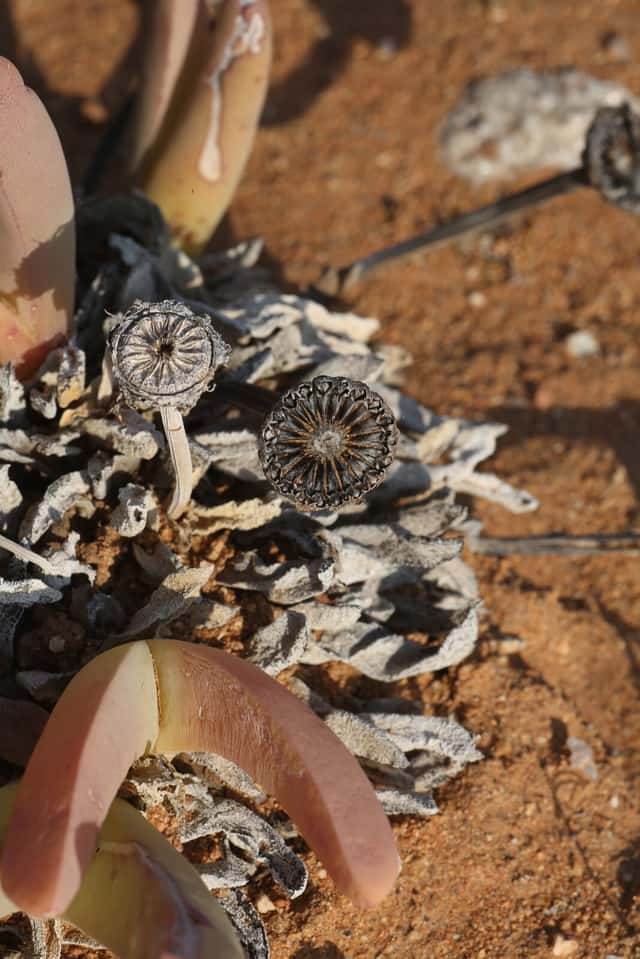
Cheiridopsis denticulata is a compact perennial succulent in the Aizoaceae (ice plant) family, native to Namaqualand and the Richtersveld in South Africa, reaching into southern Namibia. It forms cushions up to 10 cm tall and 30 cm wide, made of erect pairs of grey-blue leaves that are triangular towards the tip and often toothed along the keel, hence "denticulata". The flowers, up to 8 cm across, are cream to pale yellow, sometimes tipped violet, and open in the afternoon in late winter.
How to Propagate Lobster Claws?
Seed sowing
The seeds are tiny, so do not bury them deep. Good airflow keeps seedlings free of fungus.
- 1 Soak the seeds in warm water for 24 hours to soften the coat
- 2 Sow in autumn on a sandy mix
- 3 Cover with a thin layer of fine sand (about 1 mm)
- 4 Keep damp with a fine spray until they germinate
- 5 Once seedlings are growing, slowly reduce watering
Materials needed:
Clump division
Divide at the start of the growing season, never during summer dormancy.
- 1 In early autumn, take the plant out of its pot
- 2 Gently separate groups of heads that have their own roots
- 3 Let the cuts dry for 1–2 days
- 4 Plant in dry sandy mix and wait a week before watering
Materials needed:
How Big Does Lobster Claws Grow?
TLDR: Lobster Claws can reach up to 10cm tall with Slow growth rate.
Max height
10cm
Spread
30cm
Growth rate
Slow
Foliage
Evergreen
Plant Uses
Ornamental
Great for decoration
Is your plant showing symptoms?
Click on the symptom to discover possible causes:
What Diseases Commonly Affect Lobster Claws?
TLDR: Lobster Claws is susceptible to 3 known diseases. Monitor regularly for early detection.
Root Rot
Root rot is a serious fungal disease that affects the root system of plants, causing them to decay and die. It is primarily caused by overwatering, poor drainage, or soil-borne fungi such as Pythium, Phytophthora, Rhizoctonia, and Fusarium. The disease thrives in waterlogged conditions where roots are deprived of oxygen, making them susceptible to fungal infection.
Overwatering
Overwatering occurs when plants receive too much water, depriving roots of oxygen and causing root rot. This environmental stress is one of the most common causes of houseplant death, as waterlogged soil prevents roots from breathing and functioning properly.
Mealybugs
Mealybugs are small, soft-bodied insects covered with a white, waxy, cottony material. They are common pests of houseplants and outdoor plants in mild climates. These sap-sucking insects feed on plant tissue, causing damage, stunted growth, and can lead to plant death if left untreated. They produce sticky honeydew which attracts sooty mold.
Fun Facts
Cheiridopsis comes from the Greek for "sheath-like", after the old leaves that wrap the new ones
The flowers open in the afternoon and are pollinated by bees
Its seed capsules only open when it rains
Frequently asked questions
When should I water Cheiridopsis denticulata?
Why do the old leaves dry into a papery sheath?
Is it frost hardy?
Why did my lobster claws rot?
Compare with similar plants
| Attribute | Difficulty | Light | Watering | Pet Safe |
|---|---|---|---|---|
| Dark Fieldcap | Medium | Low light | 2d | ⚠️ |
| Azalea | Medium | Partial shade | 3d | ⚠️ |
| Muriel's Bamboo | Medium | Partial shade | 3d | ✓ |
| Bougainvillea | Medium | Direct sun | 7d | ⚠️ |