Araceae
Arum maculatum (Lords-and-Ladies) Care Guide
Arum maculatum
Grow in a shaded, humus-rich border or woodland corner where the soil stays moist but well-drained. Once established it needs almost no maintenance: the foliage dies back naturally in midsummer and fresh leaves reappear the following winter. Wear gloves when handling any part of the plant.
Every 7 days
Low light
-20° - °C
% - %
Categories
What is Lords-and-Ladies?
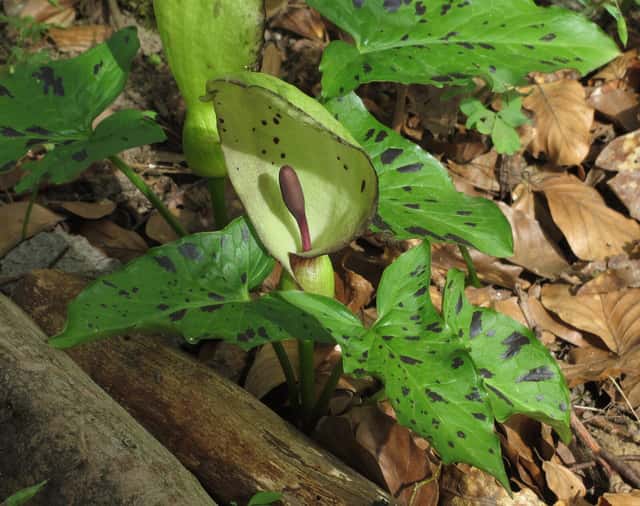
Lords-and-Ladies (Arum maculatum) is a easy-care plant from the Araceae family. A shade-loving woodland perennial in the arum family, native across most of Europe, Eastern Turkey and the Caucasus. Its glossy, arrow-shaped leaves emerge in late winter, often marked with dark purple blotches, followed in late spring by a pale green to purple-flushed spathe wrapped around a deep p...
Lords-and-Ladies grows up to 45cm, spread of 45cm, watering every 7 days. It is not suitable for indoor environments and not safe for pets.
Unlike many tropical plants, Lords-and-Ladies tolerates watering mistakes. Best for beginners. Without precautions, ingestion can cause irritation in pets. Keep out of reach of cats and dogs.
How to Care for Lords-and-Ladies?
TLDR: Lords-and-Ladies needs Low light, watering every 7 days, and temperatures between -20-30°C with 40-70% humidity.
How Often Should You Water Lords-and-Ladies?
Keep the soil consistently moist but never waterlogged during the active growing season (winter to early summer); water whenever the top of the soil starts to feel dry. Watering can stop almost entirely once the plant dies back for its summer dormancy.
How Much Light Does Lords-and-Ladies Need?
Thrives in full to partial shade, such as beneath deciduous trees or along a hedgerow; tolerates a little morning sun but prefers cool, shaded woodland-style conditions.
What Is the Best Soil for Lords-and-Ladies?
Plant in humus-rich, moist but well-drained soil enriched with compost or leaf mould before planting. Tolerates chalk, clay, loam or sandy soils across a wide pH range from mildly acid to alkaline.
What Pot Should You Use for Lords-and-Ladies?
Rarely grown in pots; if containerised, use a deep pot with excellent drainage and a leaf-mould-rich compost to mimic woodland soil, and keep it in a shaded spot.
What Is Lords-and-Ladies and Where Does It Come From?
A shade-loving woodland perennial in the arum family, native across most of Europe, Eastern Turkey and the Caucasus. Its glossy, arrow-shaped leaves emerge in late winter, often marked with dark purple blotches, followed in late spring by a pale green to purple-flushed spathe wrapped around a deep purple spadix. By midsummer the foliage and flower die back completely, leaving a bare stalk topped with a tight cluster of bright orange-red berries that persist into autumn. Every part of the plant -- leaves, stem, tuber and berries -- is highly toxic, packed with needle-like calcium oxalate crystals and other irritant compounds that cause intense burning of the mouth and throat if chewed or eaten.
How to Propagate Lords-and-Ladies?
Tuber division
Wear gloves throughout -- the tuber's sap and tissue are highly irritant to skin. Divisions establish faster when replanted the same day they are lifted.
- 1 Wait until the foliage has completely died back in midsummer
- 2 Carefully lift the tuber and gently pull or cut off smaller offset tubers
- 3 Pot the divisions individually in leaf-mould-rich compost, or replant directly in a shaded bed
- 4 Keep the soil lightly moist until new growth appears the following winter
Materials needed:
Seed sowing
Fresh seed germinates far more reliably than stored seed, which can take over a year. Always wear gloves when handling the pulp.
- 1 Collect ripe orange-red berries in late summer, wearing gloves
- 2 Remove and clean the seeds from the toxic pulp
- 3 Sow fresh seed immediately in trays of humus-rich compost in a cold frame
- 4 Keep at around 15C and consistently moist until germination
Materials needed:
How Big Does Lords-and-Ladies Grow?
TLDR: Lords-and-Ladies can reach up to 45cm tall with Slow growth rate.
Max height
45cm
Spread
45cm
Growth rate
Slow
Foliage
Deciduous
Warning: Toxic Plant
This plant can be toxic if ingested. Keep out of reach of:
Plant Uses
Ornamental
Great for decoration
Edible
Can be consumed
Medicinal
Medicinal properties
Medicinal Uses
- Historically used as a diuretic and expectorant
- Root once used as a purgative and vermifuge
- Applied externally in folk medicine for rheumatic pain
Culinary Uses
- Tuber historically dried and ground into a starch (Portland arrowroot / Portland sago) after prolonged processing to remove toxic crystals
- Young leaves occasionally boiled at length in old country cooking -- not recommended today given the plant's toxicity
Is your plant showing symptoms?
Click on the symptom to discover possible causes:
What Diseases Commonly Affect Lords-and-Ladies?
TLDR: Lords-and-Ladies is susceptible to 2 known diseases. Monitor regularly for early detection.
Bacterial Leaf Spot
Bacterial leaf spot is a plant disease caused by bacteria in the Xanthomonas and Pseudomonas genera that affects various ornamental and edible plants. The bacteria infect leaves through wounds or natural openings, causing characteristic lesions that can lead to premature leaf drop and plant weakening.
Slugs and Snails
Slugs and snails are mollusks that feed on plant tissue, causing irregular holes in leaves and damage to young seedlings. They are most active at night and in moist conditions, leaving characteristic silvery slime trails. These pests can quickly devastate gardens, especially during wet seasons.
Meaning & Symbolism
Its common name "lords-and-ladies" and older name "cuckoo-pint" (from "pintle", an old word for penis) both reference the phallic spadix hidden inside the hooded spathe, giving the plant long-standing folk associations with fertility and sexuality. Its poisonous berries also made it a folk symbol of hidden danger.
Fun Facts
The spadix can generate its own heat, warming several degrees above the surrounding air to help release its carrion-like scent and lure pollinating flies
Its many folk names -- Cuckoo Pint, Lords-and-Ladies, Adam and Eve, Snake's Head -- all allude to the flower's suggestive shape
The starchy tuber was once processed into "Portland arrowroot," a starch used for stiffening Elizabethan ruffs
Frequently asked questions
Is Arum maculatum safe to have in a garden with children or pets?
Why does Arum maculatum disappear in summer?
Does Arum maculatum need full shade?
How do I propagate Arum maculatum?
Compare with similar plants
| Attribute | Difficulty | Light | Watering | Pet Safe |
|---|---|---|---|---|
| Field Maple | Easy | Bright indirect | 14d | ✓ |
| Silver Birch | Easy | Direct sun | 14d | ✓ |
| Common Blanketflower | Easy | Direct sun | 10d | ✓ |
| Cushion Bush | Easy | Direct sun | 14d | ✓ |





