Apocynaceae
Loroco: Aromatic Plant
Fernaldia pandurata
Loroco prefers very bright locations or full sun for at least six hours a day, fertile and well-drained soil, regular watering without waterlogging, and the high humidity typical of tropical climates. It is a vigorous plant that requires a sturdy support (trellis, pergola, or fence) to accommodate its climbing habit.
Every 5 days
Bright indirect
15° - 32°C
60% - 90%
Categories
What is Loroco?
Loroco (Fernaldia pandurata) is a medium-care plant from the Apocynaceae family. Loroco (Fernaldia pandurata) is an evergreen climbing vine in the Apocynaceae family, native to the tropical regions of Central America, particularly El Salvador, Guatemala, and Honduras. It is characterized by its twining pubescent stems that climb over fences, pergolas, and nearby trees, and by it...
Loroco grows up to 5.0m, spread of 300cm, watering every 5 days, 15°C – 32°C, 60–90% humidity. It is suitable for indoor environments and not safe for pets.
Without precautions, ingestion can cause irritation in pets. Keep out of reach of cats and dogs. Without adequate drainage, root rot can develop within 10 days.
How to Care for Loroco?
TLDR: Loroco needs Bright indirect, watering every 5 days, and temperatures between 15-32°C with 60-90% humidity.
How Often Should You Water Loroco?
Keep the substrate consistently moist but never soggy: allow the top inch of soil to dry out between waterings and increase frequency during flowering to prevent root rot caused by standing water.
How Much Light Does Loroco Need?
Place the loroco in full sun or a very bright spot with at least six hours of light per day; in hotter regions, protect the plant from direct sun during peak hours to avoid leaf scorch.
What Is the Best Soil for Loroco?
Use a fertile, loose, and well-draining potting mix enriched with compost or organic matter; add perlite or coarse sand to improve drainage and maintain a slightly acidic to neutral pH (6.0-7.0).
What Pot Should You Use for Loroco?
Choose a large, deep pot with ample drainage holes, suitable for housing a robust and fibrous root system; set up a stake or vertical trellis from the start to support its climbing growth, ideal for sunny terraces and balconies.
Care Schedule
Fertilize
Every 30 days
Misting
Every 2 days
Rotate
Every 15 days
Repot
Every 730 days
What Is Loroco and Where Does It Come From?
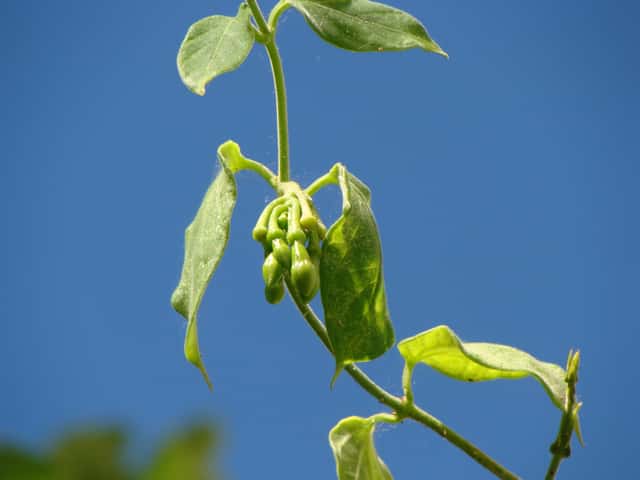
Loroco (Fernaldia pandurata) is an evergreen climbing vine in the Apocynaceae family, native to the tropical regions of Central America, particularly El Salvador, Guatemala, and Honduras. It is characterized by its twining pubescent stems that climb over fences, pergolas, and nearby trees, and by its fragrant, edible greenish-white flower buds, which are an iconic ingredient in Salvadoran cuisine, especially in pupusas.
How to Propagate Loroco?
Sowing
- Maintain a constant warm temperature to speed up germination.
- Avoid waterlogging which promotes seedling rot.
- 1 Soaking
Soak the seeds in warm water for 12-24 hours before sowing.
- 2 Sowing
Sow in a light, well-draining substrate at the beginning of the rainy season or in spring in warm climates.
- 3 Germination
Keep warm (75-84°F) and slightly moist: germination typically occurs in 5-15 days.
Materials needed:
Stem cutting
- Remove the lower leaves of the cutting to reduce transpiration.
- Provide support from the early stages of growth.
- 1 Cutting
Take a 6-8 inch semi-woody cutting from a healthy stem with at least two nodes.
- 2 Rooting
Bury the base of the cutting in a light, draining mix and keep it moist in a warm, bright environment but not in direct full sun.
- 3 Transplanting
Transplant into a permanent pot or final location with a support once the roots are well-developed.
Materials needed:
How Big Does Loroco Grow?
TLDR: Loroco can reach up to 5.0m tall with Fast growth rate.
Max height
5.0m
Spread
3.0m
Growth rate
Fast
Foliage
Evergreen
Warning: Toxic Plant
This plant can be toxic if ingested. Keep out of reach of:
Plant Uses
Edible
Can be consumed
Ornamental
Great for decoration
Aromatic
Pleasant fragrance
Medicinal
Medicinal properties
Medicinal Uses
- Infusion of leaves and flowers to aid digestion and relieve intestinal bloating
- Traditional use as a mild purifying diuretic
- Topical application on inflamed skin and joints
- Warning: the roots contain toxic alkaloids and must be avoided
Culinary Uses
- Signature ingredient in Salvadoran pupusas
- Used in tamales, rice, and soups
- Added to omelets and melted cheeses (quesadillas)
- Paired with chicken-based dishes
- The buds must always be cooked briefly before consumption
Is your plant showing symptoms?
Click on the symptom to discover possible causes:
What Diseases Commonly Affect Loroco?
TLDR: Loroco is susceptible to 6 known diseases. Monitor regularly for early detection.
Spider Mites
Spider mites are tiny arachnids (less than 1/20 inch long) related to spiders and ticks that feed on plant sap. They thrive in hot, dry conditions and can cause significant damage to ornamental and vegetable plants. During severe infestations, crop losses can reach 14% or higher as these pests disrupt vital plant processes including photosynthesis, carbon dioxide absorption, and transpiration.
Mealybugs
Mealybugs are small, soft-bodied insects covered with a white, waxy, cottony material. They are common pests of houseplants and outdoor plants in mild climates. These sap-sucking insects feed on plant tissue, causing damage, stunted growth, and can lead to plant death if left untreated. They produce sticky honeydew which attracts sooty mold.
Whiteflies
Whiteflies are small, soft-bodied, winged insects closely related to aphids and mealybugs. They are moth-like in appearance, about 1/16 inch long, triangular in shape, and gray-white in color. These sap-sucking pests feed on plant tissue, causing yellowing, stunted growth, and wilting. They also excrete honeydew, which attracts ants and promotes sooty mold growth. Whiteflies can transmit serious plant viruses.
Aphids
Aphids are small, soft-bodied, pear-shaped insects (1/16 to 1/8 inch long) that feed by sucking nutrient-rich sap from plants. They reproduce rapidly and can quickly weaken plants, causing distorted growth and transmitting plant viruses. Aphids come in various colors including green, black, red, yellow, brown, and gray. They secrete honeydew, a sticky substance that attracts ants and encourages sooty mold growth.
Meaning & Symbolism
The name loroco likely derives from the Nahuatl word 'cohollo', meaning 'edible herb', and the plant is deeply rooted in the culinary and cultural identity of El Salvador, Honduras, and Guatemala, where the seasonal harvest of the buds also represents a source of income for rural communities.
Compare with similar plants
| Attribute | Difficulty | Light | Watering | Pet Safe |
|---|---|---|---|---|
| Dark Fieldcap | Medium | Low light | 2d | ⚠️ |
| Azalea | Medium | Partial shade | 3d | ⚠️ |
| Muriel's Bamboo | Medium | Partial shade | 3d | ✓ |
| Bougainvillea | Medium | Direct sun | 7d | ⚠️ |
Choose & Compare
Sources & References
- Fernaldia pandurata (Loroco): care, properties and essential uses
- Fernaldia pandurata - Useful Tropical Plants
- Loroco, Fernaldia pandurata (Apocynaceae): A popular edible flower of Central America
- Identificacion de virus que afectan el loroco (Fernaldia pandurata) en el valle de Zapotitan, El Salvador
- Grow & Care for Loroco Plant: Tips for a Thriving Vine




