Apiaceae
Lovage: Aromatic Plant
Levisticum officinale
Lovage thrives best in a sunny to lightly shaded spot with rich, well-draining, moist soil. Water regularly during dry periods but avoid waterlogged roots. Once established, it is a frost-hardy perennial that dies back in winter and regrows in spring. Avoid excessive humidity around the foliage to prevent fungal diseases.
Every 2 days
Direct sun
-21° - 28°C
40% - 70%
Categories
What is Lovage?
Lovage (Levisticum officinale) is a medium-care plant from the Apiaceae family. Levisticum officinale is a robust, perennial herb in the Apiaceae family, native to the Mediterranean region. The plant reaches a height of up to 180 cm and forms a dense clump of finely branched, glossy green leaves containing celery-scented essential oils. In summer, numerous yellow flowers appear...
Lovage grows up to 1.8m, spread of 100cm, watering every 2 days, -21°C – 28°C, 40–70% humidity. It is not suitable for indoor environments and not safe for pets.
Without precautions, ingestion can cause irritation in pets. Keep out of reach of cats and dogs.
How to Care for Lovage?
TLDR: Lovage needs Direct sun, watering every 2 days, and temperatures between -21-28°C with 40-70% humidity.
How Often Should You Water Lovage?
Keep the soil evenly moist but not saturated. Water deeply, about twice a week during dry spells. Irregular watering leads to bitter leaves. Avoid getting water on the foliage to limit Botrytis.
How Much Light Does Lovage Need?
Plant in a location with at least 6-8 hours of direct sunlight per day. The plant tolerates partial shade but grows fuller and more aromatic in full sun. In very hot climates, light afternoon shade is beneficial.
What Is the Best Soil for Lovage?
Lovage prefers soil with a pH of 6.0-7.5, rich in organic matter. A mixture of sand, loam, and compost promotes drainage while retaining moisture. Mulching keeps moisture levels consistent and suppresses weeds.
What Pot Should You Use for Lovage?
For container cultivation: use a pot of at least 15-20 liters with drainage holes. Lovage grows better outdoors but can be kept in large containers for a few seasons.
Care Schedule
Fertilize
Every 30 days
Rotate
Every 1095 days
What Is Lovage and Where Does It Come From?
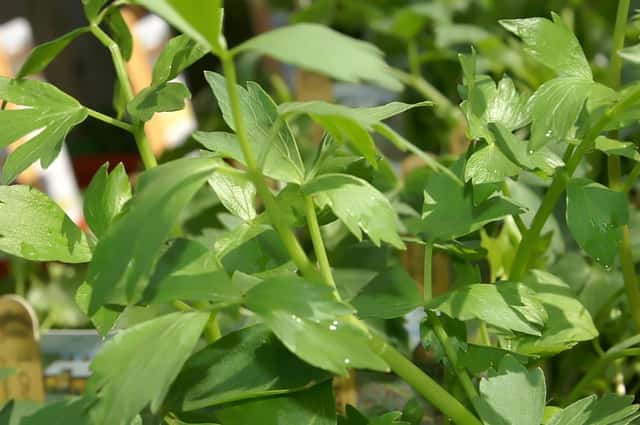
Levisticum officinale is a robust, perennial herb in the Apiaceae family, native to the Mediterranean region. The plant reaches a height of up to 180 cm and forms a dense clump of finely branched, glossy green leaves containing celery-scented essential oils. In summer, numerous yellow flowers appear in umbels, followed by aromatic seeds. The entire plant—leaves, stems, roots, and seeds—is edible and possesses strong medicinal and culinary properties.
How Big Does Lovage Grow?
TLDR: Lovage can reach up to 1.8m tall with Medium growth rate.
Max height
1.8m
Spread
1.0m
Growth rate
Medium
Foliage
Deciduous
Warning: Toxic Plant
This plant can be toxic if ingested. Keep out of reach of:
Plant Uses
Edible
Can be consumed
Medicinal
Medicinal properties
Aromatic
Pleasant fragrance
Medicinal Uses
- Digestion: relieves indigestion, bloating, and gas
- Diuretic: supports the urinary tract
- Mild analgesic effect for joint and abdominal pain
- Anti-inflammatory phenolic compounds
- Traditionally used for gout and rheumatic complaints
Culinary Uses
- Fresh leaves finely chopped in salads, soups, and broths
- Stems as a celery substitute
- Seeds in bread, pastries, and savory dishes
- Popular in Polish and Eastern European soups
Is your plant showing symptoms?
Click on the symptom to discover possible causes:
What Diseases Commonly Affect Lovage?
TLDR: Lovage is susceptible to 5 known diseases. Monitor regularly for early detection.
Leaf Spot
Leaf spot is a common fungal disease caused by various pathogens including Alternaria, Ascochyta, Colletotrichum, Septoria, and Venturia. It primarily affects leaves, causing discolored spots that can lead to premature leaf drop if left untreated.
Powdery Mildew
Powdery mildew is a common fungal disease caused by various fungi species including Erysiphe, Podosphaera, Oïdium, and Leveillula. It affects over 10,000 plant species worldwide. The disease thrives in warm, dry climates with high humidity and appears as a distinctive white powdery coating on plant surfaces.
Root Rot
Root rot is a serious fungal disease that affects the root system of plants, causing them to decay and die. It is primarily caused by overwatering, poor drainage, or soil-borne fungi such as Pythium, Phytophthora, Rhizoctonia, and Fusarium. The disease thrives in waterlogged conditions where roots are deprived of oxygen, making them susceptible to fungal infection.
Aphids
Aphids are small, soft-bodied, pear-shaped insects (1/16 to 1/8 inch long) that feed by sucking nutrient-rich sap from plants. They reproduce rapidly and can quickly weaken plants, causing distorted growth and transmitting plant viruses. Aphids come in various colors including green, black, red, yellow, brown, and gray. They secrete honeydew, a sticky substance that attracts ants and encourages sooty mold growth.
Compare with similar plants
| Attribute | Difficulty | Light | Watering | Pet Safe |
|---|---|---|---|---|
| Dark Fieldcap | Medium | Low light | 2d | ⚠️ |
| Azalea | Medium | Partial shade | 3d | ⚠️ |
| Muriel's Bamboo | Medium | Partial shade | 3d | ✓ |
| Bougainvillea | Medium | Direct sun | 7d | ⚠️ |




