Scrophulariaceae
Buddleja madagascariensis (Madagascar Butterfly Bush) Care Guide
Buddleja madagascariensis
Grow in full sun with shelter from cold winds; it thrives in warm, frost-free climates (USDA zones 9-10) and needs protection below about 1°C. Plant in well-drained soil - chalk, loam or sand all suit it - and water freely during active growth, letting the top of the soil dry between waterings since wet, waterlogged soil favors root rot. Prune hard after flowering to keep the lax, straggling growth in shape and encourage denser blooming the following season.
Every 7 days
Direct sun
1° - 35°C
% - %
Categories
What is Madagascar Butterfly Bush?
Madagascar Butterfly Bush (Buddleja madagascariensis) is a easy-care plant from the Scrophulariaceae family. Buddleja madagascariensis, commonly known as the Madagascar butterfly bush or smokebush, is a fast-growing, sprawling evergreen shrub native to Madagascar. It can reach 1.5-4 m in cultivation (occasionally taller in the wild) and produces long, slender terminal panicles of fragrant flowers that open...
Madagascar Butterfly Bush grows up to 4.0m, spread of 400cm, watering every 7 days, 1°C – 35°C. It is not suitable for indoor environments and not safe for pets.
Unlike many tropical plants, Madagascar Butterfly Bush tolerates watering mistakes. Best for beginners. Without precautions, ingestion can cause irritation in pets. Keep out of reach of cats and dogs.
How to Care for Madagascar Butterfly Bush?
TLDR: Madagascar Butterfly Bush needs Direct sun, watering every 7 days, and temperatures between 1-35°C with 40-70% humidity.
How Often Should You Water Madagascar Butterfly Bush?
Water generously while the plant is actively growing, then cut back in winter. Allow the soil surface to dry out between waterings - Buddleja madagascariensis is far more tolerant of brief dry spells than of waterlogged, constantly wet soil, which invites root rot.
How Much Light Does Madagascar Butterfly Bush Need?
Give it full sun for the best flowering and compact growth. In hot conservatories or greenhouses, ensure good ventilation alongside bright light to prevent stress.
What Is the Best Soil for Madagascar Butterfly Bush?
Use a fertile, well-drained, loam-based mix (chalk, loam or sand all work). Add grit or perlite for container plants to guarantee sharp drainage, since this species dislikes sitting in wet soil.
What Pot Should You Use for Madagascar Butterfly Bush?
A wide, sturdy terracotta or unglazed clay pot with generous drainage holes suits it best, since porous walls help excess moisture escape and match this shrub's dislike of waterlogged roots.
Care Schedule
Repot
Every 730 days
What Is Madagascar Butterfly Bush and Where Does It Come From?
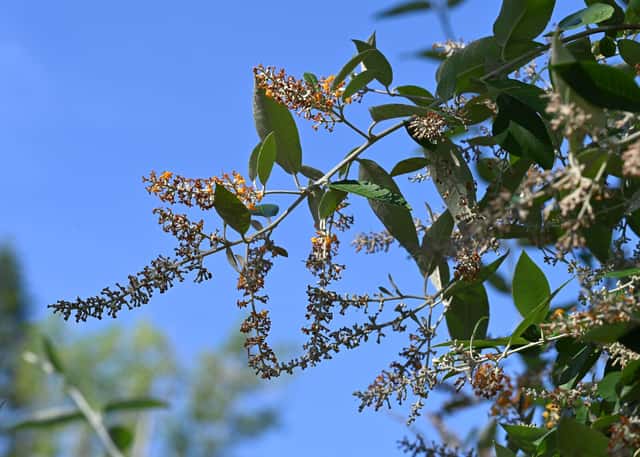
Buddleja madagascariensis, commonly known as the Madagascar butterfly bush or smokebush, is a fast-growing, sprawling evergreen shrub native to Madagascar. It can reach 1.5-4 m in cultivation (occasionally taller in the wild) and produces long, slender terminal panicles of fragrant flowers that open deep yellow and age through orange to soft pink, blooming from autumn through spring. The felted, greyish undersides of its leaves give the plant a soft, silvery look, and its flowers are highly attractive to butterflies, hummingbirds and bees. Outside its native range it has become invasive in parts of Hawaii and other subtropical regions, where its vigorous growth allows it to overtop native vegetation, so it should be planted with care and, where required by local regulation, kept contained.
How to Propagate Madagascar Butterfly Bush?
Semi-hardwood stem cuttings
Use clean, sharp secateurs and keep the cutting mix moist but never waterlogged; bottom heat speeds rooting.
- 1 Take a 10-15 cm semi-hardwood cutting just below a leaf node in summer
- 2 Remove the lower leaves and dip the cut end in rooting hormone
- 3 Insert into a free-draining mix of perlite and compost
- 4 Keep warm, humid and out of direct sun until roots form
Materials needed:
Seed sowing
Seed viability drops quickly, so sow as fresh as possible for the best germination rate.
- 1 Sow fresh seed on the surface of a well-drained seed compost
- 2 Barely cover with a fine layer of grit or vermiculite
- 3 Keep at 18-21°C in bright, indirect light and evenly moist
- 4 Transplant seedlings once they have 2-3 true leaves
Materials needed:
How Big Does Madagascar Butterfly Bush Grow?
TLDR: Madagascar Butterfly Bush can reach up to 4.0m tall with Fast growth rate.
Max height
4.0m
Spread
4.0m
Growth rate
Fast
Foliage
Evergreen
Warning: Toxic Plant
This plant can be toxic if ingested. Keep out of reach of:
Plant Uses
Ornamental
Great for decoration
Aromatic
Pleasant fragrance
Is your plant showing symptoms?
Click on the symptom to discover possible causes:
What Diseases Commonly Affect Madagascar Butterfly Bush?
TLDR: Madagascar Butterfly Bush is susceptible to 10 known diseases. Monitor regularly for early detection.
Caterpillars
Caterpillars are the larval stage of moths and butterflies that feed voraciously on plant foliage, stems, flowers, and fruits. Common species include cabbage loopers, tomato hornworms, armyworms, and cutworms. These pests can cause extensive damage by consuming large amounts of plant tissue in a short time. They vary in size from small (1/4 inch) to large (5 inches), with colors ranging from green to brown, often featuring stripes or spots. Caterpillars are highly mobile and can quickly spread throughout gardens, making them one of the most destructive common pests.
Spider Mites
Spider mites are tiny arachnids (less than 1/20 inch long) related to spiders and ticks that feed on plant sap. They thrive in hot, dry conditions and can cause significant damage to ornamental and vegetable plants. During severe infestations, crop losses can reach 14% or higher as these pests disrupt vital plant processes including photosynthesis, carbon dioxide absorption, and transpiration.
Leaf Spot
Leaf spot is a common fungal disease caused by various pathogens including Alternaria, Ascochyta, Colletotrichum, Septoria, and Venturia. It primarily affects leaves, causing discolored spots that can lead to premature leaf drop if left untreated.
Mosaic Virus
Mosaic virus is a group of plant viruses that cause mottled, patchy patterns on leaves and can affect a wide variety of plants. The virus creates characteristic yellow, white, and green mosaic patterns, often accompanied by stunted growth and deformed plant parts. This highly contagious disease spreads rapidly through insect vectors and contaminated tools.
Meaning & Symbolism
The butterfly bush family is widely associated with attraction, transformation and vitality, thanks to the swarms of butterflies and pollinators its nectar-rich flowers draw in - fitting for a plant whose color-shifting blooms move from gold to orange to pink.
Fun Facts
Its flowers open deep yellow and gradually shift through orange to soft pink as they age on the same panicle.
Despite the nickname, it is not a true smokebush (Cotinus) - that name comes from its hazy, felted grey leaf undersides.
In Hawaii and other subtropical islands it has escaped cultivation and is now considered an invasive weed.
Frequently asked questions
Is Buddleja madagascariensis invasive?
How cold-hardy is Madagascar butterfly bush?
When does it flower?
How do I stop it becoming leggy?
Compare with similar plants
| Attribute | Difficulty | Light | Watering | Pet Safe |
|---|---|---|---|---|
| Field Maple | Easy | Bright indirect | 14d | ✓ |
| Silver Birch | Easy | Direct sun | 14d | ✓ |
| Common Blanketflower | Easy | Direct sun | 10d | ✓ |
| Cushion Bush | Easy | Direct sun | 14d | ✓ |
Choose & Compare
Sources & References
- Buddleja madagascariensis - RHS
- Buddleja madagascariensis - Plant Pono
- Buddleja madagascariensis - Useful Tropical Plants
- Buddleia madagascariensis - HEAR PIER report
- madagascariensis - Buddleja Collection
- Buddleja madagascariensis - IUCN Global Invasive Species Database
- Buddleja madagascariensis - Wikipedia
- Buddleja Pests and Diseases





