Araceae
Magnificent Anthurium (Anthurium magnificum)
Anthurium magnificum
Give bright, indirect light, a chunky, well-aerated, organically rich potting mix, and high humidity (60-80%). Water once the top half of the mix has dried out, and avoid soggy soil — overwatering is the leading cause of problems in this species.
Every 8 days
Partial shade
18° - 27°C
60% - 80%
Categories
What is Magnificent Anthurium?
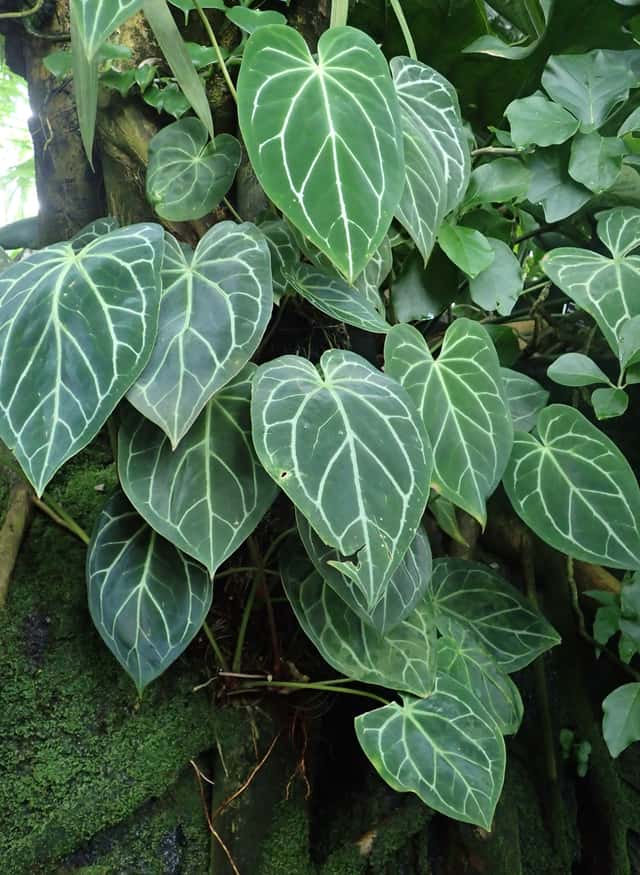
Magnificent Anthurium (Anthurium magnificum) is a medium-care plant from the Araceae family. The Magnificent Anthurium (Anthurium magnificum) is a terrestrial aroid native to humid tropical forest at low to intermediate elevations on the western slopes of the Colombian Andes. It is grown chiefly for its foliage: large, heart-shaped, deep green leaves with a velvety texture and striking silv...
Magnificent Anthurium grows up to 1.5m, spread of 60cm, watering every 8 days, 18°C – 27°C, 60–80% humidity. It is suitable for indoor environments and not safe for pets.
Without precautions, ingestion can cause irritation in pets. Keep out of reach of cats and dogs. Without adequate drainage, root rot can develop within 16 days.
How to Care for Magnificent Anthurium?
TLDR: Magnificent Anthurium needs Partial shade, watering every 8 days, and temperatures between 18-27°C with 60-80% humidity.
How Often Should You Water Magnificent Anthurium?
Water when the top half of the potting mix feels dry, typically every 7-10 days. Never let the plant sit in soggy soil, as the thick roots rot quickly when oxygen-starved.
How Much Light Does Magnificent Anthurium Need?
Bright, indirect light is ideal. Direct sun scorches the velvety leaves, while too little light slows growth and dulls the leaf venation.
What Is the Best Soil for Magnificent Anthurium?
Use a light, well-aerated, organically rich mix (coco chips, orchid bark, perlite, charcoal) with a slightly acidic pH between 5.5 and 6.5.
What Pot Should You Use for Magnificent Anthurium?
Terracotta or plastic pot with generous drainage holes, ideally paired with a moss pole to support larger leaves.
Care Schedule
Fertilize
Every 45 days
Repot
Every 730 days
What Is Magnificent Anthurium and Where Does It Come From?
The Magnificent Anthurium (Anthurium magnificum) is a terrestrial aroid native to humid tropical forest at low to intermediate elevations on the western slopes of the Colombian Andes. It is grown chiefly for its foliage: large, heart-shaped, deep green leaves with a velvety texture and striking silvery-white venation. Its quadrangular (four-sided) petioles help distinguish it from closely related species such as Anthurium crystallinum. It is a highly sought-after species among aroid collectors and a popular parent for velvet-leaf hybrids.
How to Propagate Magnificent Anthurium?
Stem cutting
Use sterilized tools and keep humidity high around the cutting to speed up rooting.
- 1 Cut a stem section with at least one node and one leaf attached
- 2 Let the cut callus over for a few hours in a dry spot
- 3 Place in moist, well-draining substrate or in water
- 4 Keep in bright indirect light and high humidity until roots form
Materials needed:
Clump division
Divide only mature, well-established plants to minimize stress.
- 1 Carefully remove the plant from its pot
- 2 Separate offsets, making sure each division keeps its own roots
- 3 Repot each division into its own pot with fresh mix
Materials needed:
How Big Does Magnificent Anthurium Grow?
TLDR: Magnificent Anthurium can reach up to 1.5m tall with Slow growth rate.
Max height
1.5m
Spread
60cm
Growth rate
Slow
Foliage
Evergreen
Warning: Toxic Plant
This plant can be toxic if ingested. Keep out of reach of:
Plant Uses
Ornamental
Great for decoration
Is your plant showing symptoms?
Click on the symptom to discover possible causes:
What Diseases Commonly Affect Magnificent Anthurium?
TLDR: Magnificent Anthurium is susceptible to 11 known diseases. Monitor regularly for early detection.
Root Rot
Root rot is a serious fungal disease that affects the root system of plants, causing them to decay and die. It is primarily caused by overwatering, poor drainage, or soil-borne fungi such as Pythium, Phytophthora, Rhizoctonia, and Fusarium. The disease thrives in waterlogged conditions where roots are deprived of oxygen, making them susceptible to fungal infection.
Phytophthora Root Rot
The Phytophthora genus consists of soil-borne oomycetes (water molds) that act as plant pathogens, primarily affecting trees and woody plants. It typically spreads through the root system, leading to systemic decline and eventual plant collapse.
Pythium Root Rot
Pythium root rot is a serious fungal disease caused by various Pythium species including P. aphanidermatum, P. ultimum, and P. irregulare. These water molds are present in practically all cultivated soils and attack plant roots under wet conditions, causing rapid wet rot that can extend into the stem. The disease is favored by poor drainage, overwatering, and specific temperatures depending on the species.
Anthracnose
Anthracnose is a fungal disease caused by fungi in the genus Colletotrichum that affects many plants, including vegetables, fruits, and trees. The disease thrives in cool, wet conditions, causing dark, sunken lesions on leaves, stems, flowers, and fruits.
Fun Facts
Its quadrangular (four-sided) petioles help tell it apart from lookalike species such as Anthurium crystallinum.
Mature leaves can exceed 50-75 cm (20-30 in) in length on well-grown specimens.
It is native to the western slopes of the Colombian Andes, at elevations of roughly 800-2125 meters.
It is one of the most popular parent species for velvet-leaf Anthurium hybrids among collectors.
Frequently asked questions
Is the Magnificent Anthurium toxic to cats and dogs?
How often should I water Anthurium magnificum?
What humidity does Anthurium magnificum need?
Why did my Anthurium magnificum lose its velvety sheen?
Compare with similar plants
| Attribute | Difficulty | Light | Watering | Pet Safe |
|---|---|---|---|---|
| Dark Fieldcap | Medium | Low light | 2d | ⚠️ |
| Azalea | Medium | Partial shade | 3d | ⚠️ |
| Muriel's Bamboo | Medium | Partial shade | 3d | ✓ |
| Bougainvillea | Medium | Direct sun | 7d | ⚠️ |




