Rosaceae
Mahaleb Cherry: Aromatic Plant
Prunus mahaleb
A tough, low-maintenance tree best grown in full sun; drought-tolerant once established. Prefers well-drained soil, even poor soil, and dislikes waterlogging. Needs little beyond moderate watering during establishment and light formative pruning in the dormant season.
Every 14 days
Direct sun
° - °C
% - %
Categories
What is Mahaleb Cherry?
Mahaleb Cherry (Prunus mahaleb) is a easy-care plant from the Rosaceae family. Mahaleb cherry (Prunus mahaleb) is a deciduous tree or shrub in the Rosaceae family, native to central and southern Europe, northwest Africa, and western Asia. It typically grows 2-10 m tall, with grey-brown bark marked by conspicuous lenticels. Small, rounded, serrated leaves accompany fragrant whi...
Mahaleb Cherry grows up to 10.0m, spread of 900cm, watering every 14 days. It is not suitable for indoor environments and not safe for pets.
Unlike many tropical plants, Mahaleb Cherry tolerates watering mistakes. Best for beginners. Without precautions, ingestion can cause irritation in pets. Keep out of reach of cats and dogs.
How to Care for Mahaleb Cherry?
TLDR: Mahaleb Cherry needs Direct sun, watering every 14 days, and temperatures between 15-30°C with 40-70% humidity.
How Often Should You Water Mahaleb Cherry?
Water regularly while young, letting the soil dry between waterings; once established the tree tolerates drought well and needs little supplemental irrigation. Avoid soggy soil — wet roots invite rot.
How Much Light Does Mahaleb Cherry Need?
Grows best in full sun to light shade; more direct light means better flowering and fruiting.
What Is the Best Soil for Mahaleb Cherry?
Adapts to sandy, loamy, or clay soils as long as they drain well; tolerates mildly acid to mildly alkaline pH (6.0-8.0) and even poor, rocky, or calcareous ground. Avoid heavy, waterlogged soil.
What Pot Should You Use for Mahaleb Cherry?
Best planted directly in the ground given its medium-to-large mature size; if grown young in a container, choose a large, deep, well-draining pot (terracotta or another porous material).
What Is Mahaleb Cherry and Where Does It Come From?
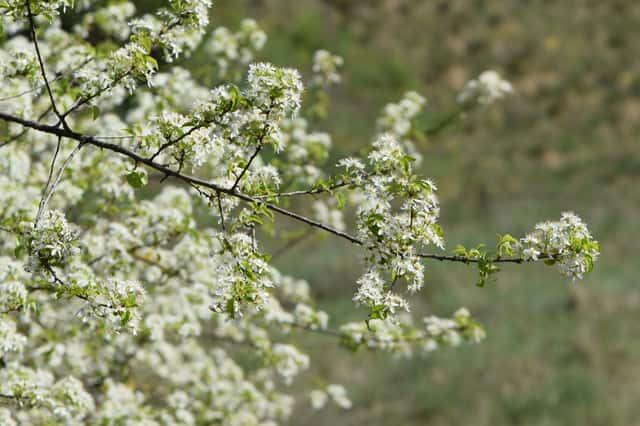
Mahaleb cherry (Prunus mahaleb) is a deciduous tree or shrub in the Rosaceae family, native to central and southern Europe, northwest Africa, and western Asia. It typically grows 2-10 m tall, with grey-brown bark marked by conspicuous lenticels. Small, rounded, serrated leaves accompany fragrant white flowers borne in short racemes in mid-spring. The small drupes ripen from green to red to dark purple-black and are very bitter, rarely eaten fresh — but the roasted, ground kernels yield mahlab (mahlepe), a fragrant spice widely used in Eastern Mediterranean and Middle Eastern breads and pastries. The species is also the classic cherry rootstock, prized for its hardiness and tolerance of dry, calcareous soils.
How to Propagate Mahaleb Cherry?
Seed propagation
Germination is notoriously difficult and can take up to 18 months; fresh seed and proper stratification improve success.
- 1 Collect seeds as soon as fruit ripens
- 2 Remove the pulp and wash the stone clean
- 3 Cold-stratify for 2-3 months in moist, refrigerated substrate
- 4 Sow in a pot or protected bed, keeping substrate lightly moist
- 5 Wait for germination, which can be slow and uneven
Materials needed:
Grafting (as cherry rootstock)
This is the most common commercial technique, since P. mahaleb is the classic cherry rootstock thanks to its hardiness and tolerance of dry, calcareous soils.
- 1 Select a healthy Prunus mahaleb rootstock of compatible diameter
- 2 Choose scion wood from the desired cherry cultivar
- 3 Make a matching bevel cut and fit the scion to the rootstock
- 4 Bind and seal the graft union with grafting tape
- 5 Keep in a protected spot until the union takes
Materials needed:
How Big Does Mahaleb Cherry Grow?
TLDR: Mahaleb Cherry can reach up to 10.0m tall with Fast growth rate.
Max height
10.0m
Spread
9.0m
Growth rate
Fast
Foliage
Deciduous
Warning: Toxic Plant
This plant can be toxic if ingested. Keep out of reach of:
Plant Uses
Ornamental
Great for decoration
Edible
Can be consumed
Aromatic
Pleasant fragrance
Medicinal
Medicinal properties
Medicinal Uses
- Seeds traditionally used in small amounts as a digestive tonic and mild respiratory stimulant
- Bark and seeds contain coumarin compounds reported to have anti-inflammatory and sedative folk uses
Culinary Uses
- Roasted, ground seed kernels are the source of mahlab (mahlepe), a spice used in sweet breads, brioche, and pastries across the Eastern Mediterranean and Middle East
- Fresh fruit is rarely eaten due to its very bitter flavor
Is your plant showing symptoms?
Click on the symptom to discover possible causes:
What Diseases Commonly Affect Mahaleb Cherry?
TLDR: Mahaleb Cherry is susceptible to 6 known diseases. Monitor regularly for early detection.
Brown Rot
Monilinia is a genus of ascomycete fungi that causes blossom blight and brown rot in fruit trees. It spreads most rapidly in cool, wet weather, particularly during the bloom period. Symptoms include flowers that turn brown and remain attached to the shoots, small tan spots on fruit that expand into gray-beige spore rings (sporodochia), twig dieback, and 'mummified' fruit that shrivels and often persists on the tree. It primarily affects stone fruits (peach, nectarine, apricot, plum, cherry) but can also infect pome fruits such as apple and pear.
Bacterial Canker
Serious bacterial disease affecting stone fruits and tomatoes caused by Pseudomonas syringae or Clavibacter michiganensis. Creates sunken lesions that ooze sap.
Peach Leaf Curl
Taphrina deformans is a fungal disease that primarily affects peaches and nectarines (commonly known as peach leaf curl). The fungus overwinters on twigs and in bud scales, infecting young leaves during damp, cool weather in early spring. It is characterized by thickened, puckered, red-to-yellow discolored, and severely curled leaves. Shoots may become distorted and leaves may drop prematurely; fruits can also develop spots or deformities. Apricots and almonds can occasionally be affected, though less frequently.
Plum Pockets
Taphrina pruni is a fungal pathogen that causes 'pocket plum' or 'plum pockets' in Prunus species, including plums, damsons, and blackthorn. It infects flowers and young fruit during cool, wet spring weather. The primary symptom is the development of distorted, enlarged, hollow fruit without a stone; these appear pale or yellowish, feel spongy, and may later develop a whitish, powdery fungal coating. Affected fruit typically drop prematurely. While leaves and shoots are usually less affected, severe infections can significantly reduce the season's crop yield.
Meaning & Symbolism
Like many flowering cherries, its fragrant white blossoms evoke purity, renewal, and the fleeting nature of beauty — themes long associated with cherry blossom in many cultures.
Compare with similar plants
| Attribute | Difficulty | Light | Watering | Pet Safe |
|---|---|---|---|---|
| Field Maple | Easy | Bright indirect | 14d | ✓ |
| Silver Birch | Easy | Direct sun | 14d | ✓ |
| Common Blanketflower | Easy | Direct sun | 10d | ✓ |
| Cushion Bush | Easy | Direct sun | 14d | ✓ |
Choose & Compare
Sources & References
- Prunus mahaleb - PFAF Plant Database
- Prunus mahaleb - Wikipedia
- Plum Tree Diseases: Guide to Treating Pest & Diseases
- Plum (Prunus) - CT Plant Pest Handbook
- Shot hole disease - Wikipedia
- Peachtree Borer - Colorado State University Extension
- Complete guide to growing and caring for the St. Lucia cherry tree





