Caryophyllaceae
Dianthus deltoides -- Maiden Pink Care Guide
Dianthus deltoides
Maiden Pink thrives in full sun with at least 6 hours of direct light daily and well-drained, slightly sandy or rocky soil. It is highly drought-tolerant once established and needs minimal fertilizing. Shear back spent flowers after the first bloom flush to encourage rebloom and prevent legginess. Avoid overwatering or heavy, waterlogged soils, which quickly lead to root and crown rot.
Every 10 days
Direct sun
-37° - 32°C
% - %
Categories
What is Maiden Pink?
Maiden Pink (Dianthus deltoides) is a easy-care plant from the Caryophyllaceae family. Dianthus deltoides, known as Maiden Pink, is a low-growing, mat-forming perennial in the carnation family (Caryophyllaceae). Native to Europe and western Asia, it forms dense evergreen-to-semi-evergreen cushions of narrow, gray-green foliage topped with small, fragrant, deep-pink to magenta flowers...
Maiden Pink grows up to 30cm, spread of 45cm, watering every 10 days, -37°C – 32°C. It is not suitable for indoor environments and not safe for pets.
Unlike many tropical plants, Maiden Pink tolerates watering mistakes. Best for beginners. Without precautions, ingestion can cause irritation in pets. Keep out of reach of cats and dogs.
How to Care for Maiden Pink?
TLDR: Maiden Pink needs Direct sun, watering every 10 days, and temperatures between -37-32°C with 40-70% humidity.
How Often Should You Water Maiden Pink?
Water deeply about once every 10 days during active growth, letting the soil dry out between waterings. Reduce watering in winter and rely on rainfall once the plant is established.
How Much Light Does Maiden Pink Need?
Give Maiden Pink full sun -- at least 6 hours of direct light a day. Partial shade will reduce flowering and make the mat leggy.
What Is the Best Soil for Maiden Pink?
Plant in well-drained, sandy or loamy soil with neutral to slightly alkaline pH. Mix in coarse sand or grit if the native soil is heavy clay to prevent waterlogging.
What Pot Should You Use for Maiden Pink?
If grown in a container, use a wide, shallow terracotta pot with drainage holes to mimic its natural rocky, well-drained habitat.
What Is Maiden Pink and Where Does It Come From?
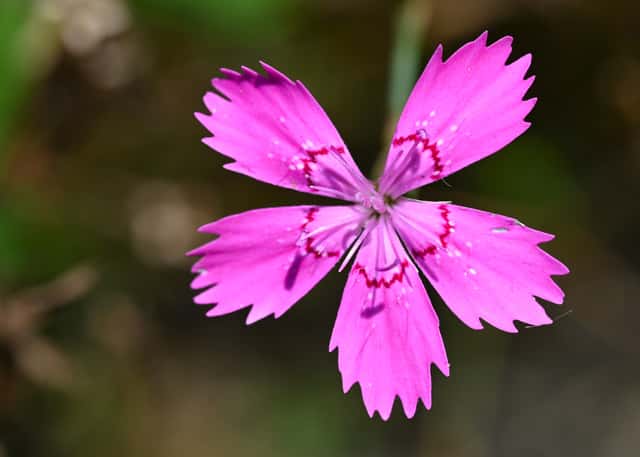
Dianthus deltoides, known as Maiden Pink, is a low-growing, mat-forming perennial in the carnation family (Caryophyllaceae). Native to Europe and western Asia, it forms dense evergreen-to-semi-evergreen cushions of narrow, gray-green foliage topped with small, fragrant, deep-pink to magenta flowers marked with a darker central ring. It blooms prolifically from late spring through summer and is prized as a groundcover, rock garden plant, and edging border because of its drought tolerance and rapid spread.
How to Propagate Maiden Pink?
Division
Divide every 2-3 years to keep the mat vigorous and prevent the center from dying out.
- 1 Dig up an established clump in early spring or after flowering
- 2 Gently pull or cut the mat into smaller sections with roots attached
- 3 Replant divisions immediately at the same depth in well-drained soil
- 4 Water well until new growth appears
Materials needed:
Seed sowing
Maiden Pink self-seeds readily in the garden, so volunteer seedlings often appear nearby.
- 1 Sow seeds on the surface of well-drained seed compost in early spring
- 2 Press seeds lightly into the soil but do not bury them, as they need light to germinate
- 3 Keep moist at 18-21C until germination
- 4 Transplant seedlings outdoors after the last frost
Materials needed:
How Big Does Maiden Pink Grow?
TLDR: Maiden Pink can reach up to 30cm tall with Fast growth rate.
Max height
30cm
Spread
45cm
Growth rate
Fast
Foliage
Semi-evergreen
Warning: Toxic Plant
This plant can be toxic if ingested. Keep out of reach of:
Plant Uses
Ornamental
Great for decoration
Ground Cover
Soil coverage
Edible
Can be consumed
Aromatic
Pleasant fragrance
Culinary Uses
- Fresh petals (white bitter base removed) are edible and used to garnish salads, desserts, and drinks, adding a mild clove-like flavor
Is your plant showing symptoms?
Click on the symptom to discover possible causes:
What Diseases Commonly Affect Maiden Pink?
TLDR: Maiden Pink is susceptible to 6 known diseases. Monitor regularly for early detection.
Powdery Mildew
Powdery mildew is a common fungal disease caused by various fungi species including Erysiphe, Podosphaera, Oïdium, and Leveillula. It affects over 10,000 plant species worldwide. The disease thrives in warm, dry climates with high humidity and appears as a distinctive white powdery coating on plant surfaces.
Gray Mold (Botrytis Blight)
Gray mold, caused by the fungus Botrytis cinerea, is a widespread necrotrophic pathogen affecting over 1,400 plant species. It thrives in cool, humid conditions and attacks weakened or aging plant tissues, causing soft rot and characteristic gray fuzzy growth.
Root Rot
Root rot is a serious fungal disease that affects the root system of plants, causing them to decay and die. It is primarily caused by overwatering, poor drainage, or soil-borne fungi such as Pythium, Phytophthora, Rhizoctonia, and Fusarium. The disease thrives in waterlogged conditions where roots are deprived of oxygen, making them susceptible to fungal infection.
Rust
Rust is a common fungal disease caused by fungi in the order Pucciniales that affects a wide variety of plants. The disease gets its name from the characteristic orange, yellow, or reddish-brown pustules that appear on leaves, resembling metal rust. This obligate fungal parasite requires living plants to survive and can cause significant economic losses in agricultural crops.
Meaning & Symbolism
In the language of flowers, Dianthus blooms symbolize pure love, admiration, and boldness; the delicate, deeply fringed petals of the maiden pink have historically represented youthful beauty and affection.
Fun Facts
Its species name deltoides refers to the triangular, delta-shaped markings at the base of its petals.
Maiden Pink flowers close up at night and reopen in the morning sun.
The flowers have a light, spicy clove-like fragrance, a trait shared by many Dianthus species.
A single plant can spread into a dense mat up to 60cm wide within a couple of growing seasons.
Frequently asked questions
Is Maiden Pink toxic to pets?
Can I eat Maiden Pink flowers?
How often should I water Maiden Pink?
Why is my Maiden Pink not flowering?
Compare with similar plants
| Attribute | Difficulty | Light | Watering | Pet Safe |
|---|---|---|---|---|
| Field Maple | Easy | Bright indirect | 14d | ✓ |
| Silver Birch | Easy | Direct sun | 14d | ✓ |
| Common Blanketflower | Easy | Direct sun | 10d | ✓ |
| Cushion Bush | Easy | Direct sun | 14d | ✓ |
Choose & Compare
Sources & References
- Dianthus deltoides - NC State Extension Gardener Plant Toolbox
- Maiden pink - planting, care and tips
- Maiden Pink (Dianthus Deltoides) Care Guide
- Dianthus Diseases
- Dianthus Pests
- Dianthus deltoides: Complete Care, Flowering, and Use Guide
- Toxic and Non-toxic Plants: Pinks - ASPCA
- Is Dianthus Poisonous?
- Clavellina, Clavelina - Dianthus deltoides





