Asteraceae
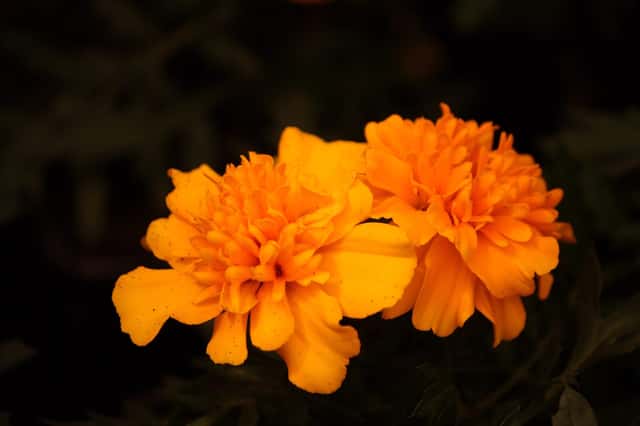
Marigold: Aromatic Plant
Tagetes
An easy, full-sun annual perfect for beginners. Prefers well-draining soil and moderate watering, letting the topsoil dry between waterings. Grows fast and flowers prolifically all summer into fall; deadheading spent blooms encourages more flowers.
Every 4 days
Direct sun
10° - 35°C
% - %
Categories
What is Marigold?
Marigold (Tagetes) is a easy-care plant from the Asteraceae family. Tagetes is a genus of annual herbaceous plants in the Asteraceae family, native to Mexico and Central America. Commonly known as marigold, it is one of the most widely grown garden flowers worldwide, with the French marigold (Tagetes patula) and African marigold (Tagetes erecta) as its best-known re...
Marigold grows up to 90cm, spread of 40cm, watering every 4 days, 10°C – 35°C. It is suitable for indoor environments and not safe for pets.
Unlike many tropical plants, Marigold tolerates watering mistakes. Best for beginners. Without precautions, ingestion can cause irritation in pets. Keep out of reach of cats and dogs. Without adequate drainage, root rot can develop within 8 days.
How to Care for Marigold?
TLDR: Marigold needs Direct sun, watering every 4 days, and temperatures between 10-35°C with 40-70% humidity.
How Often Should You Water Marigold?
Water when the top inch of soil feels dry, roughly every 4 days during the growing season. Avoid wetting the foliage to reduce fungal disease risk, and never let the plant sit in soggy soil since it is prone to root rot.
How Much Light Does Marigold Need?
Needs full sun, at least 6 hours of direct light daily. In partial shade it blooms less and grows leggy, weak stems.
What Is the Best Soil for Marigold?
Thrives in well-draining soil rich in organic matter, pH 6.0-7.5. Tolerates clay, loam or sandy textures as long as drainage is good.
What Pot Should You Use for Marigold?
Wide, shallow pots or containers with drainage holes, in terracotta or plastic, work well with a light, fast-draining potting mix.
Care Schedule
Fertilize
Every 30 days
What Is Marigold and Where Does It Come From?
Tagetes is a genus of annual herbaceous plants in the Asteraceae family, native to Mexico and Central America. Commonly known as marigold, it is one of the most widely grown garden flowers worldwide, with the French marigold (Tagetes patula) and African marigold (Tagetes erecta) as its best-known representatives. It produces abundant yellow, orange and gold blooms through summer, and its aromatic foliage is popularly used as a companion plant to help deter certain garden pests.
How to Propagate Marigold?
Seed sowing
Marigolds germinate quickly and reliably from seed; soaking seeds overnight can slightly speed germination.
- 1 Sow seeds directly in the garden or in trays after the last frost
- 2 Cover lightly with soil, about 0.5 cm deep
- 3 Keep the soil consistently moist until germination
- 4 Thin seedlings to 20-30 cm apart once they have true leaves
Materials needed:
How Big Does Marigold Grow?
TLDR: Marigold can reach up to 90cm tall with Fast growth rate.
Max height
90cm
Spread
40cm
Growth rate
Fast
Foliage
Deciduous
Warning: Toxic Plant
This plant can be toxic if ingested. Keep out of reach of:
Plant Uses
Ornamental
Great for decoration
Edible
Can be consumed
Aromatic
Pleasant fragrance
Medicinal
Medicinal properties
Medicinal Uses
- Traditionally used in folk remedies as an anti-inflammatory and wound-healing infusion or poultice
- Flower extract used in natural insect-repellent preparations
Culinary Uses
- Petals used as a natural food coloring and saffron substitute in rice and broths
- Edible-flower varieties like Lemon Gem and Tangerine Gem used in salads and teas
Is your plant showing symptoms?
Click on the symptom to discover possible causes:
What Diseases Commonly Affect Marigold?
TLDR: Marigold is susceptible to 6 known diseases. Monitor regularly for early detection.
Powdery Mildew
Powdery mildew is a common fungal disease caused by various fungi species including Erysiphe, Podosphaera, Oïdium, and Leveillula. It affects over 10,000 plant species worldwide. The disease thrives in warm, dry climates with high humidity and appears as a distinctive white powdery coating on plant surfaces.
Spider Mites
Spider mites are tiny arachnids (less than 1/20 inch long) related to spiders and ticks that feed on plant sap. They thrive in hot, dry conditions and can cause significant damage to ornamental and vegetable plants. During severe infestations, crop losses can reach 14% or higher as these pests disrupt vital plant processes including photosynthesis, carbon dioxide absorption, and transpiration.
Aphids
Aphids are small, soft-bodied, pear-shaped insects (1/16 to 1/8 inch long) that feed by sucking nutrient-rich sap from plants. They reproduce rapidly and can quickly weaken plants, causing distorted growth and transmitting plant viruses. Aphids come in various colors including green, black, red, yellow, brown, and gray. They secrete honeydew, a sticky substance that attracts ants and encourages sooty mold growth.
Grey Mould
Meaning & Symbolism
Represents the sun, warmth and positive energy. In Mexico, the marigold (cempasuchil) is the traditional flower of Dia de los Muertos, believed to guide the spirits of the deceased back home with its scent and color.
Compare with similar plants
| Attribute | Difficulty | Light | Watering | Pet Safe |
|---|---|---|---|---|
| Field Maple | Easy | Bright indirect | 14d | ✓ |
| Silver Birch | Easy | Direct sun | 14d | ✓ |
| Common Blanketflower | Easy | Direct sun | 10d | ✓ |
| Cushion Bush | Easy | Direct sun | 14d | ✓ |
Choose & Compare
Sources & References
- Marigold Plant Care: Water, Light, Nutrients | Greg App
- Marigold (Tagetes Erecta) Plant Care & How to Grow, Water | Plantiary
- How to Grow and Care for Marigolds in South Carolina | HGIC
- Tagetes (Marigold) | NC State Extension Gardener Plant Toolbox
- Tagetes erecta | NC State Extension Gardener Plant Toolbox
- Marigolds: From Folklore to the Home Garden | Penn State Extension





