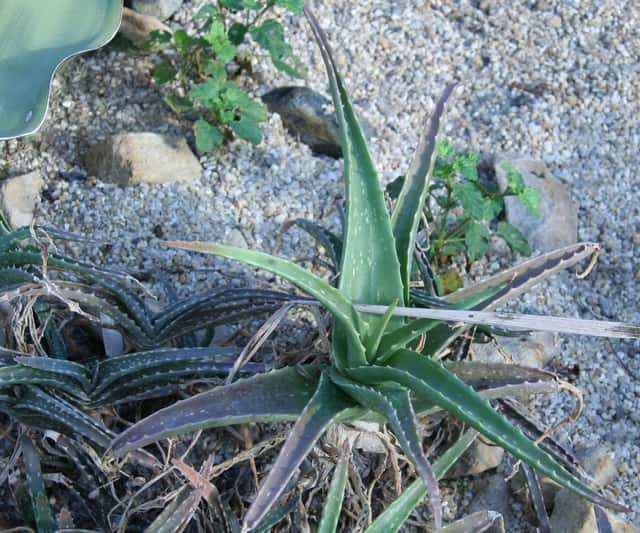
Asphodelaceae
Aloe massawana — Massawa Aloe
Aloe massawana
Grow in full sun with fast-draining, sandy soil. Water only once the substrate is completely dry, and cut back drastically in winter. Highly drought tolerant but intolerant of soggy soil and frost.
Every 21 days
Direct sun
10° - 35°C
20% - 50%
Categories
What is Massawa Aloe?
Massawa Aloe (Aloe massawana) is a easy-care plant from the Asphodelaceae family. Aloe massawana, commonly known as the Massawa Aloe, is a stemless to short-stemmed succulent native to coastal East Africa — southern Kenya, northern Tanzania, Mozambique, and Eritrea. It suckers freely to form dense clumps that can spread up to 3 meters (10 ft) across in the wild. Its thick, gray-g...
Massawa Aloe grows up to 60cm, spread of 90cm, watering every 21 days, 10°C – 35°C, 20–50% humidity. It is suitable for indoor environments and not safe for pets.
Unlike many tropical plants, Massawa Aloe tolerates watering mistakes. Best for beginners. Without precautions, ingestion can cause irritation in pets. Keep out of reach of cats and dogs. Without adequate drainage, root rot can develop within 42 days.
How to Care for Massawa Aloe?
TLDR: Massawa Aloe needs Direct sun, watering every 21 days, and temperatures between 10-35°C with 20-50% humidity.
How Often Should You Water Massawa Aloe?
Let the soil dry out completely between waterings — roughly every 3 weeks in summer, much less in winter.
How Much Light Does Massawa Aloe Need?
Needs at least 6 hours of direct sun daily; a bit of afternoon shade is fine in extremely hot climates.
What Is the Best Soil for Massawa Aloe?
Use a coarse, fast-draining cactus/succulent mix — coarse sand, perlite, or pumice all work well.
What Pot Should You Use for Massawa Aloe?
An unglazed terracotta pot with ample drainage holes helps excess moisture evaporate quickly.
Care Schedule
Fertilize
Every 90 days
Repot
Every 365 days
What Is Massawa Aloe and Where Does It Come From?
Aloe massawana, commonly known as the Massawa Aloe, is a stemless to short-stemmed succulent native to coastal East Africa — southern Kenya, northern Tanzania, Mozambique, and Eritrea. It suckers freely to form dense clumps that can spread up to 3 meters (10 ft) across in the wild. Its thick, gray-green rosette leaves, edged with small teeth, store water to endure long dry seasons, and it sends up flower spikes with tubular red-orange blooms, typically in fall.
How to Propagate Massawa Aloe?
Offset (pup) division
Always use clean tools to avoid contamination, and make sure the cut is fully callused before planting.
- 1 Wait until offsets around the mother plant reach a few centimeters and have their own roots
- 2 Using a clean knife, cut the offset away as close to the mother plant as possible
- 3 Let the cut callus over for 2-3 days in a dry, shaded spot
- 4 Plant in well-draining sandy soil and water lightly only after 1 week
Materials needed:
Seed sowing
Germination is slow and uneven — be patient and avoid overwatering to prevent damping-off.
- 1 Sow onto well-draining sandy soil, covering lightly with a thin layer of sand
- 2 Keep the substrate moist but never soggy, in bright indirect light
- 3 Once germinated, gradually move seedlings into full sun
- 4 Transplant into individual pots once seedlings have 2-3 true leaves
Materials needed:
How Big Does Massawa Aloe Grow?
TLDR: Massawa Aloe can reach up to 60cm tall with Medium growth rate.
Max height
60cm
Spread
90cm
Growth rate
Medium
Foliage
Evergreen
Warning: Toxic Plant
This plant can be toxic if ingested. Keep out of reach of:
Plant Uses
Ornamental
Great for decoration
Medicinal
Medicinal properties
Ground Cover
Soil coverage
Medicinal Uses
- Traditional folk remedy for skin ailments
- Traditional use as a digestive aid
Is your plant showing symptoms?
Click on the symptom to discover possible causes:
What Diseases Commonly Affect Massawa Aloe?
TLDR: Massawa Aloe is susceptible to 9 known diseases. Monitor regularly for early detection.
Root Rot
Root rot is a serious fungal disease that affects the root system of plants, causing them to decay and die. It is primarily caused by overwatering, poor drainage, or soil-borne fungi such as Pythium, Phytophthora, Rhizoctonia, and Fusarium. The disease thrives in waterlogged conditions where roots are deprived of oxygen, making them susceptible to fungal infection.
Sooty Mold
Sooty mold is a fungal disease that develops on surfaces coated with honeydew, a sticky sweet substance secreted by sap-sucking insects like aphids, scale insects, and whiteflies. While it does not directly infect plant tissue, it reduces photosynthetic capacity by blocking sunlight and diminishes the plant's aesthetic appearance.
Anthracnose
Anthracnose is a fungal disease caused by fungi in the genus Colletotrichum that affects many plants, including vegetables, fruits, and trees. The disease thrives in cool, wet conditions, causing dark, sunken lesions on leaves, stems, flowers, and fruits.
Leaf Spot
Leaf spot is a common fungal disease caused by various pathogens including Alternaria, Ascochyta, Colletotrichum, Septoria, and Venturia. It primarily affects leaves, causing discolored spots that can lead to premature leaf drop if left untreated.
Meaning & Symbolism
Symbolizes resilience and healing, echoing the traditional East African use of aloes as a folk remedy for skin ailments.
Fun Facts
The species name honors Massawa, an ancient port city in Eritrea.
It suckers into dense clumps that can reach 3 meters across in the wild.
Its fleshy leaves store enough water to survive extended droughts.
Frequently asked questions
Is Aloe massawana toxic?
How often should I water Aloe massawana?
Can this succulent handle frost?
What is the easiest way to propagate Aloe massawana?
Compare with similar plants
| Attribute | Difficulty | Light | Watering | Pet Safe |
|---|---|---|---|---|
| Field Maple | Easy | Bright indirect | 14d | ✓ |
| Silver Birch | Easy | Direct sun | 14d | ✓ |
| Common Blanketflower | Easy | Direct sun | 10d | ✓ |
| Cushion Bush | Easy | Direct sun | 14d | ✓ |
Choose & Compare
Sources & References
- LLIFLE Encyclopedia of Succulents - Aloe massawana
- FloraFinder - Aloe massawana
- Guildford Cycads - Aloe massawana: The Massawa Aloe (Eritrean Species)
- Contra Costa Water Saving Plants - Aloe massawana
- Succulent City - Aloe Massawana
- Gardening in South Africa - Problems, Pests & Diseases of Aloes
- Greg App - Aloe Massawana Plant Care





