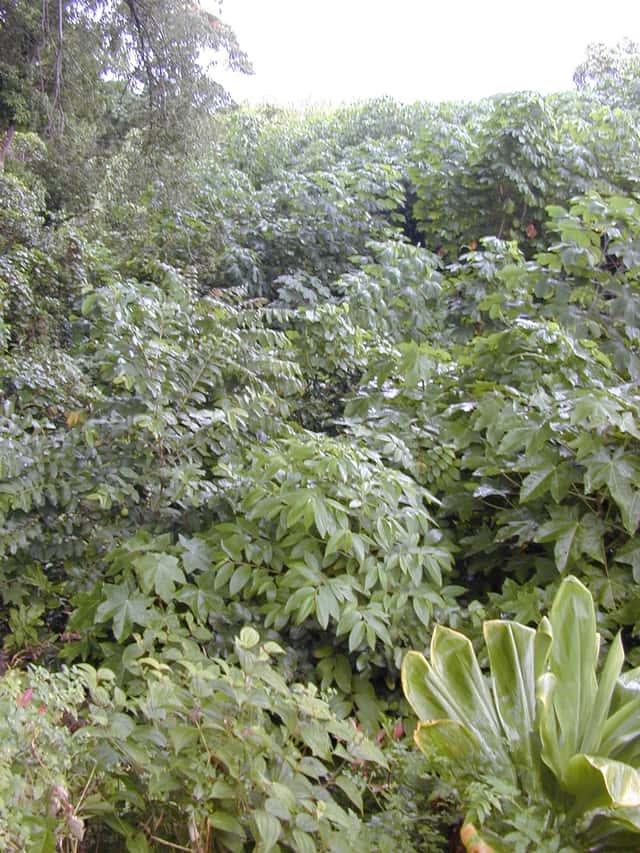
Piperaceae
Matico: Aromatic Plant
Piper aduncum
Prefers full sun to partial shade, fertile and well-drained soil kept slightly moist (not waterlogged), and a warm, humid climate. It is easy to cultivate, grows quickly, and tolerates frequent pruning to manage its size.
Every 6 days
Bright indirect
20° - 30°C
60% - 80%
Categories
What is Matico?
Matico (Piper aduncum) is a easy-care plant from the Piperaceae family. Piper aduncum, popularly known as matico or spiked pepper, is a perennial shrub or small tree native to Central and South America, common in Brazil, where it grows in secondary forests, forest edges, and riverbanks. It grows rapidly, reaching 2 to 8 meters in height, with aromatic, pungent-tasting l...
Matico grows up to 8.0m, watering every 6 days, 20°C – 30°C, 60–80% humidity. It is suitable for indoor environments and safe for pets.
Unlike many tropical plants, Matico tolerates watering mistakes. Best for beginners. Unlike many popular species, Matico is safe to keep around pets. Without adequate drainage, root rot can develop within 12 days.
How to Care for Matico?
TLDR: Matico needs Bright indirect, watering every 6 days, and temperatures between 20-30°C with 60-80% humidity.
How Often Should You Water Matico?
Keep the soil slightly moist, watering every 5-7 days; allow the top layer to dry out between waterings, as matico is sensitive to waterlogging and prone to root rot.
How Much Light Does Matico Need?
Cultivate in full sun to partial shade — the more light, the more vigorous the growth and flowering; in very shady locations, the plant becomes leggy and flowers sparsely.
What Is the Best Soil for Matico?
Use a substrate rich in organic matter, light, and well-drained (potting soil, compost, and sand); avoid waterlogged, compacted, or saline soils.
What Pot Should You Use for Matico?
Prefer large, deep pots with multiple drainage holes, as the plant grows quickly and develops a robust root system; clay pots help prevent excess moisture.
Care Schedule
Misting
Every 7 days
Repot
Every 365 days
What Is Matico and Where Does It Come From?
Piper aduncum, popularly known as matico or spiked pepper, is a perennial shrub or small tree native to Central and South America, common in Brazil, where it grows in secondary forests, forest edges, and riverbanks. It grows rapidly, reaching 2 to 8 meters in height, with aromatic, pungent-tasting leaves and elongated, white to pale-yellow floral spikes that can appear year-round. It is widely valued in traditional Amazonian medicine for its healing, antiseptic, and antimicrobial properties.
How to Propagate Matico?
Cuttings (stem cuttings)
- Maintaining high humidity around the cuttings accelerates rooting
- Avoid strong direct sun until establishment
- 1 Cut semi-hardwood cuttings 15-20 cm long with 2-3 nodes, in spring or early summer
- 2 Remove leaves from the lower half and leave only 2-3 leaves at the top
- 3 Plant in light, moist substrate, keeping it consistently damp
- 4 Keep in a shaded, warm location until rooting
Materials needed:
Seeds
- Germination is naturally favored by passage through birds and bats, which disperse the seeds in nature
- 1 Collect the small, fully ripe black fruits
- 2 Remove the pulp and sow superficially in moist substrate
- 3 Keep in a warm place with indirect light until germination
- 4 Transplant seedlings when they reach a few centimeters
Materials needed:
How Big Does Matico Grow?
TLDR: Matico can reach up to 8.0m tall with Fast growth rate.
Max height
8.0m
Growth rate
Fast
Foliage
Evergreen
Plant Uses
Ornamental
Great for decoration
Medicinal
Medicinal properties
Edible
Can be consumed
Aromatic
Pleasant fragrance
Medicinal Uses
- Healing of wounds and cuts (topical use of macerated leaves)
- Antiseptic and antimicrobial action
- Relief of toothaches and menstrual cramps
- Treatment of diarrhea and gastric problems
- Infusion used for coughs, bronchitis, and respiratory infections
- Compresses for rheumatism and inflammations
Culinary Uses
- Ripe fruits consumed as a pungent spice, similar to pepper
- Young leaves used as an aromatic seasoning in regional dishes
Is your plant showing symptoms?
Click on the symptom to discover possible causes:
What Diseases Commonly Affect Matico?
TLDR: Matico is susceptible to 4 known diseases. Monitor regularly for early detection.
Root Rot
Root rot is a serious fungal disease that affects the root system of plants, causing them to decay and die. It is primarily caused by overwatering, poor drainage, or soil-borne fungi such as Pythium, Phytophthora, Rhizoctonia, and Fusarium. The disease thrives in waterlogged conditions where roots are deprived of oxygen, making them susceptible to fungal infection.
Spider Mites
Spider mites are tiny arachnids (less than 1/20 inch long) related to spiders and ticks that feed on plant sap. They thrive in hot, dry conditions and can cause significant damage to ornamental and vegetable plants. During severe infestations, crop losses can reach 14% or higher as these pests disrupt vital plant processes including photosynthesis, carbon dioxide absorption, and transpiration.
Mealybugs
Mealybugs are small, soft-bodied insects covered with a white, waxy, cottony material. They are common pests of houseplants and outdoor plants in mild climates. These sap-sucking insects feed on plant tissue, causing damage, stunted growth, and can lead to plant death if left untreated. They produce sticky honeydew which attracts sooty mold.
Scale Insects
Scale insects are small sap-sucking pests that appear as brown, shell-like bumps on plant stems and leaves. There are over 25 species, divided into armored (hard) and unarmored (soft) scales. They feed by piercing plant tissue and extracting sap, which weakens the plant and can lead to yellowing, stunted growth, and even death if left untreated. They also excrete honeydew, which attracts ants and promotes sooty mold growth.
Meaning & Symbolism
A symbol of healing in the Amazon rainforest: its leaves have been used for generations by traditional communities to stop bleeding and treat wounds, representing protection and regeneration.
Compare with similar plants
| Attribute | Difficulty | Light | Watering | Pet Safe |
|---|---|---|---|---|
| Field Maple | Easy | Bright indirect | 14d | ✓ |
| Silver Birch | Easy | Direct sun | 14d | ✓ |
| Common Blanketflower | Easy | Direct sun | 10d | ✓ |
| Cushion Bush | Easy | Direct sun | 14d | ✓ |





