Passifloraceae
Maypop (Passiflora incarnata)
Passiflora incarnata
Maypop thrives in full sun with well-draining, slightly acidic soil and regular watering during the growing season. It is a vigorous climber that benefits from sturdy support and occasional pruning, and it tolerates heat and short dry spells once established.
Every 7 days
Direct sun
10° - 32°C
40% - 60%
Categories
What is Maypop?
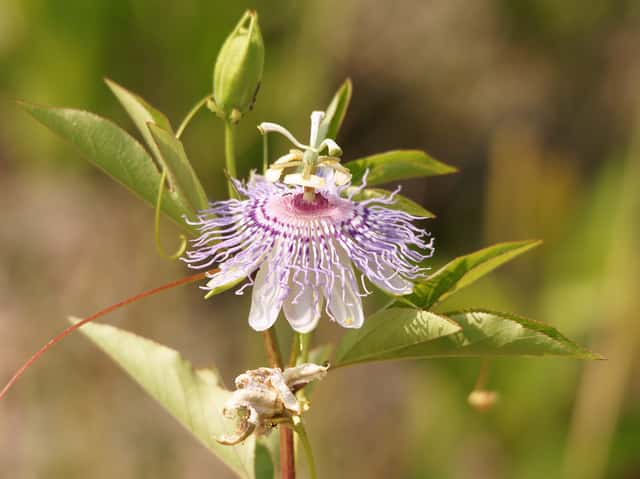
Maypop (Passiflora incarnata) is a medium-care plant from the Passifloraceae family. Passiflora incarnata, commonly known as maypop or purple passionflower, is a fast-growing, herbaceous perennial vine native to the southeastern United States. Its intricate, fringed purple-and-white flowers bloom from early summer through fall, followed by egg-shaped, edible yellow-green fruits that...
Maypop grows up to 8.0m, spread of 300cm, watering every 7 days, 10°C – 32°C, 40–60% humidity. It is suitable for indoor environments and not safe for pets.
Without precautions, ingestion can cause irritation in pets. Keep out of reach of cats and dogs. Without adequate drainage, root rot can develop within 14 days.
How to Care for Maypop?
TLDR: Maypop needs Direct sun, watering every 7 days, and temperatures between 10-32°C with 40-60% humidity.
How Often Should You Water Maypop?
Water deeply about once a week during spring and summer, letting the top few centimeters of soil dry between waterings; reduce watering in fall and stop almost entirely once the vine goes dormant in winter.
How Much Light Does Maypop Need?
Provide at least 6 hours of direct sun daily for the best flowering and fruiting; in very hot climates, light afternoon shade helps prevent leaf scorch.
What Is the Best Soil for Maypop?
Use well-draining sandy or loamy soil with a slightly acidic to neutral pH (6.1-7.5); amend heavy clay with compost and grit to improve drainage.
What Pot Should You Use for Maypop?
A large (30+ cm) container with ample drainage holes, paired with a sturdy trellis, or moved to open ground, since maypop is a vigorous vine that quickly becomes root-bound.
Care Schedule
Fertilize
Every 30 days
Repot
Every 730 days
What Is Maypop and Where Does It Come From?
Passiflora incarnata, commonly known as maypop or purple passionflower, is a fast-growing, herbaceous perennial vine native to the southeastern United States. Its intricate, fringed purple-and-white flowers bloom from early summer through fall, followed by egg-shaped, edible yellow-green fruits that turn yellow when ripe. The vine dies back to its rootstock each winter and re-sprouts vigorously in spring, often naturalizing along fences, trellises, and woodland edges.
How to Propagate Maypop?
Seed Sowing
Fresh seed germinates far more reliably than older seed; expect uneven, sometimes slow germination.
- 1 Nick or soak seeds for 24 hours to soften the hard seed coat
- 2 Sow seeds 1 cm deep in moist seed-starting mix
- 3 Keep at 21-27C in bright, indirect light until germination
- 4 Transplant seedlings outdoors after the last frost
Materials needed:
Softwood Stem Cutting
Rooting hormone and consistent moisture speed up success; avoid direct sun while roots establish.
- 1 Take a 10-15 cm softwood cutting with 2-3 nodes
- 2 Remove lower leaves and dip the cut end in rooting hormone
- 3 Insert into moist, well-draining potting mix
- 4 Keep humid and in bright, indirect light until roots form
Materials needed:
Rhizome Division
Maypop spreads readily by underground rhizomes, so volunteer suckers are the easiest way to propagate.
- 1 Locate a rooted sucker growing from the spreading rhizome
- 2 Dig it up carefully, keeping roots intact
- 3 Replant immediately at the same depth in prepared soil
- 4 Water thoroughly to settle the soil
Materials needed:
How Big Does Maypop Grow?
TLDR: Maypop can reach up to 8.0m tall with Fast growth rate.
Max height
8.0m
Spread
3.0m
Growth rate
Fast
Foliage
Deciduous
Warning: Toxic Plant
This plant can be toxic if ingested. Keep out of reach of:
Plant Uses
Ornamental
Great for decoration
Edible
Can be consumed
Medicinal
Medicinal properties
Medicinal Uses
- Traditionally used as a calming tea or tincture for anxiety, nervous tension, and sleep support
- Modern clinical studies suggest mild anxiolytic and sedative effects comparable to low-dose benzodiazepines in some trials
- Used historically by Native American and later European herbalists as a nervine for restlessness
Culinary Uses
- Ripe fruit pulp eaten fresh, scooped straight from the shell
- Pulp strained and used in juices, syrups, jellies, and sorbets
- Popular flavoring for cocktails and desserts in the southeastern US
Is your plant showing symptoms?
Click on the symptom to discover possible causes:
What Diseases Commonly Affect Maypop?
TLDR: Maypop is susceptible to 9 known diseases. Monitor regularly for early detection.
Fusarium Wilt
Fusarium wilt is a serious fungal disease caused by the soil-borne fungus Fusarium oxysporum. The fungus invades roots and blocks the water-conducting vessels (xylem) of the plant, causing progressive wilting and eventual death. Host-specific forms of the pathogen exist that attack different plant species.
Anthracnose
Anthracnose is a fungal disease caused by fungi in the genus Colletotrichum that affects many plants, including vegetables, fruits, and trees. The disease thrives in cool, wet conditions, causing dark, sunken lesions on leaves, stems, flowers, and fruits.
Mosaic Virus
Mosaic virus is a group of plant viruses that cause mottled, patchy patterns on leaves and can affect a wide variety of plants. The virus creates characteristic yellow, white, and green mosaic patterns, often accompanied by stunted growth and deformed plant parts. This highly contagious disease spreads rapidly through insect vectors and contaminated tools.
Aphids
Aphids are small, soft-bodied, pear-shaped insects (1/16 to 1/8 inch long) that feed by sucking nutrient-rich sap from plants. They reproduce rapidly and can quickly weaken plants, causing distorted growth and transmitting plant viruses. Aphids come in various colors including green, black, red, yellow, brown, and gray. They secrete honeydew, a sticky substance that attracts ants and encourages sooty mold growth.
Meaning & Symbolism
The maypop's elaborate flower has long symbolized the Passion of Christ: the corona filaments recall the crown of thorns, the ten petals and sepals the faithful apostles, and the three stigmas the nails of the crucifixion. More broadly it represents faith, resilience, and inner calm.
Fun Facts
The name maypop comes from the popping sound the ripe, hollow fruit makes when stepped on
Maypop is the state wildflower of Tennessee
Its elaborate flower structure inspired the common name passionflower, tied to Christian symbolism of the crucifixion
It is the northernmost-hardy Passiflora species, surviving winters as far north as USDA zone 6
Frequently asked questions
Is maypop fruit edible?
Is Passiflora incarnata toxic to pets?
Does maypop die in winter?
How is maypop used medicinally?
How fast does maypop grow?
Compare with similar plants
| Attribute | Difficulty | Light | Watering | Pet Safe |
|---|---|---|---|---|
| Dark Fieldcap | Medium | Low light | 2d | ⚠️ |
| Azalea | Medium | Partial shade | 3d | ⚠️ |
| Muriel's Bamboo | Medium | Partial shade | 3d | ✓ |
| Bougainvillea | Medium | Direct sun | 7d | ⚠️ |
Choose & Compare
Sources & References
- Maypop (Passiflora incarnata): Benefits, Uses, Growing Tips - Gardenia
- Passiflora incarnata - NC State Extension Plant Toolbox
- Common Diseases And Pests Of Passion Vine Plants - Gardening Know How
- Passiflora incarnata in Neuropsychiatric Disorders - A Systematic Review
- Maypop, Passiflora incarnata - Growables




