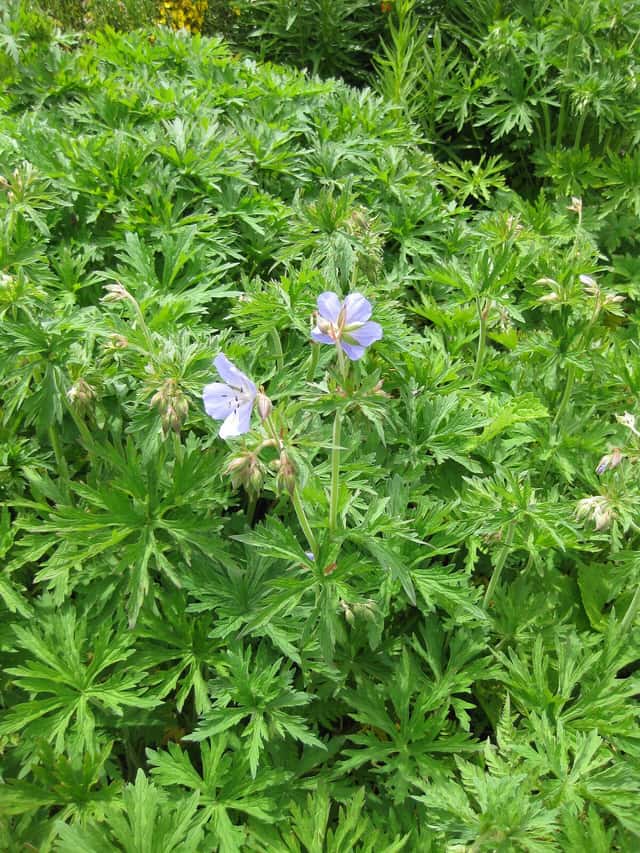
Geraniaceae
Meadow Crane's-bill (Geranium pratense)
Geranium pratense
An easy-going, low-maintenance perennial for full sun to part shade in well-drained soil with moderate watering. Extremely cold hardy and largely free of serious pests or diseases.
Every 5 days
Bright indirect
-20° - 32°C
40% - 70%
Categories
What is Meadow Crane's-bill?
Meadow Crane's-bill (Geranium pratense) is a easy-care plant from the Geraniaceae family. Meadow crane's-bill (Geranium pratense) is a hardy herbaceous perennial native to Europe and Asia, widely grown in borders, cottage gardens, and wildflower meadows. It forms neat clumps of deeply cut foliage and bears large, saucer-shaped blue to violet flowers from late spring through summer.
Meadow Crane's-bill grows up to 90cm, spread of 90cm, watering every 5 days, -20°C – 32°C, 40–70% humidity. It is not suitable for indoor environments and safe for pets.
Unlike many tropical plants, Meadow Crane's-bill tolerates watering mistakes. Best for beginners. Unlike many popular species, Meadow Crane's-bill is safe to keep around pets.
How to Care for Meadow Crane's-bill?
TLDR: Meadow Crane's-bill needs Bright indirect, watering every 5 days, and temperatures between -20-32°C with 40-70% humidity.
How Often Should You Water Meadow Crane's-bill?
Water regularly through spring and summer, keeping soil lightly moist but never waterlogged; cut back watering in autumn and winter as the plant goes dormant.
How Much Light Does Meadow Crane's-bill Need?
Grows best in full sun for the heaviest bloom, but tolerates part shade, especially in hotter climates.
What Is the Best Soil for Meadow Crane's-bill?
Adapts to most garden soils, including sandy, clay, and chalky ground, as long as drainage is good and the soil isn't waterlogged in winter.
What Pot Should You Use for Meadow Crane's-bill?
Not ideal for small pots; best planted directly in garden soil or large containers (12in/30cm+) with good drainage.
What Is Meadow Crane's-bill and Where Does It Come From?
Meadow crane's-bill (Geranium pratense) is a hardy herbaceous perennial native to Europe and Asia, widely grown in borders, cottage gardens, and wildflower meadows. It forms neat clumps of deeply cut foliage and bears large, saucer-shaped blue to violet flowers from late spring through summer.
How to Propagate Meadow Crane's-bill?
Clump division
The fastest and most reliable method; divide every 3-4 years to keep plants vigorous.
- 1 Dig up the clump in early spring
- 2 Split the rootstock into sections, each with healthy roots and shoots
- 3 Replant immediately in well-drained soil
- 4 Water well until established
Materials needed:
Seed sowing
Seeds may benefit from 4 weeks of cold stratification before sowing.
- 1 Sow in trays with light, well-drained compost in early spring
- 2 Keep moist in a bright spot out of direct sun
- 3 Transplant seedlings once they have 2-3 true leaves
Materials needed:
How Big Does Meadow Crane's-bill Grow?
TLDR: Meadow Crane's-bill can reach up to 90cm tall with Medium growth rate.
Max height
90cm
Spread
90cm
Growth rate
Medium
Foliage
Deciduous
Plant Uses
Ornamental
Great for decoration
Ground Cover
Soil coverage
Medicinal Uses
- Roots traditionally used as an astringent in European folk medicine
Is your plant showing symptoms?
Click on the symptom to discover possible causes:
What Diseases Commonly Affect Meadow Crane's-bill?
TLDR: Meadow Crane's-bill is susceptible to 5 known diseases. Monitor regularly for early detection.
Powdery Mildew
Powdery mildew is a common fungal disease caused by various fungi species including Erysiphe, Podosphaera, Oïdium, and Leveillula. It affects over 10,000 plant species worldwide. The disease thrives in warm, dry climates with high humidity and appears as a distinctive white powdery coating on plant surfaces.
Root Rot
Root rot is a serious fungal disease that affects the root system of plants, causing them to decay and die. It is primarily caused by overwatering, poor drainage, or soil-borne fungi such as Pythium, Phytophthora, Rhizoctonia, and Fusarium. The disease thrives in waterlogged conditions where roots are deprived of oxygen, making them susceptible to fungal infection.
Downy Mildew
Downy mildew is a fungal-like disease caused by oomycetes (water molds) that thrives in cool, wet conditions. It affects a wide range of plants, causing yellowing leaves with fuzzy white-gray growth underneath, leading to defoliation and reduced yields if left untreated.
Aphids
Aphids are small, soft-bodied, pear-shaped insects (1/16 to 1/8 inch long) that feed by sucking nutrient-rich sap from plants. They reproduce rapidly and can quickly weaken plants, causing distorted growth and transmitting plant viruses. Aphids come in various colors including green, black, red, yellow, brown, and gray. They secrete honeydew, a sticky substance that attracts ants and encourages sooty mold growth.
Meaning & Symbolism
Associated with friendship, healing, and gentleness in European folklore; its clear blue flowers earned it the old name Gratia Dei ("Grace of God").
Fun Facts
Its seed capsules snap open explosively in a stork's-bill shape, which is where the "crane's-bill" name comes from
It is extremely cold hardy, tolerating temperatures down to -20°C (-4°F)
Unlike common potted "geraniums" (Pelargonium), meadow crane's-bill is not toxic to pets
Frequently asked questions
Is meadow crane's-bill toxic to cats and dogs?
How often should I water meadow crane's-bill?
Does meadow crane's-bill need full sun?
How do you propagate meadow crane's-bill?
Compare with similar plants
| Attribute | Difficulty | Light | Watering | Pet Safe |
|---|---|---|---|---|
| Field Maple | Easy | Bright indirect | 14d | ✓ |
| Silver Birch | Easy | Direct sun | 14d | ✓ |
| Common Blanketflower | Easy | Direct sun | 10d | ✓ |
| Cushion Bush | Easy | Direct sun | 14d | ✓ |





