Selaginellaceae
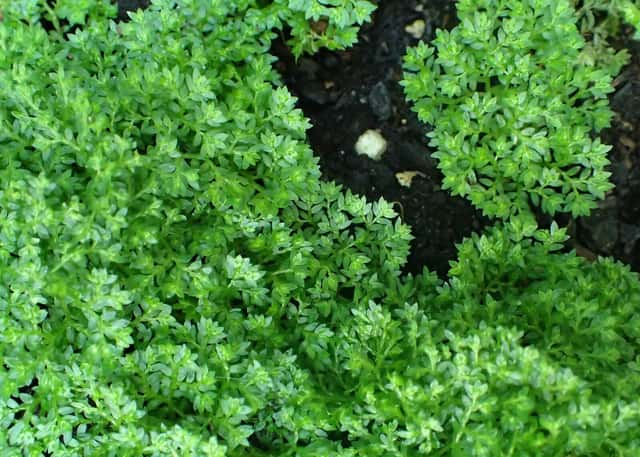
Meadow spikemoss (Selaginella apoda)
Selaginella apoda
Ideal for a closed terrarium: it wants shade or indirect light, constantly moist mix and humid air. Outside a terrarium it dries out fast, so never let it go dry.
Every 3 days
Low light
15° - 30°C
% - %
Categories
What is Meadow spikemoss?
Meadow spikemoss (Selaginella apoda) is a medium-care plant from the Selaginellaceae family. Selaginella apoda is a small creeping plant that looks like moss but is a lycophyte, a distant relative of ferns. It is native to the eastern United States, from Maine to the Gulf, and reaches through Mexico to Guatemala. It forms soft, light green mats, with branches no more than 15 cm long that sp...
Meadow spikemoss grows up to 15cm, watering every 3 days, 15°C – 30°C. It is suitable for indoor environments and safe for pets.
Unlike many popular species, Meadow spikemoss is safe to keep around pets. Without adequate drainage, root rot can develop within 7 days.
How to Care for Meadow spikemoss?
TLDR: Meadow spikemoss needs Low light, watering every 3 days, and temperatures between 15-30°C with 40-70% humidity.
How Often Should You Water Meadow spikemoss?
Keep the mix evenly moist but not soggy. Water as soon as the top layer starts to dry, every 2 or 3 days outside a terrarium. It does not tolerate drying out.
How Much Light Does Meadow spikemoss Need?
Indirect light or part shade. Direct sun scorches and dries the fronds.
What Is the Best Soil for Meadow spikemoss?
In a pot, use a moisture-holding mix such as fern compost with peat or coir. In a terrarium, a mix that stays moist but drains well.
What Pot Should You Use for Meadow spikemoss?
A closed terrarium or a shallow plastic pot, which holds moisture better than terracotta.
What Is Meadow spikemoss and Where Does It Come From?
Selaginella apoda is a small creeping plant that looks like moss but is a lycophyte, a distant relative of ferns. It is native to the eastern United States, from Maine to the Gulf, and reaches through Mexico to Guatemala. It forms soft, light green mats, with branches no more than 15 cm long that sprawl along the ground. The leaves are tiny, scale-like and toothed along the edges. It has no flowers: it reproduces by spores borne in small cones at the branch tips. In the wild it grows in damp, shady places such as wet meadows, stream and lake shores, swamps and open woods. Its life cycle is one of the shortest in the genus, as little as about 85 days, which makes it a model plant for research. At home it is a popular terrarium plant.
How to Propagate Meadow spikemoss?
Division
Pieces of stem laid on moist mix inside a terrarium also root.
- 1 Gently lift a piece of the mat with roots attached
- 2 Set it on moist mix
- 3 Press lightly so it makes contact
- 4 Keep it moist and humid until it settles
Materials needed:
Stem cutting
High air humidity is what makes the cuttings take.
- 1 Snip branch tips 3 to 5 cm long
- 2 Lay them flat on moist mix
- 3 Cover the container to hold humidity
- 4 Wait for roots to form at the nodes
Materials needed:
How Big Does Meadow spikemoss Grow?
TLDR: Meadow spikemoss can reach up to 15cm tall with Medium growth rate.
Max height
15cm
Plant Uses
Ornamental
Great for decoration
Ground Cover
Soil coverage
Is your plant showing symptoms?
Click on the symptom to discover possible causes:
What Diseases Commonly Affect Meadow spikemoss?
TLDR: Meadow spikemoss is susceptible to 3 known diseases. Monitor regularly for early detection.
Root Rot
Root rot is a serious fungal disease that affects the root system of plants, causing them to decay and die. It is primarily caused by overwatering, poor drainage, or soil-borne fungi such as Pythium, Phytophthora, Rhizoctonia, and Fusarium. The disease thrives in waterlogged conditions where roots are deprived of oxygen, making them susceptible to fungal infection.
Low Humidity Stress
Low humidity stress occurs when indoor air becomes too dry, causing plants to lose moisture faster than they can absorb it through their roots. This is especially common during winter heating periods, near radiators and heating vents, or in air-conditioned spaces. Tropical plants are particularly susceptible to low humidity damage.
Fungus Gnats
Fungus gnats are small, gray-to-black mosquito-like insects (1/8 to 1/10 inches long) commonly found in indoor plants. Adult gnats are mostly a nuisance, but their larvae feed on plant roots and organic matter in soil, potentially causing serious damage to young or vulnerable plants. The larvae are translucent white with distinctive black heads and can leave slime trails on the soil surface in heavy infestations.
Fun Facts
Apoda comes from Greek and means without a foot
It can complete its life cycle in about 85 days
Scientists use it as a model plant in research
Frequently asked questions
Is meadow spikemoss a moss?
Why did my spikemoss dry up?
Does it need sun?
Does it flower?
Compare with similar plants
| Attribute | Difficulty | Light | Watering | Pet Safe |
|---|---|---|---|---|
| Dark Fieldcap | Medium | Low light | 2d | ⚠️ |
| Azalea | Medium | Partial shade | 3d | ⚠️ |
| Muriel's Bamboo | Medium | Partial shade | 3d | ✓ |
| Bougainvillea | Medium | Direct sun | 7d | ⚠️ |




