Rosaceae
Meadowsweet: Aromatic Plant
Filipendula ulmaria
Meadowsweet thrives best in moist to wet soil and tolerates both full sun and light shade. It requires consistent access to moisture and nutrient-rich, humus-heavy soil to bloom well throughout the summer.
Every 4 days
Partial shade
-30° - 30°C
60% - 90%
Categories
What is Meadowsweet?
Meadowsweet (Filipendula ulmaria) is a medium-care plant from the Rosaceae family. Meadowsweet (Filipendula ulmaria) is a perennial herb in the rose family (Rosaceae), native to Europe and Western Asia. The plant typically grows in damp meadows, marshes, and along riverbanks, reaching heights of 3–5 feet with sturdy, furrowed stems. The leaves are dark green and serrated on the up...
Meadowsweet grows up to 1.5m, spread of 60cm, watering every 4 days, -30°C – 30°C, 60–90% humidity. It is not suitable for indoor environments and not safe for pets.
Without precautions, ingestion can cause irritation in pets. Keep out of reach of cats and dogs.
How to Care for Meadowsweet?
TLDR: Meadowsweet needs Partial shade, watering every 4 days, and temperatures between -30-30°C with 60-90% humidity.
How Often Should You Water Meadowsweet?
Keep the soil constantly moist—meadowsweet does not tolerate drying out. Water generously, especially during hot spells, and never let the soil dry out completely between waterings.
How Much Light Does Meadowsweet Need?
Prefers full sun to partial shade. In full sun, it requires extra soil moisture to thrive optimally.
What Is the Best Soil for Meadowsweet?
Use nutrient-rich, moisture-retentive soil with a neutral to slightly alkaline pH. The plant also thrives in heavy clay soil as long as it does not remain waterlogged for extended periods.
What Pot Should You Use for Meadowsweet?
Best suited for open ground in damp borders or near pond edges; poorly suited as an indoor houseplant. If grown in containers, choose a large pot and ensure consistent moisture, preferably using a saucer to hold water.
Care Schedule
Fertilize
Every 90 days
What Is Meadowsweet and Where Does It Come From?
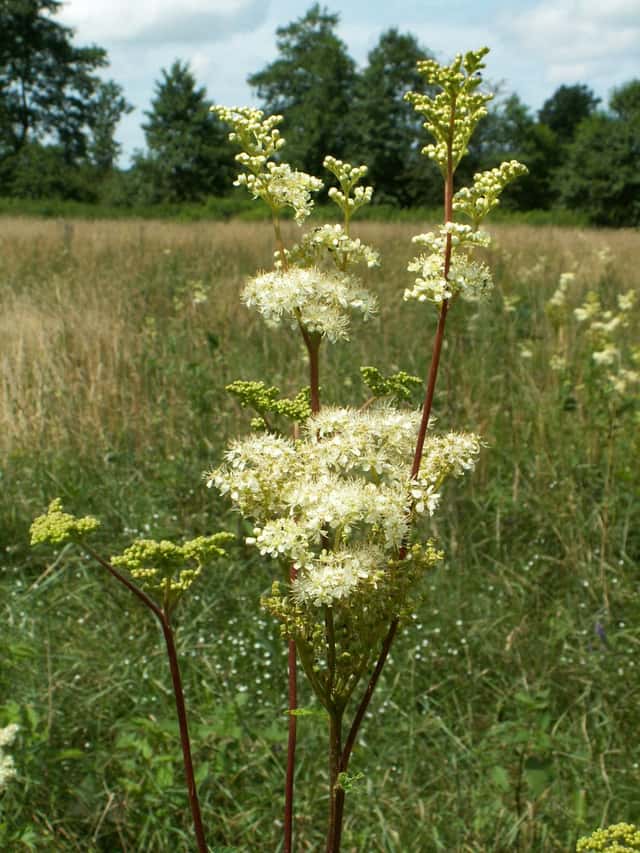
Meadowsweet (Filipendula ulmaria) is a perennial herb in the rose family (Rosaceae), native to Europe and Western Asia. The plant typically grows in damp meadows, marshes, and along riverbanks, reaching heights of 3–5 feet with sturdy, furrowed stems. The leaves are dark green and serrated on the upper side, while the underside is whitish and downy. In summer and early fall, it bears dense clusters of small, creamy-white flowers with a strong, sweet fragrance reminiscent of almonds and antiseptic balsam. Meadowsweet is historically significant as the source of salicylic acid, the precursor to acetylsalicylic acid (aspirin), which was developed by Bayer in 1899.
How to Propagate Meadowsweet?
How Big Does Meadowsweet Grow?
TLDR: Meadowsweet can reach up to 1.5m tall with Fast growth rate.
Max height
1.5m
Spread
60cm
Growth rate
Fast
Foliage
Deciduous
Warning: Toxic Plant
This plant can be toxic if ingested. Keep out of reach of:
Plant Uses
Ornamental
Great for decoration
Medicinal
Medicinal properties
Aromatic
Pleasant fragrance
Edible
Can be consumed
Medicinal Uses
- Traditionally used for colds, fevers, and mild inflammation due to its salicylate content
- Source of salicylic acid, which Bayer used in 1899 to develop acetylsalicylic acid (aspirin)
- Used in folk medicine for rheumatic complaints and as a diuretic
- Leaves and flowers used as a tea for indigestion and acid reflux
- Should be avoided by individuals with aspirin allergies or asthma, and by children under 12, due to salicylate content and the risk of Reye's syndrome
Culinary Uses
- Flowers provide a mild almond flavor to desserts, jams, and syrups
- Traditionally used to flavor mead, beer, and wine in Scandinavia
- Young leaves can be used in soups and salads
- Dried flowers are used for herbal tea
Is your plant showing symptoms?
Click on the symptom to discover possible causes:
What Diseases Commonly Affect Meadowsweet?
TLDR: Meadowsweet is susceptible to 3 known diseases. Monitor regularly for early detection.
Powdery Mildew
Powdery mildew is a common fungal disease caused by various fungi species including Erysiphe, Podosphaera, Oïdium, and Leveillula. It affects over 10,000 plant species worldwide. The disease thrives in warm, dry climates with high humidity and appears as a distinctive white powdery coating on plant surfaces.
Leaf Spot
Leaf spot is a common fungal disease caused by various pathogens including Alternaria, Ascochyta, Colletotrichum, Septoria, and Venturia. It primarily affects leaves, causing discolored spots that can lead to premature leaf drop if left untreated.
Aphids
Aphids are small, soft-bodied, pear-shaped insects (1/16 to 1/8 inch long) that feed by sucking nutrient-rich sap from plants. They reproduce rapidly and can quickly weaken plants, causing distorted growth and transmitting plant viruses. Aphids come in various colors including green, black, red, yellow, brown, and gray. They secrete honeydew, a sticky substance that attracts ants and encourages sooty mold growth.
Meaning & Symbolism
Meadowsweet was one of the three most sacred plants of the Druids (along with vervain and water mint) and was traditionally strewn on wedding floors—hence the name 'bridewort.' It symbolizes love, peace, and happiness.
Compare with similar plants
| Attribute | Difficulty | Light | Watering | Pet Safe |
|---|---|---|---|---|
| Dark Fieldcap | Medium | Low light | 2d | ⚠️ |
| Azalea | Medium | Partial shade | 3d | ⚠️ |
| Muriel's Bamboo | Medium | Partial shade | 3d | ✓ |
| Bougainvillea | Medium | Direct sun | 7d | ⚠️ |




