Melastomataceae
Miconia (genus Miconia)
Miconia
Garden and restoration plants rather than pot plants. They want sun or part shade, moist soil rich in organic matter, and regular watering while young. Pioneer species grow well in open ground and draw many birds.
Every 7 days
Bright indirect
° - °C
% - %
Categories
What is Miconia?
Miconia (Miconia) is a medium-care plant from the Melastomataceae family. Miconia is a large genus in the family Melastomataceae, with about 1,900 species across the warm parts of the Americas, from Mexico to Argentina. They are shrubs and small to medium trees up to 15 metres tall. The leaves are opposite and have 3 to 5 veins that run from the base to the tip, a feature...
Miconia grows up to 15.0m, watering every 7 days. It is not suitable for indoor environments and safe for pets.
Unlike many popular species, Miconia is safe to keep around pets.
How to Care for Miconia?
TLDR: Miconia needs Bright indirect, watering every 7 days, and temperatures between 15-30°C with 40-70% humidity.
How Often Should You Water Miconia?
Water once a week, more in hot weather, while the young plant establishes. Once settled, rain is usually enough; water during long dry spells.
How Much Light Does Miconia Need?
Full sun or part shade. Pioneer species prefer open sun; forest-interior species accept more shade.
What Is the Best Soil for Miconia?
Moist woodland soil with plenty of organic matter. Some species, such as Miconia ligustroides, tolerate waterlogged ground.
What Is Miconia and Where Does It Come From?
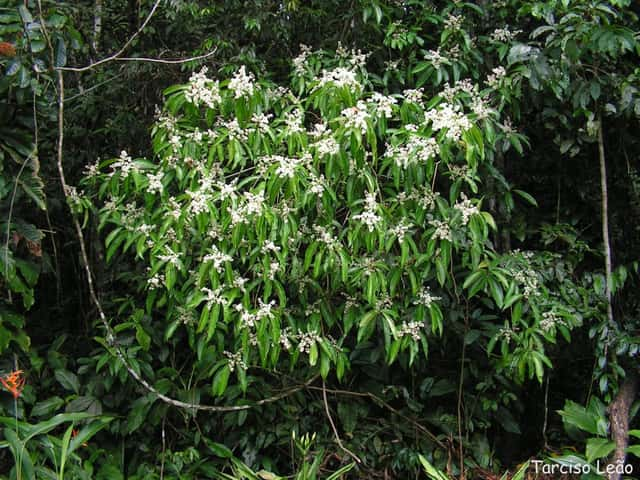
Miconia is a large genus in the family Melastomataceae, with about 1,900 species across the warm parts of the Americas, from Mexico to Argentina. They are shrubs and small to medium trees up to 15 metres tall. The leaves are opposite and have 3 to 5 veins that run from the base to the tip, a feature easy to spot across the whole family. The small white or pinkish flowers grow in clusters at the ends of the branches. The fruits are small purple, black or bluish berries that many birds eat, spreading the seeds. Many species are pioneers, among the first trees to grow in cleared land, forest edges and open ground. One species, Miconia calvescens, has become a serious invasive in Hawaii and Tahiti.
How to Propagate Miconia?
Seed
Growing from seed is difficult. For many species, the most practical way is to transplant seedlings that come up on their own under mature plants.
- 1 Collect fully ripe purple or black fruits
- 2 Mash and rinse the pulp to free the very small seeds
- 3 Scatter them on fine, moist mix without covering
- 4 Keep in bright light and moist until they sprout
Materials needed:
How Big Does Miconia Grow?
TLDR: Miconia can reach up to 15.0m tall with Medium growth rate.
Max height
15.0m
Foliage
Evergreen
Plant Uses
Ornamental
Great for decoration
Medicinal
Medicinal properties
Medicinal Uses
- Several species are used in folk medicine as astringents and anti-inflammatories
Is your plant showing symptoms?
Click on the symptom to discover possible causes:
What Diseases Commonly Affect Miconia?
TLDR: Miconia is susceptible to 1 known diseases. Monitor regularly for early detection.
Fun Facts
It is one of the largest genera of flowering plants in the Americas, with close to 1,900 species.
Miconia calvescens, with leaves purple underneath, is nicknamed the green cancer of Tahiti.
The name honours the Catalan physician and botanist Francesc Micó.
Frequently asked questions
Can I grow Miconia in a pot?
How do I recognise a Miconia?
Why is Miconia calvescens a problem?
Are the berries edible?
Compare with similar plants
| Attribute | Difficulty | Light | Watering | Pet Safe |
|---|---|---|---|---|
| Dark Fieldcap | Medium | Low light | 2d | ⚠️ |
| Azalea | Medium | Partial shade | 3d | ⚠️ |
| Muriel's Bamboo | Medium | Partial shade | 3d | ✓ |
| Bougainvillea | Medium | Direct sun | 7d | ⚠️ |
Choose & Compare
Sources & References
- Wikipedia - Miconia
- Crónica del Quindío - El nigüito llorón (Miconia pustulata)
- ESALQ/USP - Miconia cinnamomifolia (jacatirão-açu)
- Flora IPE - Miconia (jacatirão)
- UFU - Frugivoria por aves em cinco espécies de Miconia no Cerrado
- Embrapa - Espécies Arbóreas Brasileiras vol. 3: Pixiricão (Miconia cabucu)