Apiaceae
Micro Sword: Ground Cover Plant
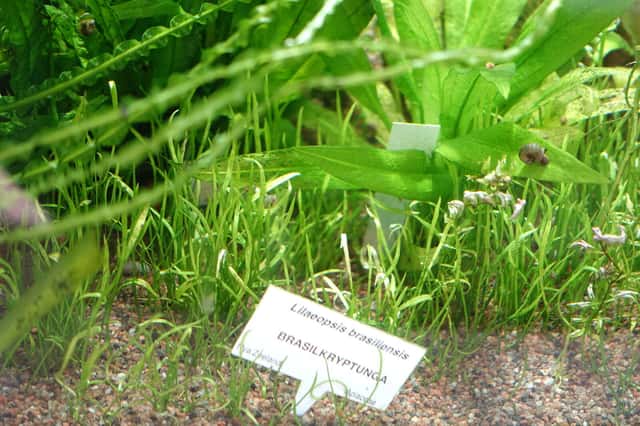
Lilaeopsis brasiliensis
Lilaeopsis brasiliensis requires intensive lighting (30-50 PAR) to form a dense carpet. A water temperature between 15-28°C (59-82°F), a slightly acidic to neutral pH (6.5-7.5), and a nutrient-rich substrate of fine sand or gravel are required. Dose liquid fertilizer regularly. CO2 supplementation significantly accelerates growth. It is relatively demanding and therefore suitable for experienced aquarists.
Every 7-10 days
Bright indirect
15° - 28°C
% - %
Categories
What is Micro Sword?
Micro Sword (Lilaeopsis brasiliensis) is a medium-care plant from the Apiaceae family. Lilaeopsis brasiliensis is a popular aquatic groundcover plant from the Apiaceae family, native to South American waters. It forms dense, low carpets with fine, grass-like leaves and reaches a maximum height of about 7 cm. The plant spreads via runners (stolons) and is excellent for foreground plant...
Micro Sword grows up to 7cm, 15°C – 28°C. It is suitable for indoor environments and safe for pets.
Unlike many popular species, Micro Sword is safe to keep around pets.
How to Care for Micro Sword?
TLDR: Micro Sword needs Bright indirect, watering every 7 days, and temperatures between 15-28°C with 40-70% humidity.
How Often Should You Water Micro Sword?
As an aquatic plant, it does not require watering in the traditional sense. However, water quality must remain stable: pH 6.5-7.5, stable temperature 15-28°C (59-82°F). Regular water changes support healthy growth.
How Much Light Does Micro Sword Need?
Intense lighting is essential. LEDs with ~6500 K and at least 30-50 PAR at the substrate level are ideal. Provide 8-10 hours of light per day. If light is insufficient, the plant will grow vertically instead of spreading out.
What Is the Best Soil for Micro Sword?
A fine-grained, nutrient-rich substrate such as sand or aquarium gravel is important. Root tabs or substrate fertilizers improve the nutrient supply.
What Pot Should You Use for Micro Sword?
Aquarium of at least 20 liters (approx. 5 gallons); flat substrate preferred. Plant directly into the aquarium floor; ideal as a foreground element in aquascaping.
Care Schedule
Fertilize
Every 7 days
What Is Micro Sword and Where Does It Come From?
Lilaeopsis brasiliensis is a popular aquatic groundcover plant from the Apiaceae family, native to South American waters. It forms dense, low carpets with fine, grass-like leaves and reaches a maximum height of about 7 cm. The plant spreads via runners (stolons) and is excellent for foreground planting. It is fully aquatic and is cultivated permanently submerged.
How Big Does Micro Sword Grow?
TLDR: Micro Sword can reach up to 7cm tall with Slow growth rate.
Max height
7cm
Growth rate
Slow
Foliage
Evergreen
Plant Uses
Ornamental
Great for decoration
Ground Cover
Soil coverage
Is your plant showing symptoms?
Click on the symptom to discover possible causes:
What Diseases Commonly Affect Micro Sword?
TLDR: Micro Sword is susceptible to 3 known diseases. Monitor regularly for early detection.
Nutrient Deficiency
Nutrient deficiency occurs when a plant cannot access one or more essential mineral elements in sufficient quantities for healthy growth. Plants require 17 essential nutrients: macronutrients (N, P, K, Ca, Mg, S) and micronutrients (Fe, Zn, Mn, Cu, B, Mo, Cl). Each plays a unique role in metabolism, structure, and reproduction. Deficiencies arise from depleted soils, incorrect pH blocking uptake, poor watering practices leaching nutrients, root damage, or imbalanced fertilization. Understanding whether a nutrient is mobile or immobile determines where symptoms first appear: mobile nutrients (N, P, K, Mg) show symptoms on older leaves first, while immobile nutrients (Ca, Fe, Zn, Cu, B) show symptoms on new growth first.
Iron Deficiency
Iron deficiency, commonly known as iron chlorosis, is a nutrient deficiency disorder where plants cannot access sufficient iron from the soil. While iron is typically abundant in soil, various soil conditions can limit plant uptake, resulting in characteristic yellowing of leaves while veins remain green.
Root Rot
Root rot is a serious fungal disease that affects the root system of plants, causing them to decay and die. It is primarily caused by overwatering, poor drainage, or soil-borne fungi such as Pythium, Phytophthora, Rhizoctonia, and Fusarium. The disease thrives in waterlogged conditions where roots are deprived of oxygen, making them susceptible to fungal infection.
Compare with similar plants
| Attribute | Difficulty | Light | Watering | Pet Safe |
|---|---|---|---|---|
| Dark Fieldcap | Medium | Low light | 2d | ⚠️ |
| Azalea | Medium | Partial shade | 3d | ⚠️ |
| Muriel's Bamboo | Medium | Partial shade | 3d | ✓ |
| Bougainvillea | Medium | Direct sun | 7d | ⚠️ |




