Asteraceae
Milk thistle: Edible Plant
Silybum marianum
Milk thistle requires full sun and well-drained soil; it can handle the rest on its own. There is no need for fertilization or pruning. It is mostly grown as an annual from seeds sown directly outdoors. To prevent it from spreading throughout the garden, remove spent flower heads before the downy fluff appears. Always wear thick gloves when handling this plant.
Every 10 days
Direct sun
-10° - °C
% - %
Categories
What is Milk thistle?
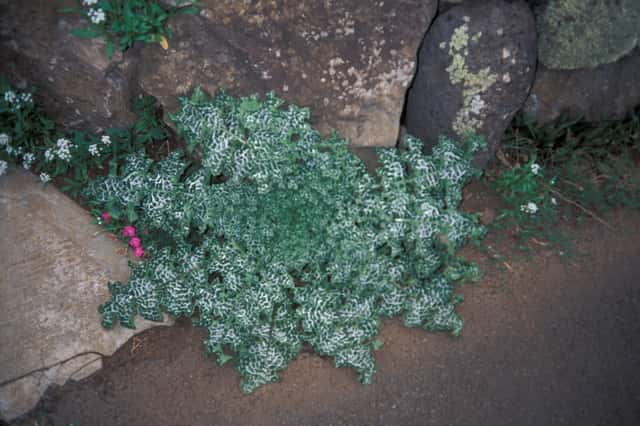
Milk thistle (Silybum marianum) is a easy-care plant from the Asteraceae family. Milk thistle is an annual or biennial herb from the Asteraceae family, native to the Mediterranean region and extending to Central Asia. In its first year, it forms a basal rosette of large, glossy leaves characterized by white veins and spiny margins. It then sends up a stem 1 to 2 meters tall topp...
Milk thistle grows up to 2.0m, spread of 100cm, watering every 10 days. It is not suitable for indoor environments and safe for pets.
Unlike many tropical plants, Milk thistle tolerates watering mistakes. Best for beginners. Unlike many popular species, Milk thistle is safe to keep around pets.
How to Care for Milk thistle?
TLDR: Milk thistle needs Direct sun, watering every 10 days, and temperatures between -10-30°C with 40-70% humidity.
How Often Should You Water Milk thistle?
Water only during germination and the first few weeks of growth. Mature plants are drought-tolerant and only require watering during prolonged dry spells, approximately once every 10 days. Waterlogged soil in winter is more harmful to the plant than dry conditions.
How Much Light Does Milk thistle Need?
Full sun, ideally in a south- or west-facing location. It will not grow in the shade.
What Is the Best Soil for Milk thistle?
Poor to moderately fertile, well-drained loamy or sandy soil, ranging from neutral to slightly alkaline (pH approx. 5.5 to 7.6). In nitrogen-rich soils, nitrates can accumulate in the leaves.
What Pot Should You Use for Milk thistle?
It grows best directly in garden soil. If using a container, choose a very large and deep pot with drainage holes, as the plant develops a long taproot and can reach a width of up to 1 meter.
What Is Milk thistle and Where Does It Come From?
Milk thistle is an annual or biennial herb from the Asteraceae family, native to the Mediterranean region and extending to Central Asia. In its first year, it forms a basal rosette of large, glossy leaves characterized by white veins and spiny margins. It then sends up a stem 1 to 2 meters tall topped with purple flower heads that bloom in summer and are surrounded by hard spines. The seeds, equipped with white downy tufts, are dispersed by the wind, allowing the plant to self-seed easily and often behave as a weed outside its native range.
How to Propagate Milk thistle?
Seed Sowing
Milk thistle does not tolerate transplanting well due to its taproot, so sow it directly in its permanent location. The plant self-seeds easily.
- 1 Choose a sunny spot with well-drained soil
- 2 Sow seeds directly outdoors at a depth of 1 to 1.5 cm, in either spring or fall
- 3 Keep the soil slightly moist until the seeds germinate
- 4 Thin the plants to a distance of about 25 to 40 cm apart
Materials needed:
How Big Does Milk thistle Grow?
TLDR: Milk thistle can reach up to 2.0m tall with Fast growth rate.
Max height
2.0m
Spread
1.0m
Growth rate
Fast
Foliage
Deciduous
Plant Uses
Medicinal
Medicinal properties
Edible
Can be consumed
Ornamental
Great for decoration
Medicinal Uses
- Seed extract (silymarin) is used for liver support; recognized by the EMA as a well-established use
- Traditionally used for digestive disorders
- Consult a doctor before use: it may cause allergic reactions and digestive issues
Culinary Uses
- Young leaves with spines removed can be eaten raw in salads or cooked like spinach
- Peeled young stems can be prepared like asparagus
- Flower buds can be boiled and eaten like artichokes
- Roots can be eaten raw or cooked; roasted seeds serve as a coffee substitute
Is your plant showing symptoms?
Click on the symptom to discover possible causes:
What Diseases Commonly Affect Milk thistle?
TLDR: Milk thistle is susceptible to 6 known diseases. Monitor regularly for early detection.
Aphids
Aphids are small, soft-bodied, pear-shaped insects (1/16 to 1/8 inch long) that feed by sucking nutrient-rich sap from plants. They reproduce rapidly and can quickly weaken plants, causing distorted growth and transmitting plant viruses. Aphids come in various colors including green, black, red, yellow, brown, and gray. They secrete honeydew, a sticky substance that attracts ants and encourages sooty mold growth.
Curculionidae
Curculionidae (weevils) are small beetles that feed on plants. Adults chew leaf margins, leaving crescent-shaped notches, primarily at night. The larvae live in the substrate and consume roots, causing decline, yellowing, and wilting even when the substrate is moist, and in severe cases, plant death. They frequently affect ornamentals and garden plants such as strawberries, citrus, roses, hydrangeas, azaleas, blueberries, begonias, and many potted plants.
Powdery Mildew
Powdery mildew is a common fungal disease caused by various fungi species including Erysiphe, Podosphaera, Oïdium, and Leveillula. It affects over 10,000 plant species worldwide. The disease thrives in warm, dry climates with high humidity and appears as a distinctive white powdery coating on plant surfaces.
Gray Mold (Botrytis Blight)
Gray mold, caused by the fungus Botrytis cinerea, is a widespread necrotrophic pathogen affecting over 1,400 plant species. It thrives in cool, humid conditions and attacks weakened or aging plant tissues, causing soft rot and characteristic gray fuzzy growth.
Meaning & Symbolism
According to legend, the white veins on the leaves were created by drops of the Virgin Mary's milk. This is the origin of both the name 'Mary thistle' and 'milk thistle'.
Compare with similar plants
| Attribute | Difficulty | Light | Watering | Pet Safe |
|---|---|---|---|---|
| Field Maple | Easy | Bright indirect | 14d | ✓ |
| Iberian Houseleek | Easy | Direct sun | 14d | ✓ |
| Silver Birch | Easy | Direct sun | 14d | ✓ |
| Common Blanketflower | Easy | Direct sun | 10d | ✓ |





