Cistaceae
Montpellier rockrose: Ground Cover Plant
Cistus monspeliensis
A nearly indestructible plant in Mediterranean climates: full sun, poor and well-drained soil, and rare watering. Its only true weakness is excess water, which causes root rot. Light pruning after flowering is sufficient to maintain a compact shape.
Every 14 days
Direct sun
-10° - 40°C
20% - 60%
Categories
What is Montpellier rockrose?
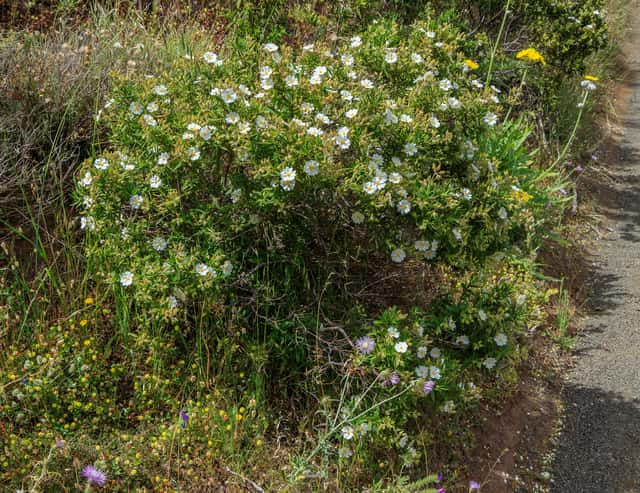
Montpellier rockrose (Cistus monspeliensis) is a easy-care plant from the Cistaceae family. The Montpellier rockrose is a low, bushy, evergreen Mediterranean shrub (50 to 120 cm) typical of garrigue and maquis landscapes. Its lanceolate, sticky, and highly fragrant leaves release a characteristic resinous scent in hot weather. From May to June, it is covered in numerous small white flowers...
Montpellier rockrose grows up to 1.2m, spread of 100cm, watering every 14 days, -10°C – 40°C, 20–60% humidity. It is not suitable for indoor environments and safe for pets.
Unlike many tropical plants, Montpellier rockrose tolerates watering mistakes. Best for beginners. Unlike many popular species, Montpellier rockrose is safe to keep around pets.
How to Care for Montpellier rockrose?
TLDR: Montpellier rockrose needs Direct sun, watering every 14 days, and temperatures between -10-40°C with 20-60% humidity.
How Often Should You Water Montpellier rockrose?
Water moderately during establishment, then let the rain do the work: a well-established rockrose tolerates long periods of drought and primarily fears excess water, which promotes root rot. In pots, allow the substrate to dry out completely between waterings.
How Much Light Does Montpellier rockrose Need?
Plant in full sun, an essential exposure for generous flowering; it tolerates light partial shade but will bloom less abundantly. Protect it from cold, drying winds.
What Is the Best Soil for Montpellier rockrose?
It requires poor, dry, and above all, perfectly draining soil: sandy, stony, or limestone soils are ideal. Excessive organic matter or overly rich soil makes it more fragile and susceptible to disease. In pots, add gravel or coarse sand to the bottom to prevent any water stagnation.
What Pot Should You Use for Montpellier rockrose?
Prefer an unglazed terracotta pot, which allows the roots to breathe and prevents stagnant moisture; ensure large drainage holes and add a layer of drainage gravel.
Care Schedule
Fertilize
Every 365 days
What Is Montpellier rockrose and Where Does It Come From?
The Montpellier rockrose is a low, bushy, evergreen Mediterranean shrub (50 to 120 cm) typical of garrigue and maquis landscapes. Its lanceolate, sticky, and highly fragrant leaves release a characteristic resinous scent in hot weather. From May to June, it is covered in numerous small white flowers with yellow centers, which are very attractive to bees. Extremely hardy and drought-tolerant, it readily colonizes poor, calcareous, or siliceous soils and plays an important role in preventing soil erosion in Mediterranean areas degraded by fire.
How Big Does Montpellier rockrose Grow?
TLDR: Montpellier rockrose can reach up to 1.2m tall with Medium growth rate.
Max height
1.2m
Spread
1.0m
Growth rate
Medium
Foliage
Evergreen
Plant Uses
Ornamental
Great for decoration
Aromatic
Pleasant fragrance
Ground Cover
Soil coverage
Medicinal
Medicinal properties
Medicinal Uses
- Flowers and leaves traditionally used externally as a depurative on wounds and bites
- Resin and leaf extracts studied for their antibacterial and antioxidant properties
Is your plant showing symptoms?
Click on the symptom to discover possible causes:
What Diseases Commonly Affect Montpellier rockrose?
TLDR: Montpellier rockrose is susceptible to 5 known diseases. Monitor regularly for early detection.
Aphids
Aphids are small, soft-bodied, pear-shaped insects (1/16 to 1/8 inch long) that feed by sucking nutrient-rich sap from plants. They reproduce rapidly and can quickly weaken plants, causing distorted growth and transmitting plant viruses. Aphids come in various colors including green, black, red, yellow, brown, and gray. They secrete honeydew, a sticky substance that attracts ants and encourages sooty mold growth.
Mealybugs
Mealybugs are small, soft-bodied insects covered with a white, waxy, cottony material. They are common pests of houseplants and outdoor plants in mild climates. These sap-sucking insects feed on plant tissue, causing damage, stunted growth, and can lead to plant death if left untreated. They produce sticky honeydew which attracts sooty mold.
Powdery Mildew
Powdery mildew is a common fungal disease caused by various fungi species including Erysiphe, Podosphaera, Oïdium, and Leveillula. It affects over 10,000 plant species worldwide. The disease thrives in warm, dry climates with high humidity and appears as a distinctive white powdery coating on plant surfaces.
Root Rot
Root rot is a serious fungal disease that affects the root system of plants, causing them to decay and die. It is primarily caused by overwatering, poor drainage, or soil-borne fungi such as Pythium, Phytophthora, Rhizoctonia, and Fusarium. The disease thrives in waterlogged conditions where roots are deprived of oxygen, making them susceptible to fungal infection.
Meaning & Symbolism
Growing in the poorest soils and rebounding after fire, the Montpellier rockrose embodies resilience and the ability to adapt to the harshest conditions of the Mediterranean basin. Its fragrant resin, once harvested for labdanum, also associates it with the symbolism of regeneration and protection.
Compare with similar plants
| Attribute | Difficulty | Light | Watering | Pet Safe |
|---|---|---|---|---|
| Field Maple | Easy | Bright indirect | 14d | ✓ |
| Silver Birch | Easy | Direct sun | 14d | ✓ |
| Common Blanketflower | Easy | Direct sun | 10d | ✓ |
| Cushion Bush | Easy | Direct sun | 14d | ✓ |
Choose & Compare
Sources & References
- Cistus care guide for the garden
- Cistus Monspeliensis Plant Care and Growing Basics - PlantIn
- Keep Your Montpelier Cistus Alive - Greg
- Ciste de Montpellier: taille, bouturage, entretien
- Ciste de Montpellier - Wikipedia FR
- Cistus monspeliensis - Plants For A Future
- Cistes - Societe Nationale Horticulture de France
- Labdanum - Wikipedia





