Moraceae
Shivereana Rubber Plant (Ficus elastica 'Shivereana')
Ficus elastica 'Shivereana'
A houseplant of moderate care. Give it bright indirect light with a little morning or late-afternoon sun: in low light the variegation fades and the plant gets leggy. Water when the top half of the soil is dry and cut back in winter; too much water yellows and drops leaves. Keep it at 18-26 °C, never below 12 °C, away from drafts and air-conditioning vents. Feed monthly in spring and summer. Keep it away from pets and children.
Every 10 days
Bright indirect
12° - 27°C
40% - 60%
Categories
What is Shivereana rubber plant?
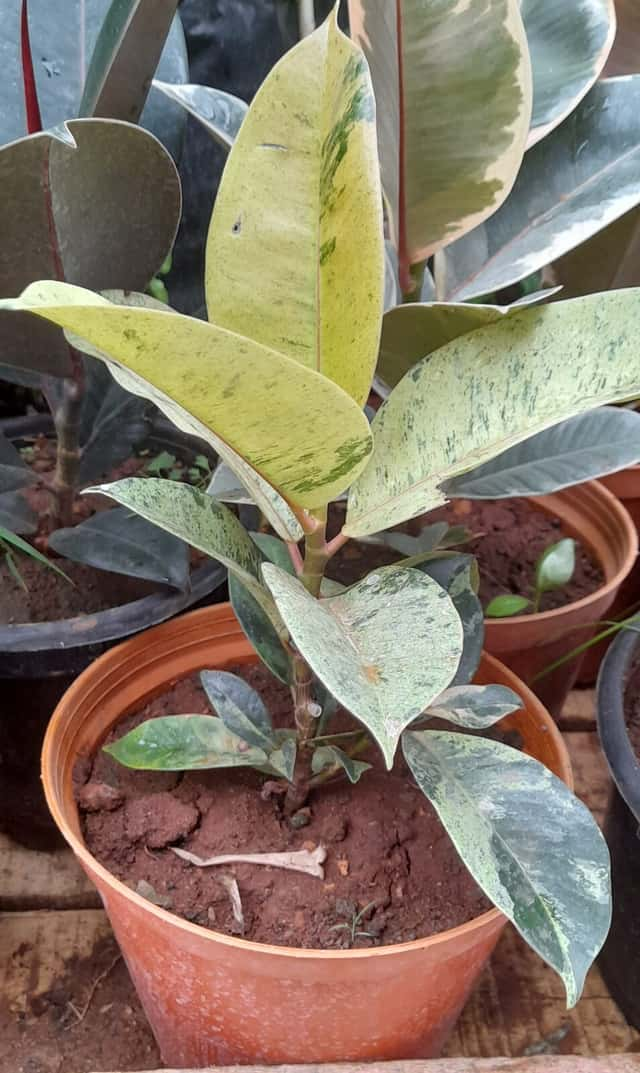
Shivereana rubber plant (Ficus elastica 'Shivereana') is a medium-care plant from the Moraceae family. The Shivereana rubber plant (Ficus elastica 'Shivereana') is a variegated cultivar of the rubber plant, also sold as 'Moonshine'. Its large, thick, glossy leaves are marbled with cream, lime green and dark green in an irregular pattern, so no two leaves look alike. New leaves emerge from a sheath an...
Shivereana rubber plant grows up to 2.4m, spread of 90cm, watering every 10 days, 12°C – 27°C, 40–60% humidity. It is suitable for indoor environments and not safe for pets.
Without precautions, ingestion can cause irritation in pets. Keep out of reach of cats and dogs. Without adequate drainage, root rot can develop within 20 days.
How to Care for Shivereana rubber plant?
TLDR: Shivereana rubber plant needs Bright indirect, watering every 10 days, and temperatures between 12-27°C with 40-60% humidity.
How Often Should You Water Shivereana rubber plant?
Water when the top 5-7 cm of soil are dry, until water runs out the bottom; the pot feels lighter at that point. Water less in winter. Never leave water standing in the saucer.
How Much Light Does Shivereana rubber plant Need?
Bright indirect light most of the day, near a window. A little morning or late-afternoon sun helps keep the colors; avoid harsh midday sun through glass.
What Is the Best Soil for Shivereana rubber plant?
Well-draining mix with chunky bark and coir, or a mix made for ficus.
What Pot Should You Use for Shivereana rubber plant?
A pot with drainage holes, only slightly larger than the root ball; repot every 2-3 years in spring. Terracotta helps the mix dry between waterings.
Care Schedule
Fertilize
Every 30 days
Rotate
Every 14 days
Repot
Every 1095 days
What Is Shivereana rubber plant and Where Does It Come From?
The Shivereana rubber plant (Ficus elastica 'Shivereana') is a variegated cultivar of the rubber plant, also sold as 'Moonshine'. Its large, thick, glossy leaves are marbled with cream, lime green and dark green in an irregular pattern, so no two leaves look alike. New leaves emerge from a sheath and may carry a pink blush before settling into their final colors. The species is native to Asia, from the Himalayas to Malaysia, Sumatra and Java. Indoors it grows on an upright stem to about 2 m, but it can be pruned to stay smaller. Like every rubber plant, it has a sticky milky sap that irritates skin and is toxic if eaten.
How to Propagate Shivereana rubber plant?
Tip cutting
Pick a cutting with plenty of green: mostly cream sections root poorly.
- 1 Cut a 15-20 cm tip with at least 2-3 leaves, wearing gloves because of the sap
- 2 Let the sap stop flowing and remove the lower leaves
- 3 Dip the base in rooting hormone and plant in a light, moist mix, or place in water
- 4 Keep warm (above 20 °C), bright and humid until rooted
Materials needed:
Air layering
This is the safest method for tall plants and also shortens the mother plant, which resprouts below the cut.
- 1 Choose a spot on the stem 20-30 cm below the tip
- 2 Make an angled cut or remove a thin ring of bark
- 3 Wrap with moist sphagnum moss and cover with plastic, tying both ends
- 4 When roots show in the moss, cut below them and pot up
Materials needed:
How Big Does Shivereana rubber plant Grow?
TLDR: Shivereana rubber plant can reach up to 2.4m tall with Medium growth rate.
Max height
2.4m
Spread
90cm
Growth rate
Medium
Foliage
Evergreen
Warning: Toxic Plant
This plant can be toxic if ingested. Keep out of reach of:
Plant Uses
Ornamental
Great for decoration
Is your plant showing symptoms?
Click on the symptom to discover possible causes:
What Diseases Commonly Affect Shivereana rubber plant?
TLDR: Shivereana rubber plant is susceptible to 8 known diseases. Monitor regularly for early detection.
Overwatering
Overwatering occurs when plants receive too much water, depriving roots of oxygen and causing root rot. This environmental stress is one of the most common causes of houseplant death, as waterlogged soil prevents roots from breathing and functioning properly.
Root Rot
Root rot is a serious fungal disease that affects the root system of plants, causing them to decay and die. It is primarily caused by overwatering, poor drainage, or soil-borne fungi such as Pythium, Phytophthora, Rhizoctonia, and Fusarium. The disease thrives in waterlogged conditions where roots are deprived of oxygen, making them susceptible to fungal infection.
Spider Mites
Spider mites are tiny arachnids (less than 1/20 inch long) related to spiders and ticks that feed on plant sap. They thrive in hot, dry conditions and can cause significant damage to ornamental and vegetable plants. During severe infestations, crop losses can reach 14% or higher as these pests disrupt vital plant processes including photosynthesis, carbon dioxide absorption, and transpiration.
Scale Insects
Scale insects are small sap-sucking pests that appear as brown, shell-like bumps on plant stems and leaves. There are over 25 species, divided into armored (hard) and unarmored (soft) scales. They feed by piercing plant tissue and extracting sap, which weakens the plant and can lead to yellowing, stunted growth, and even death if left untreated. They also excrete honeydew, which attracts ants and promotes sooty mold growth.
Fun Facts
No two Shivereana leaves have the same color pattern.
New leaves are born inside a sheath, which can be pink, and it drops when the leaf opens.
The milky sap of the species was used to make rubber before Brazilian rubber took over the market.
Frequently asked questions
Why is my Shivereana losing its variegation?
Why are the leaves falling off?
Is the Shivereana rubber plant toxic?
How is it different from Ficus Tineke?
Compare with similar plants
| Attribute | Difficulty | Light | Watering | Pet Safe |
|---|---|---|---|---|
| Dark Fieldcap | Medium | Low light | 2d | ⚠️ |
| Azalea | Medium | Partial shade | 3d | ⚠️ |
| Muriel's Bamboo | Medium | Partial shade | 3d | ✓ |
| Bougainvillea | Medium | Direct sun | 7d | ⚠️ |