Asparagaceae
Moonshine Snake Plant: Low Water Needs
Dracaena trifasciata 'Moonshine'
Extremely low-maintenance houseplant ideal for beginners and busy plant parents. Highly drought-tolerant and adaptable to varying light conditions, though prefers moderate to bright indirect light. Requires well-draining soil and infrequent watering. No misting needed.
Every 21 days
Partial shade
13° - 32°C
30% - 50%
Categories
What is Moonshine Snake Plant?
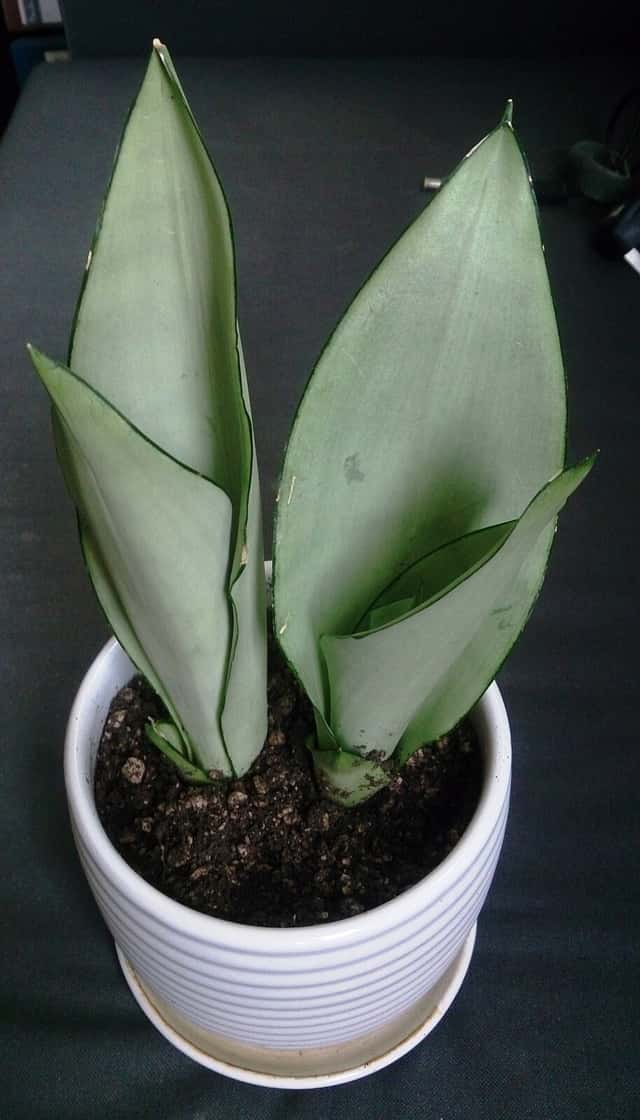
Moonshine Snake Plant (Dracaena trifasciata 'Moonshine') is a easy-care plant from the Asparagaceae family. A perennial succulent in the Asparagaceae family with broad, upright leaves displaying pale silver to mint-green coloration with minimal banding. Distinguished by its luminous, silvery tone and fine darker edge line, making it more striking than standard Dracaena trifasciata varieties. Previously cl...
Moonshine Snake Plant grows up to 60cm, spread of 20cm, watering every 21 days, 13°C – 32°C, 30–50% humidity. It is suitable for indoor environments and not safe for pets.
Unlike many tropical plants, Moonshine Snake Plant tolerates watering mistakes. Best for beginners. Without precautions, ingestion can cause irritation in pets. Keep out of reach of cats and dogs. Without adequate drainage, root rot can develop within 42 days.
How to Care for Moonshine Snake Plant?
TLDR: Moonshine Snake Plant needs Partial shade, watering every 21 days, and temperatures between 13-32°C with 30-50% humidity.
How Often Should You Water Moonshine Snake Plant?
Water every 2-6 weeks when soil is completely dry. Winter watering every 4-6 weeks. Always check soil 1-2 inches deep before watering—if damp, wait. Overwatering is the primary cause of root rot. Plant tolerates long drought periods well.
How Much Light Does Moonshine Snake Plant Need?
Position in bright indirect light (1,000-2,500 foot-candles) to maintain silvery coloration. Tolerates low light (minimum 250 foot-candles) but becomes greener and duller. Avoid excessive direct sun exceeding 3,000 foot-candles to prevent leaf scorch. Ideal: north or east-facing windows, or several feet from south/west windows.
What Is the Best Soil for Moonshine Snake Plant?
Use fast-draining succulent/cactus soil mix: 60% succulent soil base + 20% perlite + 10% coarse sand + 10% orchid bark. Never use standard potting mix. Soil pH should range 5.5-7.5 (slightly acidic to neutral). Excellent drainage prevents root rot.
What Pot Should You Use for Moonshine Snake Plant?
Terra cotta or plastic pot with drainage holes. Select pot only 1-2 inches (2.5-5 cm) larger than current pot diameter. Plant prefers being somewhat root-bound and will be unhappy in oversized containers.
Care Schedule
Fertilize
Every 180 days
Repot
Every 1095 days
What Is Moonshine Snake Plant and Where Does It Come From?
A perennial succulent in the Asparagaceae family with broad, upright leaves displaying pale silver to mint-green coloration with minimal banding. Distinguished by its luminous, silvery tone and fine darker edge line, making it more striking than standard Dracaena trifasciata varieties. Previously classified as Sansevieria trifasciata 'Moonshine' before genus reclassification.
How to Propagate Moonshine Snake Plant?
Rhizome Division
Preferred propagation method for this cultivar. Maintains true Moonshine coloring and silvery foliage characteristics, unlike leaf cuttings which often revert to standard green.
- 1 Remove plant from pot during active growing season (spring/summer)
- 2 Identify and separate natural rhizome divisions or cut with sterile knife
- 3 Ensure each section has growth points and established roots
- 4 Plant in moist, well-draining succulent soil
- 5 Keep soil lightly moist until establishment
Materials needed:
Leaf Cutting in Soil
NOTE: Leaf cuttings frequently lose the distinctive silvery variegation and revert to standard green coloration. Use division method to preserve Moonshine cultivar characteristics.
- 1 Cut healthy leaf segments 2-3 inches (5-8 cm) long with sterile knife
- 2 Allow cut end to callous-dry in dry, airy location for 1-2 days
- 3 Plant base 1 inch (2.5 cm) deep in well-draining succulent soil
- 4 Keep soil lightly moist, not waterlogged
- 5 Place in bright indirect light
- 6 Rooting takes 2-4 months; new plantlets emerge after establishment
Materials needed:
How Big Does Moonshine Snake Plant Grow?
TLDR: Moonshine Snake Plant can reach up to 60cm tall with Slow growth rate.
Max height
60cm
Spread
20cm
Growth rate
Slow
Foliage
Evergreen
Warning: Toxic Plant
This plant can be toxic if ingested. Keep out of reach of:
Plant Uses
Ornamental
Great for decoration
Air Purifying
Improves air quality
Is your plant showing symptoms?
Click on the symptom to discover possible causes:
What Diseases Commonly Affect Moonshine Snake Plant?
TLDR: Moonshine Snake Plant is susceptible to 4 known diseases. Monitor regularly for early detection.
Root Rot
Root rot is a serious fungal disease that affects the root system of plants, causing them to decay and die. It is primarily caused by overwatering, poor drainage, or soil-borne fungi such as Pythium, Phytophthora, Rhizoctonia, and Fusarium. The disease thrives in waterlogged conditions where roots are deprived of oxygen, making them susceptible to fungal infection.
Leaf Spot
Leaf spot is a common fungal disease caused by various pathogens including Alternaria, Ascochyta, Colletotrichum, Septoria, and Venturia. It primarily affects leaves, causing discolored spots that can lead to premature leaf drop if left untreated.
Spider Mites
Spider mites are tiny arachnids (less than 1/20 inch long) related to spiders and ticks that feed on plant sap. They thrive in hot, dry conditions and can cause significant damage to ornamental and vegetable plants. During severe infestations, crop losses can reach 14% or higher as these pests disrupt vital plant processes including photosynthesis, carbon dioxide absorption, and transpiration.
Mealybugs
Mealybugs are small, soft-bodied insects covered with a white, waxy, cottony material. They are common pests of houseplants and outdoor plants in mild climates. These sap-sucking insects feed on plant tissue, causing damage, stunted growth, and can lead to plant death if left untreated. They produce sticky honeydew which attracts sooty mold.
Meaning & Symbolism
Represents strength, resilience, and air purification. Historically used as a protective plant. Often considered a symbol of prosperity and protection against negative energy in various cultures.
Compare with similar plants
| Attribute | Difficulty | Light | Watering | Pet Safe |
|---|---|---|---|---|
| Field Maple | Easy | Bright indirect | 14d | ✓ |
| Silver Birch | Easy | Direct sun | 14d | ✓ |
| Common Blanketflower | Easy | Direct sun | 10d | ✓ |
| Cushion Bush | Easy | Direct sun | 14d | ✓ |
Choose & Compare
Sources & References
- Snake Plant - Sansevieria trifasciata 'Moonshine' - Plant Care 101
- Moonshine Sansevieria (Silver Snake Plant): A Complete Care Guide
- Sansevieria Care Guide | Bloomscape
- Dracaena trifasciata - North Carolina Extension Gardener Plant Toolbox
- Wikimedia Commons - Sansevieria trifasciata 'Moonshine'
- Learn How to Repot a Snake Plant - Lively Root





