Moraceae
Moreton Bay Fig (Ficus macrophylla): Complete Care Guide
Ficus macrophylla
Large outdoor tree that prefers full sun and is drought-tolerant once established. As an indoor container plant, it needs bright light and moderate watering. Fertilize monthly in spring and summer.
Every 10 days
Bright indirect
10° - 30°C
60% - 80%
Categories
What is Moreton Bay Fig?
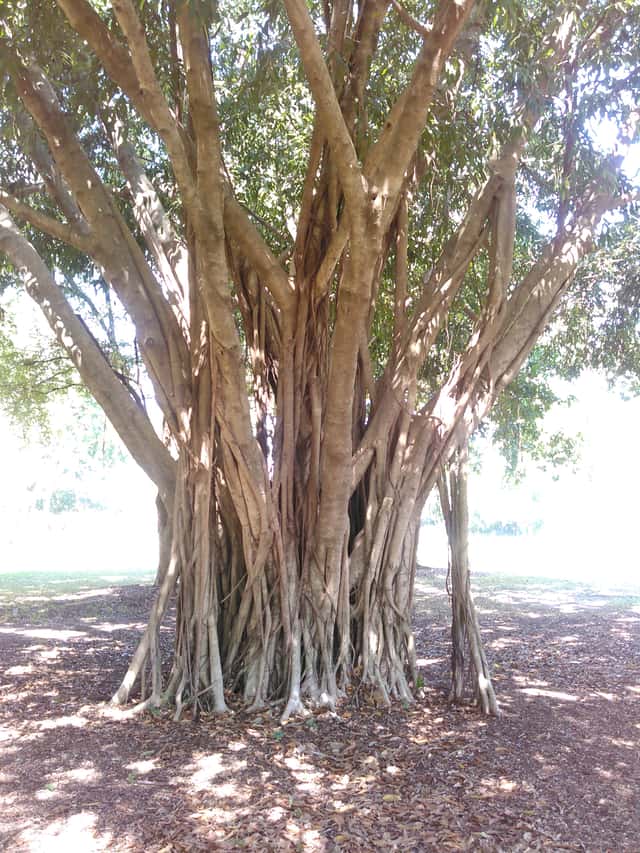
Moreton Bay Fig (Ficus macrophylla) is a medium-care plant from the Moraceae family. Ficus macrophylla, known as the Moreton Bay Fig or Australian Banyan, is a majestic large evergreen tree native to eastern Australia. Belonging to the Moraceae family, it can reach over 60 meters in height in the wild, with dramatic aerial roots and a sweeping canopy that can cover areas equivalent...
Moreton Bay Fig grows up to 60.0m, spread of 3000cm, watering every 10 days, 10°C – 30°C, 60–80% humidity. It is suitable for indoor environments and not safe for pets.
Without precautions, ingestion can cause irritation in pets. Keep out of reach of cats and dogs. Without adequate drainage, root rot can develop within 20 days.
How to Care for Moreton Bay Fig?
TLDR: Moreton Bay Fig needs Bright indirect, watering every 10 days, and temperatures between 10-30°C with 60-80% humidity.
How Often Should You Water Moreton Bay Fig?
Water deeply when the top 2-3 cm of soil feels dry, roughly every 7-14 days. Established trees are drought-tolerant. Avoid waterlogging — root rot is the primary risk.
How Much Light Does Moreton Bay Fig Need?
Prefers full sun to bright indirect light. Indoors, place near large east- or west-facing windows. Avoid intense direct summer sun, which can scorch leaves.
What Is the Best Soil for Moreton Bay Fig?
Use rich, well-draining soil with organic matter. Ideal pH 6.0-7.0. Add sand or perlite to improve root aeration and prevent waterlogging.
What Pot Should You Use for Moreton Bay Fig?
Large terracotta or clay pot with wide drainage holes. For growing specimens, prefer 40-60 cm diameter pots.
Care Schedule
Fertilize
Every 30 days
Misting
Every 7 days
Repot
Every 730 days
What Is Moreton Bay Fig and Where Does It Come From?
Ficus macrophylla, known as the Moreton Bay Fig or Australian Banyan, is a majestic large evergreen tree native to eastern Australia. Belonging to the Moraceae family, it can reach over 60 meters in height in the wild, with dramatic aerial roots and a sweeping canopy that can cover areas equivalent to several football fields. It is widely planted in parks, public gardens, and boulevards of tropical and subtropical cities worldwide. As an indoor plant, it grows slowly in containers and serves as a striking architectural focal point.
How to Propagate Moreton Bay Fig?
Stem Cutting
Use semi-hardwood cuttings for best results. Maintain high humidity by covering with a clear plastic bag.
- 1 Cut a healthy 10-15 cm branch with 2-3 leaves
- 2 Apply rooting hormone to the cut end
- 3 Plant in moist, well-draining substrate
- 4 Keep in a warm, humid spot with indirect light
- 5 Wait 3-6 weeks for roots before transplanting
Materials needed:
Air Layering
Keep the moss consistently moist throughout the process.
- 1 Make a ring cut in the bark of a healthy branch
- 2 Wrap the cut with moist sphagnum moss
- 3 Cover with clear plastic and secure both ends
- 4 Monitor root development through the plastic
- 5 Cut and pot when roots are well-formed
Materials needed:
How Big Does Moreton Bay Fig Grow?
TLDR: Moreton Bay Fig can reach up to 60.0m tall with Slow growth rate.
Max height
60.0m
Spread
30.0m
Growth rate
Slow
Foliage
Evergreen
Warning: Toxic Plant
This plant can be toxic if ingested. Keep out of reach of:
Plant Uses
Ornamental
Great for decoration
Is your plant showing symptoms?
Click on the symptom to discover possible causes:
What Diseases Commonly Affect Moreton Bay Fig?
TLDR: Moreton Bay Fig is susceptible to 9 known diseases. Monitor regularly for early detection.
Root Rot
Root rot is a serious fungal disease that affects the root system of plants, causing them to decay and die. It is primarily caused by overwatering, poor drainage, or soil-borne fungi such as Pythium, Phytophthora, Rhizoctonia, and Fusarium. The disease thrives in waterlogged conditions where roots are deprived of oxygen, making them susceptible to fungal infection.
Anthracnose
Anthracnose is a fungal disease caused by fungi in the genus Colletotrichum that affects many plants, including vegetables, fruits, and trees. The disease thrives in cool, wet conditions, causing dark, sunken lesions on leaves, stems, flowers, and fruits.
Bacterial Leaf Spot
Bacterial leaf spot is a plant disease caused by bacteria in the Xanthomonas and Pseudomonas genera that affects various ornamental and edible plants. The bacteria infect leaves through wounds or natural openings, causing characteristic lesions that can lead to premature leaf drop and plant weakening.
Spider Mites
Spider mites are tiny arachnids (less than 1/20 inch long) related to spiders and ticks that feed on plant sap. They thrive in hot, dry conditions and can cause significant damage to ornamental and vegetable plants. During severe infestations, crop losses can reach 14% or higher as these pests disrupt vital plant processes including photosynthesis, carbon dioxide absorption, and transpiration.
Meaning & Symbolism
Symbol of longevity, strength, and protection. In Australian culture, it is a sacred tree and historical landmark of coastal landscapes.
Fun Facts
Can reach over 60 meters tall and live for more than 150 years in the wild
Its aerial roots descend from branches and become new trunks when they touch the ground, creating forests from a single tree
A Moreton Bay Fig in Genoa, Italy, is over 150 years old and is designated a Natural Monument
Its small figs are eaten by birds and bats, which disperse seeds over long distances
Frequently asked questions
How often should I water the Moreton Bay Fig?
Is Ficus macrophylla toxic to pets?
Can I grow a Moreton Bay Fig indoors?
Why are my Moreton Bay Fig leaves dropping?
How fast does Ficus macrophylla grow?
Compare with similar plants
| Attribute | Difficulty | Light | Watering | Pet Safe |
|---|---|---|---|---|
| Dark Fieldcap | Medium | Low light | 2d | ⚠️ |
| Azalea | Medium | Partial shade | 3d | ⚠️ |
| Muriel's Bamboo | Medium | Partial shade | 3d | ✓ |
| Bougainvillea | Medium | Direct sun | 7d | ⚠️ |




