Asteraceae
Mugwort (Artemisia vulgaris) Care Guide
Artemisia vulgaris
Easy to grow and highly drought-tolerant once established. Plant in full sun to partial shade in well-draining soil; avoid overwatering as it is prone to root rot in soggy conditions. Contain the roots to prevent spreading, and cut back after flowering to control size.
Every 10 days
Bright indirect
-34° - 35°C
% - %
Categories
What is Mugwort?
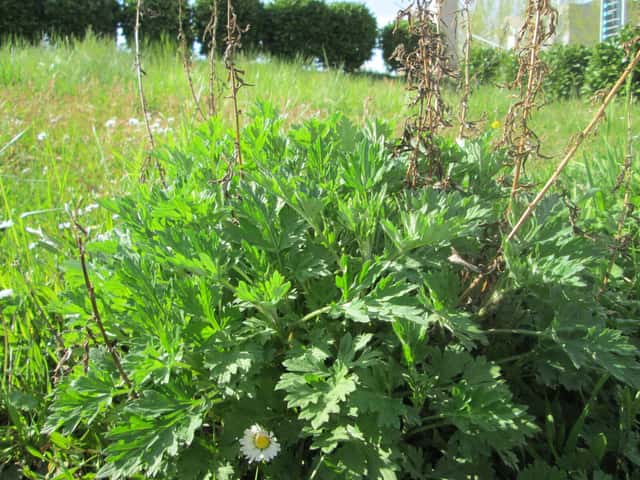
Mugwort (Artemisia vulgaris) is a easy-care plant from the Asteraceae family. Artemisia vulgaris is a tall, aromatic perennial herb in the daisy family (Asteraceae), native to Europe and Asia and now naturalized worldwide. It forms clumps of deeply lobed, dark green leaves with silvery, woolly undersides, and produces panicles of small greenish-yellow to reddish-brown flowers...
Mugwort grows up to 1.2m, spread of 180cm, watering every 10 days, -34°C – 35°C. It is not suitable for indoor environments and safe for pets.
Unlike many tropical plants, Mugwort tolerates watering mistakes. Best for beginners. Unlike many popular species, Mugwort is safe to keep around pets.
How to Care for Mugwort?
TLDR: Mugwort needs Bright indirect, watering every 10 days, and temperatures between -34-35°C with 40-70% humidity.
How Often Should You Water Mugwort?
Let soil dry out almost completely between waterings; established plants tolerate drought well and rarely need supplemental water once settled.
How Much Light Does Mugwort Need?
Thrives in full sun (6+ hours) but tolerates partial shade; more sun produces bushier, more aromatic growth.
What Is the Best Soil for Mugwort?
Adapts to poor, sandy, loamy, or rocky soils as long as drainage is good; neutral pH (6.0-8.0) is ideal.
Care Schedule
Fertilize
Every 14 days
Misting
Every 3 days
Rotate
Every 7 days
Repot
Every 365 days
What Is Mugwort and Where Does It Come From?
Artemisia vulgaris is a tall, aromatic perennial herb in the daisy family (Asteraceae), native to Europe and Asia and now naturalized worldwide. It forms clumps of deeply lobed, dark green leaves with silvery, woolly undersides, and produces panicles of small greenish-yellow to reddish-brown flowers from mid-summer into fall. Mugwort spreads aggressively by rhizomes and is considered invasive in many regions, so it is best grown in containers or contained beds.
How Big Does Mugwort Grow?
TLDR: Mugwort can reach up to 1.2m tall with Fast growth rate.
Max height
1.2m
Spread
1.8m
Growth rate
Fast
Foliage
Deciduous
Warning: Toxic Plant
This plant can be toxic if ingested. Keep out of reach of:
Plant Uses
Aromatic
Pleasant fragrance
Medicinal
Medicinal properties
Medicinal Uses
- Traditional digestive bitter
- Used to ease menstrual cramps
- Historically used in dream pillows for lucid dreaming
- Folk remedy for intestinal worms
- Used in moxibustion in traditional Chinese medicine
Culinary Uses
- Flavoring for fatty roasted meats and stuffing
- Herbal tea
- Bittering agent in some traditional beers
Is your plant showing symptoms?
Click on the symptom to discover possible causes:
What Diseases Commonly Affect Mugwort?
TLDR: Mugwort is susceptible to 5 known diseases. Monitor regularly for early detection.
Powdery Mildew
Powdery mildew is a common fungal disease caused by various fungi species including Erysiphe, Podosphaera, Oïdium, and Leveillula. It affects over 10,000 plant species worldwide. The disease thrives in warm, dry climates with high humidity and appears as a distinctive white powdery coating on plant surfaces.
Rust
Rust is a common fungal disease caused by fungi in the order Pucciniales that affects a wide variety of plants. The disease gets its name from the characteristic orange, yellow, or reddish-brown pustules that appear on leaves, resembling metal rust. This obligate fungal parasite requires living plants to survive and can cause significant economic losses in agricultural crops.
Root Rot
Root rot is a serious fungal disease that affects the root system of plants, causing them to decay and die. It is primarily caused by overwatering, poor drainage, or soil-borne fungi such as Pythium, Phytophthora, Rhizoctonia, and Fusarium. The disease thrives in waterlogged conditions where roots are deprived of oxygen, making them susceptible to fungal infection.
Aphids
Aphids are small, soft-bodied, pear-shaped insects (1/16 to 1/8 inch long) that feed by sucking nutrient-rich sap from plants. They reproduce rapidly and can quickly weaken plants, causing distorted growth and transmitting plant viruses. Aphids come in various colors including green, black, red, yellow, brown, and gray. They secrete honeydew, a sticky substance that attracts ants and encourages sooty mold growth.
Fun Facts
Mugwort pollen is one of the most common causes of late-summer hay fever in Europe.
The genus name Artemisia honors the Greek goddess Artemis.
Mugwort has been burned as incense and used in moxibustion for thousands of years.
Frequently asked questions
Compare with similar plants
| Attribute | Difficulty | Light | Watering | Pet Safe |
|---|---|---|---|---|
| Field Maple | Easy | Bright indirect | 14d | ✓ |
| Silver Birch | Easy | Direct sun | 14d | ✓ |
| Common Blanketflower | Easy | Direct sun | 10d | ✓ |
| Cushion Bush | Easy | Direct sun | 14d | ✓ |
Choose & Compare
Sources & References
- Artemisia vulgaris (Felon Herb, Mugwort) | NC State Extension Gardener Plant Toolbox
- How to Grow Mugwort (Artemisia vulgaris) - Gardening Channel
- Mugwort (Artemisia Vulgaris) Growing & Care Guide for Gardeners
- Mugwort Plant Care & Growing Basics | PlantIn
- Identification of Golovinomyces artemisiae Causing Powdery Mildew on Artemisia





