Vitaceae
Muscadine Grape (Vitis rotundifolia)
Vitis rotundifolia
Plant in full sun in well-drained, slightly acidic soil, with a sturdy trellis, arbor or fence. Water often in the first year; after that, only during long dry spells and while fruit develops. Prune every winter, leaving short spurs of 2-4 buds. Does not tolerate wet feet.
Every 7 days
Direct sun
-12° - 38°C
50% - 85%
Categories
What is Muscadine Grape?
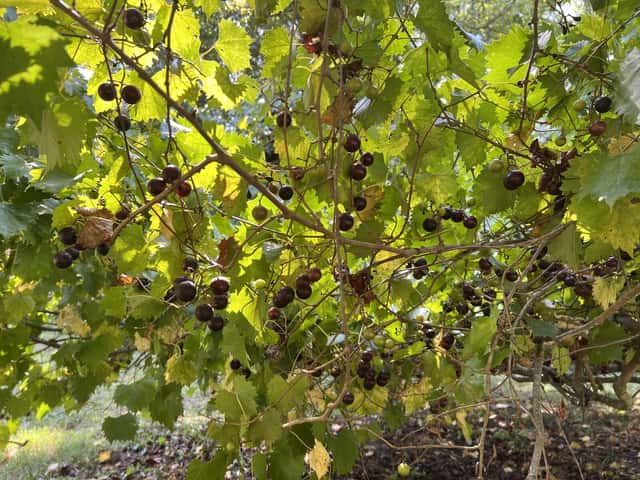
Muscadine Grape (Vitis rotundifolia) is a medium-care plant from the Vitaceae family. Muscadine grape (Vitis rotundifolia, also classified as Muscadinia rotundifolia) is a deciduous woody vine native to the southeastern United States. It climbs with simple, unbranched tendrils and has glossy, nearly round leaves with coarse teeth that turn golden yellow in fall. Small greenish-white...
Muscadine Grape grows up to watering every 7 days, -12°C – 38°C, 50–85% humidity. It is not suitable for indoor environments and not safe for pets.
Without precautions, ingestion can cause irritation in pets. Keep out of reach of cats and dogs.
How to Care for Muscadine Grape?
TLDR: Muscadine Grape needs Direct sun, watering every 7 days, and temperatures between -12-38°C with 50-85% humidity.
How Often Should You Water Muscadine Grape?
In the first year, water deeply 2-3 times a week to establish roots. Established vines handle drought well, but a deep weekly watering in dry weather from bloom to harvest improves berry size. Use drip irrigation: wet foliage encourages fungal disease.
How Much Light Does Muscadine Grape Need?
Needs at least 6-8 hours of direct sun a day to fruit well. It tolerates partial shade, but then grows more leaves and less fruit.
What Is the Best Soil for Muscadine Grape?
Deep, well-drained sandy or loamy soil with a pH of 5.5-6.5. In heavy soil, plant on a raised row. Above pH 7 the leaves tend to yellow (iron chlorosis).
What Pot Should You Use for Muscadine Grape?
Best planted in the ground. In a container, use a large, deep pot (at least 60 liters) with good drainage holes and a sturdy trellis; yields will be much lower.
Care Schedule
Fertilize
Every 42 days
What Is Muscadine Grape and Where Does It Come From?
Muscadine grape (Vitis rotundifolia, also classified as Muscadinia rotundifolia) is a deciduous woody vine native to the southeastern United States. It climbs with simple, unbranched tendrils and has glossy, nearly round leaves with coarse teeth that turn golden yellow in fall. Small greenish-white flowers open in short clusters in late spring, followed by large, thick-skinned bronze or dark purple berries that ripen from late summer into fall. Many vines are female and need a perfect-flowered variety nearby to set fruit; cultivars such as 'Carlos', 'Noble' and 'Triumph' are self-fertile. It resists Pierce's disease and phylloxera, so it thrives in hot, humid climates where European grapes struggle.
How to Propagate Muscadine Grape?
Layering
This is the most reliable method for muscadines, which root poorly from hardwood cuttings. Use canes from healthy vines of the cultivar you want.
- 1 Choose a low, flexible cane from last season
- 2 Bury a section of the cane 5-10 cm deep, leaving the tip exposed
- 3 Pin it down with a wire staple or stone and keep the soil moist
- 4 The following winter, cut it from the mother vine and transplant the rooted plant
Materials needed:
Softwood/semi-hardwood cutting
Dormant hardwood cuttings of muscadine root poorly; summer cuttings kept in high humidity do much better.
- 1 Take 15-20 cm cuttings from current-season, semi-hardwood shoots with 3-4 buds
- 2 Remove the lower leaves and keep 1-2 leaves at the top
- 3 Dip the base in rooting hormone
- 4 Stick in a light mix under mist or in a very humid enclosure
- 5 Transplant once roots are well developed
Materials needed:
Seed
Seedlings do not come true to the cultivar and may be male, bearing no fruit. Best for breeding or ornamental use.
- 1 Remove seeds from ripe fruit and rinse well
- 2 Stratify in moist sand in the refrigerator for about 3 months
- 3 Sow 1 cm deep in spring
- 4 Keep the mix moist and warm
Materials needed:
How Big Does Muscadine Grape Grow?
TLDR: Muscadine Grape can reach up to ?cm tall with Fast growth rate.
Growth rate
Fast
Foliage
Deciduous
Warning: Toxic Plant
This plant can be toxic if ingested. Keep out of reach of:
Plant Uses
Ornamental
Great for decoration
Edible
Can be consumed
Medicinal Uses
- Native American peoples used parts of the vine in traditional medicinal and ceremonial preparations
- Skins and seeds are rich in polyphenols such as resveratrol and ellagic acid, studied for antioxidant activity
Culinary Uses
- Eaten fresh: squeeze the berry to pop the pulp out and discard the thick skin and seeds
- Jellies, jams and preserves
- Juice and sweet Southern-style wines
- Pies and fillings made with the cooked skins
Is your plant showing symptoms?
Click on the symptom to discover possible causes:
What Diseases Commonly Affect Muscadine Grape?
TLDR: Muscadine Grape is susceptible to 11 known diseases. Monitor regularly for early detection.
Fruit Rot
Fruit rot is a fungal disease caused by various fungi such as Botrytis or Monilia. It manifests as rapidly spreading brown spots that soften tissues and often cover the fruit with a gray or white downy growth. It spreads through humidity and wind.
Leaf Spot
Leaf spot is a common fungal disease caused by various pathogens including Alternaria, Ascochyta, Colletotrichum, Septoria, and Venturia. It primarily affects leaves, causing discolored spots that can lead to premature leaf drop if left untreated.
Powdery Mildew
Powdery mildew is a common fungal disease caused by various fungi species including Erysiphe, Podosphaera, Oïdium, and Leveillula. It affects over 10,000 plant species worldwide. The disease thrives in warm, dry climates with high humidity and appears as a distinctive white powdery coating on plant surfaces.
Crown Gall
Crown gall is a bacterial disease caused by Agrobacterium tumefaciens that affects over 140 species of plants. The bacteria insert DNA into plant cells, causing them to divide uncontrollably and form large tumor-like growths (galls) primarily on roots, stems, and at the soil line. These galls restrict water and nutrient flow, severely impacting plant health and potentially killing the plant.
Meaning & Symbolism
A native symbol of Southern heritage; the 'Scuppernong' cultivar is North Carolina's state fruit, home of the centuries-old "Mother Vine" on Roanoke Island.
Fun Facts
It is also called Muscadinia rotundifolia, because some botanists place muscadines in a genus separate from other grapes
The "Mother Vine" on Roanoke Island, North Carolina, is considered the oldest cultivated grapevine in the US
Ripe berries drop one by one instead of ripening in a tight bunch like common grapes
It resists Pierce's disease, which keeps European grapes from being grown in much of the US South
Frequently asked questions
Does a muscadine need another vine to produce fruit?
When should I prune muscadines?
Are muscadine and Muscadinia rotundifolia the same plant?
Are muscadines toxic to dogs?
What diseases affect muscadines most?
Compare with similar plants
| Attribute | Difficulty | Light | Watering | Pet Safe |
|---|---|---|---|---|
| Dark Fieldcap | Medium | Low light | 2d | ⚠️ |
| Azalea | Medium | Partial shade | 3d | ⚠️ |
| Muriel's Bamboo | Medium | Partial shade | 3d | ✓ |
| Bougainvillea | Medium | Direct sun | 7d | ⚠️ |
Choose & Compare
Sources & References
- NC State Extension Gardener Plant Toolbox - Vitis rotundifolia
- UGA Extension - Muscadine Grape Management (C1303)
- Oklahoma State Extension - Growing Muscadine Grapes in Oklahoma
- Texas A&M AgriLife - Muscadine fact sheet
- UF/IFAS - Muscadine (Muscadinia rotundifolia)
- Specialty Crop Grower - Managing Rot and Mildew Diseases in Muscadine Grapes
- NCpedia - Mother Vineyard
- Wikipedia - Grape toxicity in dogs
- GBIF - Muscadinia rotundifolia is a synonym of Vitis rotundifolia




