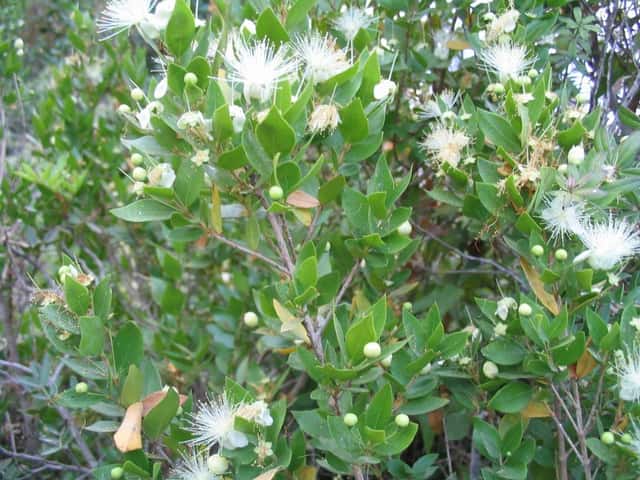
Myrtaceae
Myrtle (Myrtus) Care Guide
Myrtus
Give myrtle full sun to light shade, water when the topsoil dries out, and plant it in well-draining, slightly acidic to neutral soil. It tolerates drought once established and needs shelter from harsh, cold winds in colder zones.
Every 7 days
Bright indirect
-10° - °C
% - %
Categories
What is Common Myrtle?
Common Myrtle (Myrtus) is a easy-care plant from the Myrtaceae family. Myrtus (myrtle) is an aromatic evergreen shrub native to the Mediterranean, valued for its glossy dark-green leaves, fragrant white star-shaped flowers, and dark berries used in cooking and traditional remedies. Slow-to-medium growing and remarkably drought-tolerant once established, it thrives in f...
Common Myrtle grows up to 3.6m, spread of 365cm, watering every 7 days. It is suitable for indoor environments and safe for pets.
Unlike many tropical plants, Common Myrtle tolerates watering mistakes. Best for beginners. Unlike many popular species, Common Myrtle is safe to keep around pets. Without adequate drainage, root rot can develop within 14 days.
How to Care for Common Myrtle?
TLDR: Common Myrtle needs Bright indirect, watering every 7 days, and temperatures between -10-30°C with 40-70% humidity.
How Often Should You Water Common Myrtle?
Water deeply about once a week during the growing season, letting the top of the soil dry between waterings; cut back to every 2-3 weeks in winter.
How Much Light Does Common Myrtle Need?
Provide at least 4-6 hours of direct sun daily; in very hot climates, give some afternoon shade to prevent leaf scorch.
What Is the Best Soil for Common Myrtle?
Use well-draining sandy or loamy soil with a pH between roughly 5.5 and 8.3; avoid waterlogged conditions, which invite root rot.
What Pot Should You Use for Common Myrtle?
A terracotta pot with ample drainage holes suits myrtle well, since terracotta helps excess moisture evaporate and reduces the risk of root rot.
What Is Common Myrtle and Where Does It Come From?
Myrtus (myrtle) is an aromatic evergreen shrub native to the Mediterranean, valued for its glossy dark-green leaves, fragrant white star-shaped flowers, and dark berries used in cooking and traditional remedies. Slow-to-medium growing and remarkably drought-tolerant once established, it thrives in full sun and well-drained soil, making it a popular choice for hedges, topiary, and containers.
How to Propagate Common Myrtle?
Semi-hardwood stem cuttings
Use clean, sharp tools and consider covering the pot with a clear bag to retain humidity while roots establish.
- 1 Take a 10-15 cm semi-hardwood cutting from a healthy non-flowering shoot in summer
- 2 Remove the lower leaves and dip the cut end in rooting hormone
- 3 Insert the cutting into a moist, well-draining mix of sand and peat or perlite
- 4 Keep in a warm, bright spot out of direct sun and maintain steady moisture until roots form
Materials needed:
How Big Does Common Myrtle Grow?
TLDR: Common Myrtle can reach up to 3.6m tall with Medium growth rate.
Max height
3.6m
Spread
3.6m
Growth rate
Medium
Foliage
Evergreen
Plant Uses
Ornamental
Great for decoration
Edible
Can be consumed
Medicinal
Medicinal properties
Aromatic
Pleasant fragrance
Medicinal Uses
- Leaves and berries used in traditional Mediterranean herbal remedies for respiratory and digestive complaints
- Essential oil studied for antimicrobial and anti-inflammatory properties
Culinary Uses
- Dried berries used as a peppery spice, especially in Sardinian and Corsican cuisine
- Fresh or dried leaves used to flavor roasted meats, similar to bay leaf
- Berries used to make myrtle liqueur (mirto)
Is your plant showing symptoms?
Click on the symptom to discover possible causes:
What Diseases Commonly Affect Common Myrtle?
TLDR: Common Myrtle is susceptible to 9 known diseases. Monitor regularly for early detection.
Root Rot
Root rot is a serious fungal disease that affects the root system of plants, causing them to decay and die. It is primarily caused by overwatering, poor drainage, or soil-borne fungi such as Pythium, Phytophthora, Rhizoctonia, and Fusarium. The disease thrives in waterlogged conditions where roots are deprived of oxygen, making them susceptible to fungal infection.
Powdery Mildew
Powdery mildew is a common fungal disease caused by various fungi species including Erysiphe, Podosphaera, Oïdium, and Leveillula. It affects over 10,000 plant species worldwide. The disease thrives in warm, dry climates with high humidity and appears as a distinctive white powdery coating on plant surfaces.
Leaf Spot
Leaf spot is a common fungal disease caused by various pathogens including Alternaria, Ascochyta, Colletotrichum, Septoria, and Venturia. It primarily affects leaves, causing discolored spots that can lead to premature leaf drop if left untreated.
Aphids
Aphids are small, soft-bodied, pear-shaped insects (1/16 to 1/8 inch long) that feed by sucking nutrient-rich sap from plants. They reproduce rapidly and can quickly weaken plants, causing distorted growth and transmitting plant viruses. Aphids come in various colors including green, black, red, yellow, brown, and gray. They secrete honeydew, a sticky substance that attracts ants and encourages sooty mold growth.
Meaning & Symbolism
Myrtle has long symbolized love, marriage, and fidelity, dating back to its association with the Roman goddess Venus; it remains a traditional element of bridal bouquets and wreaths.
Fun Facts
Myrtle was sacred to the Roman goddess Venus and is still woven into bridal bouquets in parts of Europe.
Its dried berries are used to make mirto, a traditional liqueur from Sardinia and Corsica.
The crushed leaves release a distinctive spicy-sweet fragrance, historically used in perfumery.
Myrtle gives its name to the plant family Myrtaceae, which also includes eucalyptus and guava.
Frequently asked questions
Is myrtle toxic to cats or dogs?
How often should I water myrtle?
Can myrtle be grown indoors?
How do I propagate myrtle?
Compare with similar plants
| Attribute | Difficulty | Light | Watering | Pet Safe |
|---|---|---|---|---|
| Field Maple | Easy | Bright indirect | 14d | ✓ |
| Silver Birch | Easy | Direct sun | 14d | ✓ |
| Common Blanketflower | Easy | Direct sun | 10d | ✓ |
| Cushion Bush | Easy | Direct sun | 14d | ✓ |





