Asteraceae
Echinacea angustifolia — Narrow-leaf Coneflower
Echinacea angustifolia
Plant in full sun in lean, well-drained, gravelly or sandy soil. Water regularly the first season to establish the deep taproot, then rely on rainfall; established plants are highly drought tolerant. Avoid rich, wet, or heavy clay soils, which promote crown and root rot. Deadhead spent blooms to prolong flowering, or leave seed heads standing through winter as food for birds.
Every 7 days
Direct sun
-34° - 35°C
% - %
Categories
What is Narrow-leaf Coneflower?
Narrow-leaf Coneflower (Echinacea angustifolia) is a easy-care plant from the Asteraceae family. Echinacea angustifolia, the narrow-leaf coneflower, is a taprooted perennial native to the dry prairies of the central United States and Canada, from Texas and Oklahoma north through the Dakotas into Saskatchewan. It forms a low clump of lance-shaped, hairy, gray-green leaves topped from midsummer t...
Narrow-leaf Coneflower grows up to 80cm, spread of 40cm, watering every 7 days, -34°C – 35°C. It is not suitable for indoor environments and safe for pets.
Unlike many tropical plants, Narrow-leaf Coneflower tolerates watering mistakes. Best for beginners. Unlike many popular species, Narrow-leaf Coneflower is safe to keep around pets.
How to Care for Narrow-leaf Coneflower?
TLDR: Narrow-leaf Coneflower needs Direct sun, watering every 7 days, and temperatures between -34-35°C with 40-70% humidity.
How Often Should You Water Narrow-leaf Coneflower?
Water deeply once a week during the first growing season to help the taproot establish. After that, water only during prolonged drought — established plants tolerate dry spells well and are prone to crown rot if kept too wet. Always water at the soil level rather than overhead, since wet foliage encourages fungal disease.
How Much Light Does Narrow-leaf Coneflower Need?
Give it full sun — at least 6 hours of direct light daily. It tolerates light afternoon shade in very hot climates but blooms best and grows most compactly in full sun; too much shade causes floppy, sparse growth.
What Is the Best Soil for Narrow-leaf Coneflower?
Use lean, light-textured, well-draining soil such as sandy or gravelly loam with a near-neutral pH (around 6.0-7.0). Rich, heavily amended, or poorly drained soil leads to weak growth and root disease — this prairie native actually performs best in average to poor soil.
What Pot Should You Use for Narrow-leaf Coneflower?
Best grown directly in the ground due to its long taproot; if container growing is necessary, choose a deep pot (at least 40 cm) with generous drainage holes and a fast-draining sandy mix.
What Is Narrow-leaf Coneflower and Where Does It Come From?
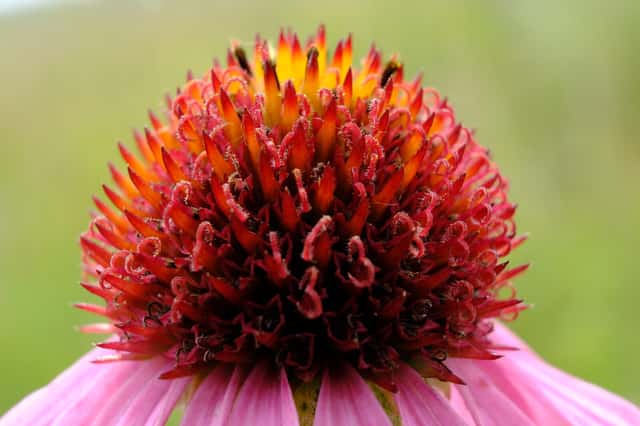
Echinacea angustifolia, the narrow-leaf coneflower, is a taprooted perennial native to the dry prairies of the central United States and Canada, from Texas and Oklahoma north through the Dakotas into Saskatchewan. It forms a low clump of lance-shaped, hairy, gray-green leaves topped from midsummer through fall by daisy-like flowers with drooping pale-pink to purple ray petals surrounding a spiny, coppery-orange central cone. Reaching only 30-80 cm tall, it is more compact and drought-tolerant than its better-known relative Echinacea purpurea, and it is the species most historically associated with Native American herbal medicine.
How to Propagate Narrow-leaf Coneflower?
Seed with cold stratification
Without cold stratification, germination rates can fall below 30 percent; with it, germination can approach 100 percent. E. angustifolia often needs the longer end of the stratification window (6-8 weeks).
- 1 Collect dried seed heads in late fall once they turn brown
- 2 Mix seeds with moist sand or vermiculite in a sealed bag
- 3 Refrigerate for 4 to 8 weeks to break dormancy (cold stratification)
- 4 Sow in seed trays or direct in the garden after the stratification period
- 5 Keep soil at 18-21 C and lightly moist until germination
Materials needed:
Crown division
Because of its deep, taproot-dominant structure, E. angustifolia resists clean division more than other Echinacea species — seed propagation is generally more reliable.
- 1 Dig up an established clump at least 3 years old in early spring or fall
- 2 Gently separate crowns with sharp, sterile tools, keeping some taproot on each section
- 3 Replant divisions immediately at the same depth as before
- 4 Water well until new growth appears
Materials needed:
How Big Does Narrow-leaf Coneflower Grow?
TLDR: Narrow-leaf Coneflower can reach up to 80cm tall with Medium growth rate.
Max height
80cm
Spread
40cm
Growth rate
Medium
Foliage
Deciduous
Plant Uses
Medicinal
Medicinal properties
Ornamental
Great for decoration
Medicinal Uses
- Immune system support for colds, flu, and upper respiratory infections
- Wound healing and skin infections (root and leaf poultices)
- Anti-inflammatory and mild antiviral applications
- Traditional remedy for sore throat, toothache, and snakebite
Culinary Uses
- Root and leaves brewed as herbal tea or tincture
Is your plant showing symptoms?
Click on the symptom to discover possible causes:
What Diseases Commonly Affect Narrow-leaf Coneflower?
TLDR: Narrow-leaf Coneflower is susceptible to 4 known diseases. Monitor regularly for early detection.
Powdery Mildew
Powdery mildew is a common fungal disease caused by various fungi species including Erysiphe, Podosphaera, Oïdium, and Leveillula. It affects over 10,000 plant species worldwide. The disease thrives in warm, dry climates with high humidity and appears as a distinctive white powdery coating on plant surfaces.
Aphids
Aphids are small, soft-bodied, pear-shaped insects (1/16 to 1/8 inch long) that feed by sucking nutrient-rich sap from plants. They reproduce rapidly and can quickly weaken plants, causing distorted growth and transmitting plant viruses. Aphids come in various colors including green, black, red, yellow, brown, and gray. They secrete honeydew, a sticky substance that attracts ants and encourages sooty mold growth.
Anthracnose
Anthracnose is a fungal disease caused by fungi in the genus Colletotrichum that affects many plants, including vegetables, fruits, and trees. The disease thrives in cool, wet conditions, causing dark, sunken lesions on leaves, stems, flowers, and fruits.
Crown Rot
Crown rot is a serious fungal disease that attacks the crown (base) of the plant where the stem meets the soil. It is caused by various fungal pathogens including Phytophthora, Fusarium, and Rhizoctonia. The disease thrives in waterlogged conditions and can quickly spread to kill the entire plant if not addressed promptly.
Meaning & Symbolism
A symbol of strength, healing, and endurance in Native American tradition, where its taproot was chewed or brewed to fortify the body against illness and infection. Modern herbal culture continues to associate it with resilience and natural immune defense.
Fun Facts
Its root has been used by Plains Indigenous peoples for centuries as a remedy for infections and snakebite
The spiny central cone gives the whole genus its name, from the Greek echinos, meaning hedgehog or sea urchin
Unlike its showier cousin Echinacea purpurea, it thrives in poor, gravelly soil where richer plants struggle
Goldfinches and other songbirds feed on its seed heads through winter if left unpruned
Frequently asked questions
How often should I water Echinacea angustifolia?
Is Echinacea angustifolia toxic to pets?
What is the difference between Echinacea angustifolia and Echinacea purpurea?
Why is cold stratification necessary for germinating seeds?
Does Echinacea angustifolia attract pollinators?
Compare with similar plants
| Attribute | Difficulty | Light | Watering | Pet Safe |
|---|---|---|---|---|
| Field Maple | Easy | Bright indirect | 14d | ✓ |
| Silver Birch | Easy | Direct sun | 14d | ✓ |
| Common Blanketflower | Easy | Direct sun | 10d | ✓ |
| Cushion Bush | Easy | Direct sun | 14d | ✓ |
Choose & Compare
Sources & References
- How to Grow Echinacea (Coneflower) - Clemson HGIC
- Blacksamson echinacea Care - PictureThis
- How to Propagate Echinacea angustifolia
- Phytochemistry, Mechanisms, and Preclinical Studies of Echinacea Extracts - PMC
- Growing Echinacea from Seed: Cold Stratification - Mother Earth News
- Echinacea: Benefits, Uses, Side Effects, and Dosage - Healthline





