Fabaceae
Lotus tenuis (Narrow-leaved Bird's-foot Trefoil) Care Guide
Lotus tenuis
Easy-care and drought-tolerant once established. Give it full sun, well-draining loamy soil, and water only when the topsoil dries out. Its nitrogen-fixing roots mean it rarely needs fertilizer, and it is largely free of serious pests and diseases.
Every 10 days
Bright indirect
-15° - 35°C
% - %
Categories
What is Narrow-leaved bird's-foot trefoil?
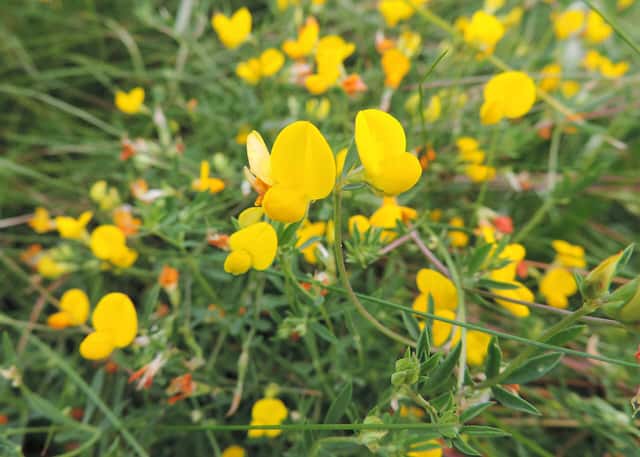
Narrow-leaved bird's-foot trefoil (Lotus tenuis) is a easy-care plant from the Fabaceae family. Lotus tenuis, commonly called narrow-leaved bird's-foot trefoil, is a low-growing perennial legume in the pea family (Fabaceae), closely related to Lotus corniculatus. Native to Europe and southwestern Asia and now naturalized worldwide, it forms compact, bushy clumps 30-45 cm tall with slender, hai...
Narrow-leaved bird's-foot trefoil grows up to 45cm, watering every 10 days, -15°C – 35°C. It is not suitable for indoor environments and safe for pets.
Unlike many tropical plants, Narrow-leaved bird's-foot trefoil tolerates watering mistakes. Best for beginners. Unlike many popular species, Narrow-leaved bird's-foot trefoil is safe to keep around pets.
How to Care for Narrow-leaved bird's-foot trefoil?
TLDR: Narrow-leaved bird's-foot trefoil needs Bright indirect, watering every 10 days, and temperatures between -15-35°C with 40-70% humidity.
How Often Should You Water Narrow-leaved bird's-foot trefoil?
Water regularly while seedlings establish, then taper off — mature plants tolerate extended dry spells and prefer to dry out between waterings. Avoid watering in the heat of the afternoon and never let water pool around the shallow root system.
How Much Light Does Narrow-leaved bird's-foot trefoil Need?
Plant in full sun for 5-8 hours of direct light daily for the best flowering. It tolerates partial shade but blooms less.
What Is the Best Soil for Narrow-leaved bird's-foot trefoil?
Use a well-draining loamy or sandy-loam soil with a near-neutral pH (6.5-7.5). Amend heavy clay with sand and compost to prevent waterlogging.
What Pot Should You Use for Narrow-leaved bird's-foot trefoil?
Best grown directly in garden beds or meadows rather than containers; if potting, choose a wide, shallow, well-draining container to match its shallow root system.
What Is Narrow-leaved bird's-foot trefoil and Where Does It Come From?
Lotus tenuis, commonly called narrow-leaved bird's-foot trefoil, is a low-growing perennial legume in the pea family (Fabaceae), closely related to Lotus corniculatus. Native to Europe and southwestern Asia and now naturalized worldwide, it forms compact, bushy clumps 30-45 cm tall with slender, hairless leaflets and clusters of bright yellow flowers that fade to orange-red with age. As a nitrogen-fixing legume it improves soil fertility naturally and is prized for pollinator-friendly meadows, erosion control, and low-input forage plantings.
How to Propagate Narrow-leaved bird's-foot trefoil?
Seed sowing
Inoculating seed with Rhizobium bacteria before sowing boosts nitrogen fixation and seedling vigor.
- 1 Collect ripe seed pods in early autumn once they turn brown and rattle
- 2 Scarify or soak seeds overnight to improve germination
- 3 Sow directly into well-draining soil in early spring, barely covering with soil
- 4 Keep the seedbed lightly moist until seedlings establish
Materials needed:
Clump division
Handle divisions quickly — the shallow roots dry out fast once exposed to air.
- 1 Dig up an established clump in early spring before active growth resumes
- 2 Gently separate the shallow root mass into smaller sections with a few shoots each
- 3 Replant divisions immediately at the same depth in well-draining soil
- 4 Water well until new growth appears
Materials needed:
How Big Does Narrow-leaved bird's-foot trefoil Grow?
TLDR: Narrow-leaved bird's-foot trefoil can reach up to 45cm tall with Medium growth rate.
Max height
45cm
Growth rate
Medium
Foliage
Deciduous
Plant Uses
Ornamental
Great for decoration
Ground Cover
Soil coverage
Is your plant showing symptoms?
Click on the symptom to discover possible causes:
What Diseases Commonly Affect Narrow-leaved bird's-foot trefoil?
TLDR: Narrow-leaved bird's-foot trefoil is susceptible to 4 known diseases. Monitor regularly for early detection.
Aphids
Aphids are small, soft-bodied, pear-shaped insects (1/16 to 1/8 inch long) that feed by sucking nutrient-rich sap from plants. They reproduce rapidly and can quickly weaken plants, causing distorted growth and transmitting plant viruses. Aphids come in various colors including green, black, red, yellow, brown, and gray. They secrete honeydew, a sticky substance that attracts ants and encourages sooty mold growth.
Slugs and Snails
Slugs and snails are mollusks that feed on plant tissue, causing irregular holes in leaves and damage to young seedlings. They are most active at night and in moist conditions, leaving characteristic silvery slime trails. These pests can quickly devastate gardens, especially during wet seasons.
Powdery Mildew
Powdery mildew is a common fungal disease caused by various fungi species including Erysiphe, Podosphaera, Oïdium, and Leveillula. It affects over 10,000 plant species worldwide. The disease thrives in warm, dry climates with high humidity and appears as a distinctive white powdery coating on plant surfaces.
Root Rot
Root rot is a serious fungal disease that affects the root system of plants, causing them to decay and die. It is primarily caused by overwatering, poor drainage, or soil-borne fungi such as Pythium, Phytophthora, Rhizoctonia, and Fusarium. The disease thrives in waterlogged conditions where roots are deprived of oxygen, making them susceptible to fungal infection.
Meaning & Symbolism
As a member of the clover-like trefoil family, it is often linked with resilience and quiet abundance, thriving in humble meadows and poor soils where showier plants struggle.
Fun Facts
Its flowers open bright yellow and gradually turn orange-red as they age and get pollinated — a visual cue to pollinators about which blooms still have nectar.
Lotus tenuis is a nitrogen-fixing legume, meaning it partners with soil bacteria to convert atmospheric nitrogen into a form other plants can use.
It is sometimes treated as a subspecies of the related Lotus corniculatus (L. corniculatus subsp. tenuifolius) rather than a fully distinct species.
In Argentina's Pampas region it is a key forage legume for livestock grazing on salty, low-lying grasslands.
Frequently asked questions
Is Lotus tenuis toxic to pets?
How often should I water Lotus tenuis?
Does Lotus tenuis need fertilizer?
What pests or diseases affect Lotus tenuis?
Can Lotus tenuis grow in poor or salty soils?
Compare with similar plants
| Attribute | Difficulty | Light | Watering | Pet Safe |
|---|---|---|---|---|
| Field Maple | Easy | Bright indirect | 14d | ✓ |
| Silver Birch | Easy | Direct sun | 14d | ✓ |
| Common Blanketflower | Easy | Direct sun | 10d | ✓ |
| Cushion Bush | Easy | Direct sun | 14d | ✓ |
Choose & Compare
Sources & References
- Lotus tenuis: complete guide to narrow-leaved bird's-foot trefoil | GardenWorld
- Narrow-leaf Bird's-foot Trefoil (Lotus Glaber) Plant Care & How to Grow, Water | Plantiary
- How To Grow Lotus tenuis | EarthOne
- Birdsfoot Trefoil | Sustainable Agriculture Research & Education Program
- UK Wildflowers - Fabaceae - Lotus Tenuis, Narrow-Leaved Bird's-Foot Trefoil
- Lotus corniculatus (Double Bird's Foot Trefoil Lotus) - Professional Gardening Tips
- Lotus tenuis - Wikipedia





