Tropaeolaceae
Nasturtium (Tropaeolum): complete growing guide
Tropaeolum
Grow in full sun, in poor to average, well-drained soil, without heavy fertilizing (rich soil reduces flowering). Water moderately, letting the soil surface dry between waterings, since soggy roots rot easily.
Every 6 days
Bright indirect
10° - 28°C
% - %
Categories
What is Nasturtium?
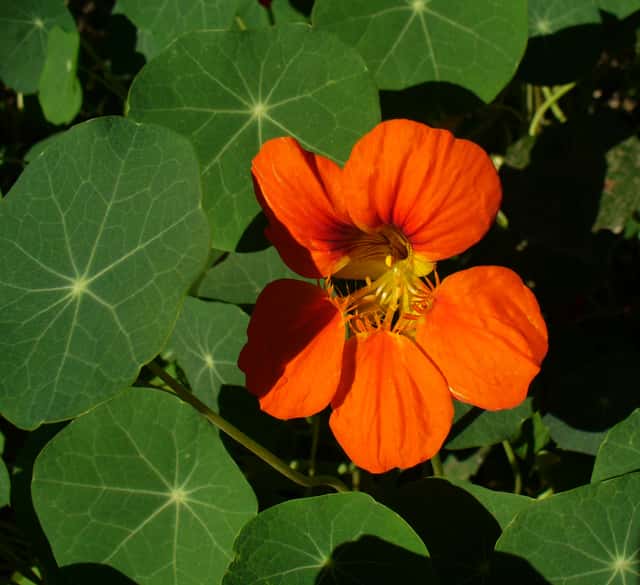
Nasturtium (Tropaeolum) is a easy-care plant from the Tropaeolaceae family. Tropaeolum is a genus of trailing or climbing herbaceous plants in the family Tropaeolaceae, native to Central and South America. The most widely cultivated species, Tropaeolum majus (garden nasturtium), has rounded peltate leaves and showy flowers in red, orange, yellow, pink, white and cream. It i...
Nasturtium grows up to 3.0m, spread of 100cm, watering every 6 days, 10°C – 28°C. It is suitable for indoor environments and not safe for pets.
Unlike many tropical plants, Nasturtium tolerates watering mistakes. Best for beginners. Without precautions, ingestion can cause irritation in pets. Keep out of reach of cats and dogs. Without adequate drainage, root rot can develop within 12 days.
How to Care for Nasturtium?
TLDR: Nasturtium needs Bright indirect, watering every 6 days, and temperatures between 10-28°C with 40-70% humidity.
How Often Should You Water Nasturtium?
Water when the top 1-2 inches of soil feel dry to the touch; nasturtium tolerates drought but not waterlogged soil.
How Much Light Does Nasturtium Need?
Prefers full sun (6+ hours of direct light); it survives in partial shade but blooms far less.
What Is the Best Soil for Nasturtium?
Use sandy, poor-to-average, well-drained soil with a pH between 6.5 and 7.5. Overly rich soil encourages foliage at the expense of flowers.
What Pot Should You Use for Nasturtium?
Wide, shallow containers with good drainage, or hanging baskets for trailing/climbing varieties.
What Is Nasturtium and Where Does It Come From?
Tropaeolum is a genus of trailing or climbing herbaceous plants in the family Tropaeolaceae, native to Central and South America. The most widely cultivated species, Tropaeolum majus (garden nasturtium), has rounded peltate leaves and showy flowers in red, orange, yellow, pink, white and cream. It is a fast-growing annual popular as an ornamental, an edible plant, and a companion plant that lures aphids away from vegetable crops.
How to Propagate Nasturtium?
Seed propagation
Darkness aids germination; avoid transplanting established seedlings since the roots are sensitive.
- 1 Sow seeds 1/2 inch deep directly where they are to grow after the last frost
- 2 Space seeds 10-12 inches apart
- 3 Keep the soil lightly moist until germination, which takes 7-10 days
- 4 Thin seedlings once true leaves appear
Materials needed:
How Big Does Nasturtium Grow?
TLDR: Nasturtium can reach up to 3.0m tall with Fast growth rate.
Max height
3.0m
Spread
1.0m
Growth rate
Fast
Warning: Toxic Plant
This plant can be toxic if ingested. Keep out of reach of:
Plant Uses
Ornamental
Great for decoration
Edible
Can be consumed
Culinary Uses
- Edible peppery flowers and leaves, similar to watercress, used fresh in salads and as garnish
- Immature green seed pods can be pickled as a caper substitute
- Flower buds can be pickled in vinegar
Is your plant showing symptoms?
Click on the symptom to discover possible causes:
What Diseases Commonly Affect Nasturtium?
TLDR: Nasturtium is susceptible to 5 known diseases. Monitor regularly for early detection.
Aphids
Aphids are small, soft-bodied, pear-shaped insects (1/16 to 1/8 inch long) that feed by sucking nutrient-rich sap from plants. They reproduce rapidly and can quickly weaken plants, causing distorted growth and transmitting plant viruses. Aphids come in various colors including green, black, red, yellow, brown, and gray. They secrete honeydew, a sticky substance that attracts ants and encourages sooty mold growth.
Caterpillars
Caterpillars are the larval stage of moths and butterflies that feed voraciously on plant foliage, stems, flowers, and fruits. Common species include cabbage loopers, tomato hornworms, armyworms, and cutworms. These pests can cause extensive damage by consuming large amounts of plant tissue in a short time. They vary in size from small (1/4 inch) to large (5 inches), with colors ranging from green to brown, often featuring stripes or spots. Caterpillars are highly mobile and can quickly spread throughout gardens, making them one of the most destructive common pests.
Mosaic Virus
Mosaic virus is a group of plant viruses that cause mottled, patchy patterns on leaves and can affect a wide variety of plants. The virus creates characteristic yellow, white, and green mosaic patterns, often accompanied by stunted growth and deformed plant parts. This highly contagious disease spreads rapidly through insect vectors and contaminated tools.
Whiteflies
Whiteflies are small, soft-bodied, winged insects closely related to aphids and mealybugs. They are moth-like in appearance, about 1/16 inch long, triangular in shape, and gray-white in color. These sap-sucking pests feed on plant tissue, causing yellowing, stunted growth, and wilting. They also excrete honeydew, which attracts ants and promotes sooty mold growth. Whiteflies can transmit serious plant viruses.
Meaning & Symbolism
Named by Linnaeus after the Greek "tropaion" (trophy), since the leaves resemble shields and the flowers resemble blood-stained helmets: it traditionally symbolizes victory, conquest and patriotism.
Fun Facts
The name Tropaeolum comes from the Greek "tropaion" (trophy) because Linnaeus thought the leaves looked like shields and the flowers like blood-stained helmets
Nasturtium's immature green seed pods can be pickled in vinegar as a caper substitute
It is often planted as a "trap crop" to lure aphids away from neighboring vegetables
Frequently asked questions
Does nasturtium need a lot of sun?
Can I eat nasturtium flowers and leaves?
Why does my nasturtium have lots of leaves but few flowers?
What pests commonly attack nasturtium?
Compare with similar plants
| Attribute | Difficulty | Light | Watering | Pet Safe |
|---|---|---|---|---|
| Field Maple | Easy | Bright indirect | 14d | ✓ |
| Silver Birch | Easy | Direct sun | 14d | ✓ |
| Common Blanketflower | Easy | Direct sun | 10d | ✓ |
| Cushion Bush | Easy | Direct sun | 14d | ✓ |
Choose & Compare
Sources & References
- Nasturtium, Tropaeolum species - Wisconsin Horticulture Extension
- Tropaeolum majus (Common Nasturtium) - NC State Extension Gardener Plant Toolbox
- Growing Nasturtiums - The Old Farmer's Almanac
- How to Identify and Treat Common Nasturtium Diseases - Gardener's Path
- Nasturtium Tropaeolum - CT Agricultural Experiment Station Plant Pest Handbook





