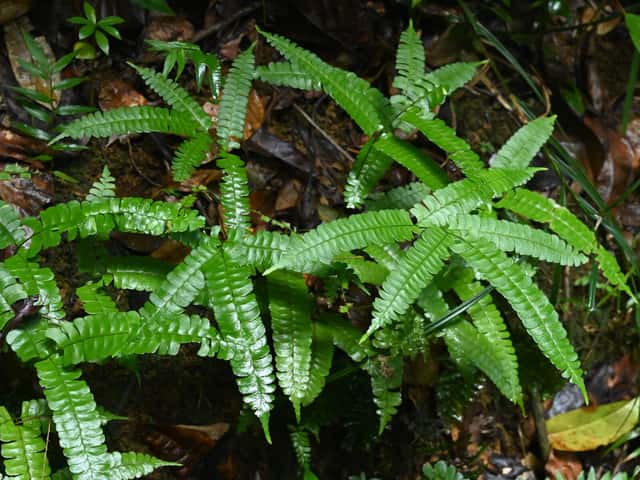
Lindsaeaceae
Lindsaea (Necklace Fern) Care Guide
Lindsaea
Necklace ferns thrive in bright, indirect light and evenly moist, well-draining soil rich in organic matter. Keep humidity moderate to high and avoid letting the soil dry out completely or stay soggy, since these ferns are sensitive to both drought and root rot.
Every 7 days
Partial shade
15° - 26°C
50% - 70%
Categories
What is Necklace Fern?
Necklace Fern (Lindsaea) is a medium-care plant from the Lindsaeaceae family. Lindsaea is a genus of roughly 180 small to medium-sized ferns in the family Lindsaeaceae, commonly known as necklace ferns. Native to moist tropical and subtropical forests across Asia, Australia, the Pacific, Madagascar, and South America, these ferns grow as low, spreading clumps of finely divide...
Necklace Fern grows up to 40cm, spread of 40cm, watering every 7 days, 15°C – 26°C, 50–70% humidity. It is suitable for indoor environments and safe for pets.
Unlike many popular species, Necklace Fern is safe to keep around pets. Without adequate drainage, root rot can develop within 14 days.
How to Care for Necklace Fern?
TLDR: Necklace Fern needs Partial shade, watering every 7 days, and temperatures between 15-26°C with 50-70% humidity.
How Often Should You Water Necklace Fern?
Water when the top of the soil starts to feel dry, keeping the mix evenly moist but never waterlogged. Reduce watering slightly in winter.
How Much Light Does Necklace Fern Need?
Provide bright, indirect light such as a spot near an east- or south-facing window filtered by a curtain. Avoid direct midday sun, which can scorch the fine fronds.
What Is the Best Soil for Necklace Fern?
Use a loose, organic-rich, well-draining mix, such as potting soil amended with coco coir, perlite, and compost, to mimic the leaf-litter floor of its native forest habitat.
What Pot Should You Use for Necklace Fern?
A wide, shallow pot with good drainage holes suits the fern's shallow, spreading root system; unglazed terracotta helps excess moisture evaporate.
Care Schedule
Fertilize
Every 60 days
Misting
Every 3 days
Rotate
Every 14 days
Repot
Every 365 days
What Is Necklace Fern and Where Does It Come From?
Lindsaea is a genus of roughly 180 small to medium-sized ferns in the family Lindsaeaceae, commonly known as necklace ferns. Native to moist tropical and subtropical forests across Asia, Australia, the Pacific, Madagascar, and South America, these ferns grow as low, spreading clumps of finely divided, leathery fronds. Species such as the screw fern (Lindsaea linearis) and weeping fern (Lindsaea pendula) are grown as ornamental houseplants and shade-garden specimens for their delicate, evergreen foliage.
How to Propagate Necklace Fern?
Spore Propagation
Keep the growing medium consistently moist and out of direct sun; germination is slow and can take weeks to months.
- 1 Wait for the sori on the underside of mature fronds to turn dark brown or black
- 2 Cut the frond and place it in a paper bag to release spores
- 3 Sprinkle the fine spores evenly over sterile, moist potting mix
- 4 Cover with clear plastic or glass to keep humidity high until germination
Materials needed:
Clump Division
Only divide established, healthy clumps; keep newly divided plants consistently moist for the first few weeks.
- 1 Remove the fern from its pot and locate natural clumps with their own roots
- 2 Gently separate divisions by hand or with a clean, sharp knife
- 3 Repot each division at the same depth in fresh, well-draining mix
- 4 Water thoroughly and keep in bright, indirect light while it establishes
Materials needed:
How Big Does Necklace Fern Grow?
TLDR: Necklace Fern can reach up to 40cm tall with Medium growth rate.
Max height
40cm
Spread
40cm
Growth rate
Medium
Foliage
Evergreen
Plant Uses
Ornamental
Great for decoration
Is your plant showing symptoms?
Click on the symptom to discover possible causes:
What Diseases Commonly Affect Necklace Fern?
TLDR: Necklace Fern is susceptible to 8 known diseases. Monitor regularly for early detection.
Root Rot
Root rot is a serious fungal disease that affects the root system of plants, causing them to decay and die. It is primarily caused by overwatering, poor drainage, or soil-borne fungi such as Pythium, Phytophthora, Rhizoctonia, and Fusarium. The disease thrives in waterlogged conditions where roots are deprived of oxygen, making them susceptible to fungal infection.
Overwatering
Overwatering occurs when plants receive too much water, depriving roots of oxygen and causing root rot. This environmental stress is one of the most common causes of houseplant death, as waterlogged soil prevents roots from breathing and functioning properly.
Low Humidity Stress
Low humidity stress occurs when indoor air becomes too dry, causing plants to lose moisture faster than they can absorb it through their roots. This is especially common during winter heating periods, near radiators and heating vents, or in air-conditioned spaces. Tropical plants are particularly susceptible to low humidity damage.
Underwatering
Underwatering or drought stress is a physiological disorder that occurs when the amount of water a plant loses through transpiration exceeds the amount its roots can absorb from the soil. This leads to cellular dehydration and various visible symptoms that can compromise plant health and productivity.
Meaning & Symbolism
Like other ferns, Lindsaea is often associated with new life, resilience, and quiet elegance, reflecting its ability to thrive in the dappled shade of the forest floor.
Fun Facts
The genus name honors 18th-century Jamaican surgeon and botanist John Lindsay.
Lindsaea is pantropical, with around 180 species spread across Asia, Australia, the Pacific, Madagascar, and South America.
Some Lindsaea species, like the screw fern, grow in nutrient-poor, sandy heathland soils rather than rich rainforest floors.
Frequently asked questions
How often should I water my necklace fern?
Does Lindsaea need high humidity?
Is Lindsaea toxic to cats and dogs?
How do I propagate a necklace fern?
Compare with similar plants
| Attribute | Difficulty | Light | Watering | Pet Safe |
|---|---|---|---|---|
| Dark Fieldcap | Medium | Low light | 2d | ⚠️ |
| Azalea | Medium | Partial shade | 3d | ⚠️ |
| Muriel's Bamboo | Medium | Partial shade | 3d | ✓ |
| Bougainvillea | Medium | Direct sun | 7d | ⚠️ |




