Nepenthaceae
Nepenthes ventricosa: Ventricosa Pitcher Plant Care
Nepenthes ventricosa
Grow in bright, indirect light with high humidity and consistently moist, mineral-free substrate. Never fertilize the soil - this carnivorous plant gets its nutrients from trapped insects, not the growing medium.
Every 3 days
Bright indirect
12° - 30°C
50% - 80%
Categories
What is Ventricosa Pitcher Plant?
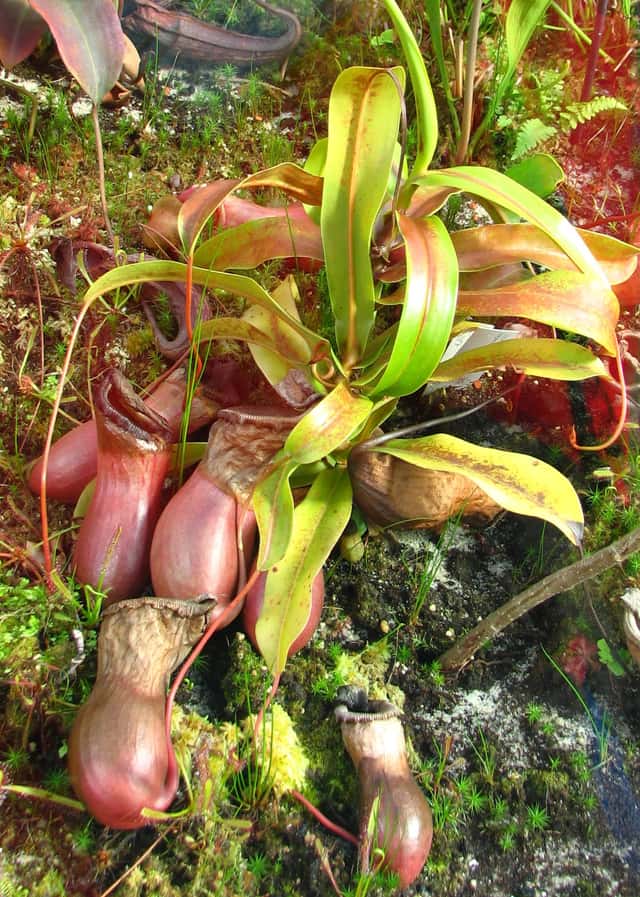
Ventricosa Pitcher Plant (Nepenthes ventricosa) is a medium-care plant from the Nepenthaceae family. Nepenthes ventricosa is a tropical pitcher plant native to the mountain forests of Luzon in the Philippines, where it grows as a climbing vine on rocky slopes and forest edges. It produces distinctive funnel-shaped pitchers with a shield-like, upturned lid used to lure and trap insects, which the pl...
Ventricosa Pitcher Plant grows up to 3.0m, spread of 60cm, watering every 3 days, 12°C – 30°C, 50–80% humidity. It is suitable for indoor environments and safe for pets.
Unlike many popular species, Ventricosa Pitcher Plant is safe to keep around pets. Without adequate drainage, root rot can develop within 7 days.
How to Care for Ventricosa Pitcher Plant?
TLDR: Ventricosa Pitcher Plant needs Bright indirect, watering every 3 days, and temperatures between 12-30°C with 50-80% humidity.
How Often Should You Water Ventricosa Pitcher Plant?
Keep the sphagnum moss or peat-based substrate evenly moist at all times, but never waterlogged. Use only distilled, reverse-osmosis, or rainwater - tap water minerals build up in the pitchers and roots and can kill the plant over time.
How Much Light Does Ventricosa Pitcher Plant Need?
Provide bright, indirect light for 12-14 hours a day; an east- or south-facing window with a sheer curtain works well. Direct midday sun can scorch the leaves, while too little light produces pitcher-less vines.
What Is the Best Soil for Ventricosa Pitcher Plant?
Pot in a low-nutrient, well-draining mix of long-fiber sphagnum moss and perlite (roughly 1:1). Never add potting soil, compost, or standard fertilizer - regular nutrients damage the roots.
What Pot Should You Use for Ventricosa Pitcher Plant?
Use a hanging basket or a plastic nursery pot with ample drainage holes; unglazed terracotta can wick away too much moisture and dry out the sensitive roots.
Care Schedule
Repot
Every 730 days
What Is Ventricosa Pitcher Plant and Where Does It Come From?
Nepenthes ventricosa is a tropical pitcher plant native to the mountain forests of Luzon in the Philippines, where it grows as a climbing vine on rocky slopes and forest edges. It produces distinctive funnel-shaped pitchers with a shield-like, upturned lid used to lure and trap insects, which the plant digests to supplement the scarce nutrients of its native volcanic soil. It is one of the most beginner-friendly carnivorous plants thanks to its tolerance of a wide range of humidity levels.
How to Propagate Ventricosa Pitcher Plant?
Stem Cutting
Use only clean, sterilized tools to prevent rot, maintain high humidity around the cutting, and avoid direct sun until roots establish.
- 1 Select a healthy stem section with 2-3 leaves and at least one node.
- 2 Cut just below a node using clean, sharp shears.
- 3 Remove the lowest leaf and insert the cut end into moist long-fiber sphagnum moss.
- 4 Keep the cutting in a humid propagator or under a clear cover at warm temperatures.
- 5 Mist regularly and wait several weeks to months for roots and new growth to appear.
Materials needed:
How Big Does Ventricosa Pitcher Plant Grow?
TLDR: Ventricosa Pitcher Plant can reach up to 3.0m tall with Medium growth rate.
Max height
3.0m
Spread
60cm
Growth rate
Medium
Foliage
Evergreen
Plant Uses
Ornamental
Great for decoration
Is your plant showing symptoms?
Click on the symptom to discover possible causes:
What Diseases Commonly Affect Ventricosa Pitcher Plant?
TLDR: Ventricosa Pitcher Plant is susceptible to 10 known diseases. Monitor regularly for early detection.
Root Rot
Root rot is a serious fungal disease that affects the root system of plants, causing them to decay and die. It is primarily caused by overwatering, poor drainage, or soil-borne fungi such as Pythium, Phytophthora, Rhizoctonia, and Fusarium. The disease thrives in waterlogged conditions where roots are deprived of oxygen, making them susceptible to fungal infection.
Aphids
Aphids are small, soft-bodied, pear-shaped insects (1/16 to 1/8 inch long) that feed by sucking nutrient-rich sap from plants. They reproduce rapidly and can quickly weaken plants, causing distorted growth and transmitting plant viruses. Aphids come in various colors including green, black, red, yellow, brown, and gray. They secrete honeydew, a sticky substance that attracts ants and encourages sooty mold growth.
Mealybugs
Mealybugs are small, soft-bodied insects covered with a white, waxy, cottony material. They are common pests of houseplants and outdoor plants in mild climates. These sap-sucking insects feed on plant tissue, causing damage, stunted growth, and can lead to plant death if left untreated. They produce sticky honeydew which attracts sooty mold.
Scale Insects
Scale insects are small sap-sucking pests that appear as brown, shell-like bumps on plant stems and leaves. There are over 25 species, divided into armored (hard) and unarmored (soft) scales. They feed by piercing plant tissue and extracting sap, which weakens the plant and can lead to yellowing, stunted growth, and even death if left untreated. They also excrete honeydew, which attracts ants and promotes sooty mold growth.
Meaning & Symbolism
In cultivation, Nepenthes ventricosa has come to symbolize adaptability and quiet resourcefulness - a plant that thrives by making the most of nutrient-poor surroundings.
Fun Facts
Its pitchers double as a natural insect trap, luring prey with nectar along the rim before they slip into the digestive fluid below.
The plant produces two pitcher shapes on the same vine: squat pitchers near the ground and slender, elongated ones higher up.
It is one of the most widely cultivated Nepenthes species because it tolerates a wider range of humidity than most of its relatives.
Frequently asked questions
Do I need to fertilize Nepenthes ventricosa?
Why aren't my pitchers forming?
Can I use tap water on my pitcher plant?
Is Nepenthes ventricosa toxic to pets?
Compare with similar plants
| Attribute | Difficulty | Light | Watering | Pet Safe |
|---|---|---|---|---|
| Dark Fieldcap | Medium | Low light | 2d | ⚠️ |
| Azalea | Medium | Partial shade | 3d | ⚠️ |
| Muriel's Bamboo | Medium | Partial shade | 3d | ✓ |
| Bougainvillea | Medium | Direct sun | 7d | ⚠️ |
Choose & Compare
Sources & References
- Nepenthes Ventricosa Care - Carnivorous Plants Guide
- Nepenthes ventricosa Pitcher Plant: How Much Water & Light Does it Need to Thrive?
- Common Nepenthes diseases and pests to look out for
- How to Grow and Care for Nepenthes Ventricosa
- How To Fertilize Nepenthes
- Carnivorous Nepenthes x ventrata plants use a naphthoquinone as phytoanticipin against herbivory




