Marantaceae
Network calathea (Calathea musaica)
Calathea musaica
Needs bright indirect light, high humidity (50-80%) and temperatures of 18-27 °C, away from cold drafts, air conditioning and heaters. Keep the mix lightly moist: water when the top inch dries, using filtered or rain water. Feed every 4-6 weeks in spring and summer and repot every 2-3 years. Brown tips almost always mean dry air or water with too much chlorine and salts.
Every 7 days
Partial shade
15° - 27°C
50% - 80%
Categories
What is Network calathea?
Network calathea (Calathea musaica) is a medium-care plant from the Marantaceae family. Network calathea, sold as Calathea musaica or Calathea 'Network', is a foliage plant in the prayer-plant family (Marantaceae) native to the Atlantic rainforest of southeastern Brazil, mainly Espírito Santo, where it grows in the forest understory. Its accepted botanical name is now Goeppertia kegelj...
Network calathea grows up to 60cm, spread of 90cm, watering every 7 days, 15°C – 27°C, 50–80% humidity. It is suitable for indoor environments and safe for pets.
Unlike many popular species, Network calathea is safe to keep around pets. Without adequate drainage, root rot can develop within 14 days.
How to Care for Network calathea?
TLDR: Network calathea needs Partial shade, watering every 7 days, and temperatures between 15-27°C with 50-80% humidity.
How Often Should You Water Network calathea?
Water when the top 2-3 cm of mix are dry, about once a week in warm months and every two weeks in winter. Use filtered or rain water, or let tap water stand for 24 hours. Drain well: yellow leaves mean too much water; curling leaves, too little.
How Much Light Does Network calathea Need?
Bright, indirect light, such as near a north- or east-facing window. Direct sun scorches and fades the leaves; in low light the net pattern becomes dull.
What Is the Best Soil for Network calathea?
A light, airy mix rich in organic matter: for example 1 part potting soil, 2 parts peat or coco coir and 2 parts perlite. The pot must have drainage holes.
What Pot Should You Use for Network calathea?
A plastic or glazed ceramic pot with drainage holes, only slightly larger than the root ball. These hold moisture better than terracotta.
Care Schedule
Fertilize
Every 35 days
Repot
Every 730 days
What Is Network calathea and Where Does It Come From?
Network calathea, sold as Calathea musaica or Calathea 'Network', is a foliage plant in the prayer-plant family (Marantaceae) native to the Atlantic rainforest of southeastern Brazil, mainly Espírito Santo, where it grows in the forest understory. Its accepted botanical name is now Goeppertia kegeljanii (it has also been called Calathea bella), but the plant trade still knows it as Calathea musaica. The oval leaves are bright light green, covered in a fine web of lime and dark green lines that looks like a mosaic or a net, hence the name. It forms a compact clump about 60 cm tall and up to 90 cm wide. Like other marantas, it moves its leaves slightly through the day. It is non-toxic to people, cats and dogs.
How to Propagate Network calathea?
Division
This is the only practical way to propagate it: it rarely sets seed indoors. Covering the new plant with a clear plastic bag helps keep humidity up.
- 1 In late spring, take the plant out of its pot and loosen the soil from the roots
- 2 Pull or cut the clump apart with a clean knife, leaving roots and a few leaves on each piece
- 3 Pot each division in a small pot of moist mix
- 4 Keep warm, humid and in low light, with no fertilizer for at least a month
Materials needed:
How Big Does Network calathea Grow?
TLDR: Network calathea can reach up to 60cm tall with Medium growth rate.
Max height
60cm
Spread
90cm
Growth rate
Medium
Foliage
Evergreen
Plant Uses
Ornamental
Great for decoration
Is your plant showing symptoms?
Click on the symptom to discover possible causes:
What Diseases Commonly Affect Network calathea?
TLDR: Network calathea is susceptible to 10 known diseases. Monitor regularly for early detection.
Spider Mites
Spider mites are tiny arachnids (less than 1/20 inch long) related to spiders and ticks that feed on plant sap. They thrive in hot, dry conditions and can cause significant damage to ornamental and vegetable plants. During severe infestations, crop losses can reach 14% or higher as these pests disrupt vital plant processes including photosynthesis, carbon dioxide absorption, and transpiration.
Mealybugs
Mealybugs are small, soft-bodied insects covered with a white, waxy, cottony material. They are common pests of houseplants and outdoor plants in mild climates. These sap-sucking insects feed on plant tissue, causing damage, stunted growth, and can lead to plant death if left untreated. They produce sticky honeydew which attracts sooty mold.
Scale Insects
Scale insects are small sap-sucking pests that appear as brown, shell-like bumps on plant stems and leaves. There are over 25 species, divided into armored (hard) and unarmored (soft) scales. They feed by piercing plant tissue and extracting sap, which weakens the plant and can lead to yellowing, stunted growth, and even death if left untreated. They also excrete honeydew, which attracts ants and promotes sooty mold growth.
Aphids
Aphids are small, soft-bodied, pear-shaped insects (1/16 to 1/8 inch long) that feed by sucking nutrient-rich sap from plants. They reproduce rapidly and can quickly weaken plants, causing distorted growth and transmitting plant viruses. Aphids come in various colors including green, black, red, yellow, brown, and gray. They secrete honeydew, a sticky substance that attracts ants and encourages sooty mold growth.
Fun Facts
Its accepted name is now Goeppertia kegeljanii, but the trade still calls it Calathea musaica
It is native to Brazil's Atlantic rainforest, mainly Espírito Santo
The leaf pattern looks like a mosaic of tiny tiles
Frequently asked questions
Why are the leaf tips turning brown?
How often should I water it?
Can it take direct sun?
Is Calathea musaica toxic to pets?
Compare with similar plants
| Attribute | Difficulty | Light | Watering | Pet Safe |
|---|---|---|---|---|
| Dark Fieldcap | Medium | Low light | 2d | ⚠️ |
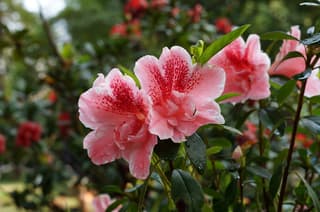
| Azalea | Medium | Partial shade | 3d | ⚠️ |
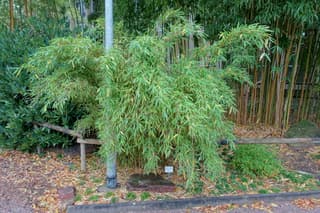
| Muriel's Bamboo | Medium | Partial shade | 3d | ✓ |
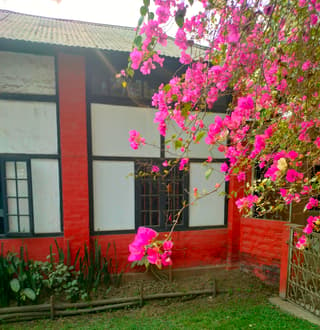
| Bougainvillea | Medium | Direct sun | 7d | ⚠️ |