Nepenthaceae
Nepenthes vieillardii — New Caledonia Pitcher Plant
Nepenthes vieillardii
Provide bright, humid, well-ventilated conditions with a coarse, fast-draining carnivorous-plant mix. Keep the substrate evenly moist but never waterlogged, water only with distilled, rain, or reverse-osmosis water, and avoid fertilizer — this plant gets its nutrients from trapped insects.
Every 7 days
Bright indirect
18° - 30°C
60% - 80%
Categories
What is New Caledonia Pitcher Plant?
New Caledonia Pitcher Plant (Nepenthes vieillardii) is a hard-care plant from the Nepenthaceae family. Nepenthes vieillardii, the New Caledonia pitcher plant, is a climbing carnivorous shrub endemic to the island of New Caledonia in the southwest Pacific — the easternmost native range of any Nepenthes species. It grows in shrublands, dry thicket-forest, and open ground from the coastal plain up to ab...
New Caledonia Pitcher Plant grows up to watering every 7 days, 18°C – 30°C, 60–80% humidity. It is suitable for indoor environments and safe for pets.
Unlike easy-care plants, New Caledonia Pitcher Plant demands constant attention to humidity and light. Not recommended for beginners. Unlike many popular species, New Caledonia Pitcher Plant is safe to keep around pets. Without adequate drainage, root rot can develop within 14 days.
How to Care for New Caledonia Pitcher Plant?
TLDR: New Caledonia Pitcher Plant needs Bright indirect, watering every 7 days, and temperatures between 18-30°C with 60-80% humidity.
How Often Should You Water New Caledonia Pitcher Plant?
Water roughly once a week with distilled, rain, or reverse-osmosis water — tap water minerals can damage the roots. Let the top of the substrate dry slightly between waterings; this species dislikes sitting in stagnant water.
How Much Light Does New Caledonia Pitcher Plant Need?
Give bright, diffused light with a little direct morning or late-afternoon sun. Insufficient light is a common reason plants stop producing pitchers.
What Is the Best Soil for New Caledonia Pitcher Plant?
Use an aggregate-rich, fast-draining mix — long-fibred sphagnum moss, perlite/pumice, and orchid bark work well. Standard potting soil retains too much water and encourages root rot.
What Pot Should You Use for New Caledonia Pitcher Plant?
Plastic nursery pots or hanging baskets with generous drainage holes; young plants benefit from being grown in a terrarium or humidity dome until well established.
Care Schedule
Repot
Every 365 days
What Is New Caledonia Pitcher Plant and Where Does It Come From?
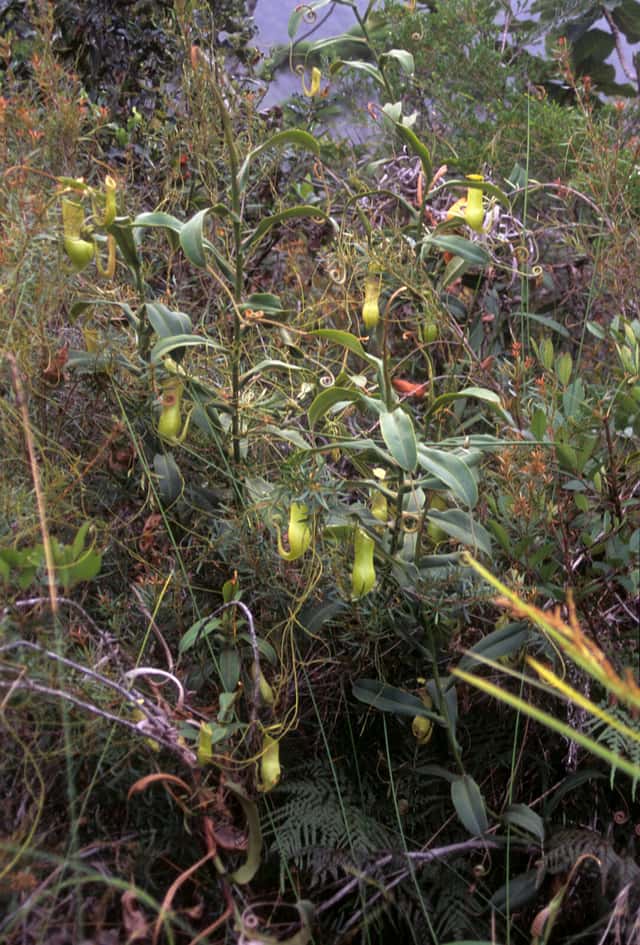
Nepenthes vieillardii, the New Caledonia pitcher plant, is a climbing carnivorous shrub endemic to the island of New Caledonia in the southwest Pacific — the easternmost native range of any Nepenthes species. It grows in shrublands, dry thicket-forest, and open ground from the coastal plain up to about 900 m altitude, often on nutrient-poor ultramafic soils. Like all pitcher plants, it produces modified leaf tips that form fluid-filled traps: lower pitchers are squat and egg-shaped with fringed wings, while upper pitchers are slimmer and funnel-shaped, both ranging from yellowish to reddish in color. The trapped insects supplement the poor mineral nutrition of its native soils. It is a slow grower and considered a challenging species in cultivation, requiring very well-drained substrate and consistently high humidity.
How to Propagate New Caledonia Pitcher Plant?
Stem cutting
Rooting is slow and can take from six months to a year; patience is essential and cuttings taken during active growth root fastest.
- 1 Select a healthy stem section with at least 2-3 leaf nodes from an actively growing plant.
- 2 Cut underwater when possible to prevent air embolisms blocking water uptake.
- 3 Dip the cut end in IBA rooting hormone.
- 4 Remove the lowest leaf and insert the cutting into damp long-fibred sphagnum moss.
- 5 Keep in a humid, warm, bright but indirect-light environment, such as a covered propagator or terrarium, until new growth appears.
Materials needed:
Seed propagation
Seed viability drops quickly after harvest, and because Nepenthes are dioecious (separate male and female plants), reliable seed is hard to obtain outside cultivation collections.
- 1 Sow fresh seed on the surface of damp long-fibred sphagnum moss or peat-perlite mix.
- 2 Keep in a sealed, humid container with bright indirect light.
- 3 Maintain warmth and constant moisture until germination, which can take several weeks.
- 4 Grow seedlings on in high humidity for months before gradual acclimatization.
Materials needed:
How Big Does New Caledonia Pitcher Plant Grow?
TLDR: New Caledonia Pitcher Plant can reach up to ?cm tall with Slow growth rate.
Growth rate
Slow
Foliage
Evergreen
Plant Uses
Ornamental
Great for decoration
Is your plant showing symptoms?
Click on the symptom to discover possible causes:
What Diseases Commonly Affect New Caledonia Pitcher Plant?
TLDR: New Caledonia Pitcher Plant is susceptible to 7 known diseases. Monitor regularly for early detection.
Mealybugs
Mealybugs are small, soft-bodied insects covered with a white, waxy, cottony material. They are common pests of houseplants and outdoor plants in mild climates. These sap-sucking insects feed on plant tissue, causing damage, stunted growth, and can lead to plant death if left untreated. They produce sticky honeydew which attracts sooty mold.
Scale Insects
Scale insects are small sap-sucking pests that appear as brown, shell-like bumps on plant stems and leaves. There are over 25 species, divided into armored (hard) and unarmored (soft) scales. They feed by piercing plant tissue and extracting sap, which weakens the plant and can lead to yellowing, stunted growth, and even death if left untreated. They also excrete honeydew, which attracts ants and promotes sooty mold growth.
Aphids
Aphids are small, soft-bodied, pear-shaped insects (1/16 to 1/8 inch long) that feed by sucking nutrient-rich sap from plants. They reproduce rapidly and can quickly weaken plants, causing distorted growth and transmitting plant viruses. Aphids come in various colors including green, black, red, yellow, brown, and gray. They secrete honeydew, a sticky substance that attracts ants and encourages sooty mold growth.
Root Rot
Root rot is a serious fungal disease that affects the root system of plants, causing them to decay and die. It is primarily caused by overwatering, poor drainage, or soil-borne fungi such as Pythium, Phytophthora, Rhizoctonia, and Fusarium. The disease thrives in waterlogged conditions where roots are deprived of oxygen, making them susceptible to fungal infection.
Meaning & Symbolism
The genus name comes from Greek mythology's nepenthes pharmakon, a potion in Homer's Odyssey said to banish sorrow — Linnaeus felt the plant's extraordinary pitchers would make any botanist forget their troubles.
Fun Facts
Its native range in New Caledonia is the most easterly of any Nepenthes species on Earth.
It grows on nutrient-poor ultramafic soils, which is likely why it evolved to trap insects for extra nutrition.
The plant produces two distinctly shaped pitchers on the same vine — squat lower pitchers and slender upper pitchers.
Its flowers are pollinated by moths, not bees.
Frequently asked questions
Is Nepenthes vieillardii easy to grow?
Is Nepenthes vieillardii toxic to cats or dogs?
How often should I water my Nepenthes vieillardii?
Does Nepenthes vieillardii need fertilizer?
Why isn't my Nepenthes vieillardii producing pitchers?
Compare with similar plants
| Attribute | Difficulty | Light | Watering | Pet Safe |
|---|---|---|---|---|
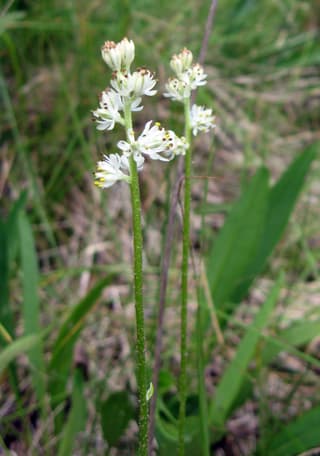
| Sticky false asphodel | Hard | Bright indirect | 1d | ✓ |
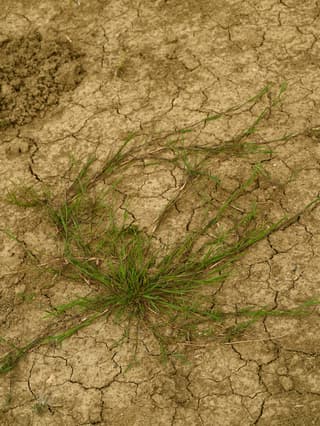
| Creeping bentgrass | Hard | Direct sun | 3d | ✓ |
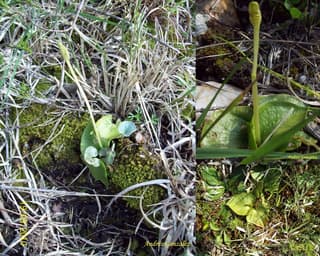
| Bulbous Adder's-tongue | Hard | Partial shade | 4d | ✓ |
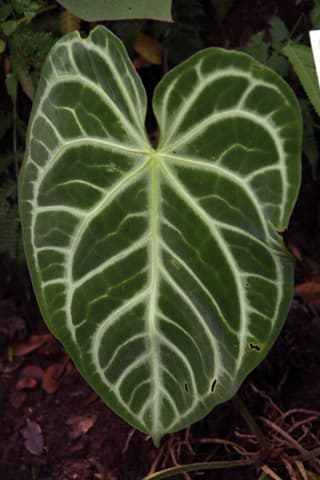
| Crystal Anthurium | Hard | Partial shade | 7d | ⚠️ |
Choose & Compare
Sources & References
- Nepenthes vieillardii - Wikipedia
- Nepenthes vieillardii - Monaco Nature Encyclopedia
- Nepenthes vieillardii Plant Care - Greg App
- Tropical Pitcher Plants (Nepenthes spp.) - Clemson HGIC
- Nepenthes vieillardii - Carnivorous Plant Nursery
- Nepenthes Propagation via Stem Cuttings - ICPS
- Pitcher Plant Toxicity - ASPCA