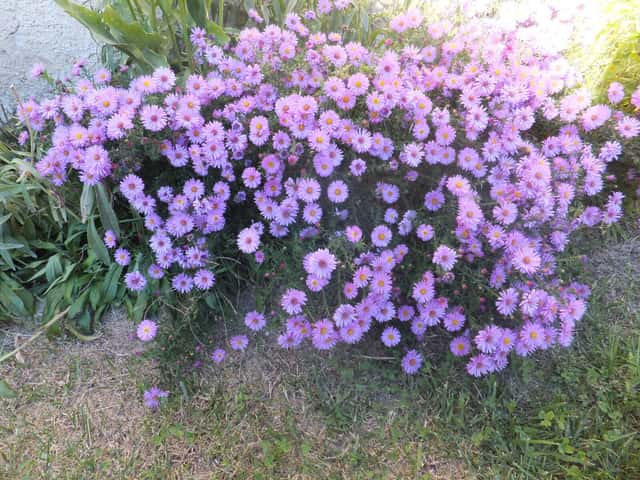
Asteraceae
New England Aster (Symphyotrichum novae-angliae)
Symphyotrichum novae-angliae
An easy perennial for a sunny border: fertile, moist, well-drained soil, water in dry spells and a hard cut back in late autumn. Pinching stems until July keeps it shorter and bushier.
Every 7 days
Bright indirect
° - °C
% - %
Categories
What is New England Aster?
New England Aster (Symphyotrichum novae-angliae) is a easy-care plant from the Asteraceae family. New England aster is a perennial wildflower of moist meadows and prairies in central and eastern North America. It forms clumps of upright, hairy stems, usually 1 to 1.2 m tall and sometimes over 1.8 m. From late summer into autumn it bears masses of deep purple, occasionally pink or white, daisies...
New England Aster grows up to 1.8m, spread of 90cm, watering every 7 days. It is not suitable for indoor environments and safe for pets.
Unlike many tropical plants, New England Aster tolerates watering mistakes. Best for beginners. Unlike many popular species, New England Aster is safe to keep around pets.
How to Care for New England Aster?
TLDR: New England Aster needs Bright indirect, watering every 7 days, and temperatures between 15-30°C with 40-70% humidity.
How Often Should You Water New England Aster?
Keep the soil lightly moist, watering about once a week in dry weather. It tolerates short dry spells but not waterlogged soil in winter.
How Much Light Does New England Aster Need?
Full sun, 6 hours or more. In part shade it flowers less and the stems flop.
What Is the Best Soil for New England Aster?
Fertile, humus-rich, moist but well-drained soil. Clay is fine as long as it does not stay waterlogged.
What Pot Should You Use for New England Aster?
A large, deep pot with good drainage if it cannot go in the ground.
What Is New England Aster and Where Does It Come From?
New England aster is a perennial wildflower of moist meadows and prairies in central and eastern North America. It forms clumps of upright, hairy stems, usually 1 to 1.2 m tall and sometimes over 1.8 m. From late summer into autumn it bears masses of deep purple, occasionally pink or white, daisies with up to 100 narrow rays around a yellow centre. The top dies back in winter and regrows in spring. Its flowers are one of the last nectar sources of the year for bees and migrating monarch butterflies.
How to Propagate New England Aster?
Division
Divide every 3 years to keep plants vigorous.
- 1 In spring, as shoots appear, lift the clump
- 2 Split it into pieces with roots and young shoots
- 3 Discard the old, woody centre
- 4 Replant at the same depth and water well
Materials needed:
Seed
Cold breaks seed dormancy.
- 1 Collect dry seed in autumn
- 2 Sow on the surface of the mix, barely covered
- 3 Leave the pot outdoors over winter or chill the seed in the fridge for 4-8 weeks
- 4 Keep moist until seedlings appear
Materials needed:
How Big Does New England Aster Grow?
TLDR: New England Aster can reach up to 1.8m tall with Medium growth rate.
Max height
1.8m
Spread
90cm
Growth rate
Medium
Foliage
Deciduous
Plant Uses
Ornamental
Great for decoration
Medicinal
Medicinal properties
Medicinal Uses
- Indigenous peoples of North America used root poultices for pain and root infusions for diarrhoea and fever.
Is your plant showing symptoms?
Click on the symptom to discover possible causes:
What Diseases Commonly Affect New England Aster?
TLDR: New England Aster is susceptible to 8 known diseases. Monitor regularly for early detection.
Powdery Mildew
Powdery mildew is a common fungal disease caused by various fungi species including Erysiphe, Podosphaera, Oïdium, and Leveillula. It affects over 10,000 plant species worldwide. The disease thrives in warm, dry climates with high humidity and appears as a distinctive white powdery coating on plant surfaces.
Fusarium Wilt
Fusarium wilt is a serious fungal disease caused by the soil-borne fungus Fusarium oxysporum. The fungus invades roots and blocks the water-conducting vessels (xylem) of the plant, causing progressive wilting and eventual death. Host-specific forms of the pathogen exist that attack different plant species.
Gray Mold (Botrytis Blight)
Gray mold, caused by the fungus Botrytis cinerea, is a widespread necrotrophic pathogen affecting over 1,400 plant species. It thrives in cool, humid conditions and attacks weakened or aging plant tissues, causing soft rot and characteristic gray fuzzy growth.
Leaf Spot
Leaf spot is a common fungal disease caused by various pathogens including Alternaria, Ascochyta, Colletotrichum, Septoria, and Venturia. It primarily affects leaves, causing discolored spots that can lead to premature leaf drop if left untreated.
Fun Facts
The name Michaelmas daisy comes from flowering around 29 September, the feast of St Michael.
More than 70 cultivars exist, and four hold the RHS Award of Garden Merit.
It has been grown in European gardens since 1710.
Frequently asked questions
How do I prevent powdery mildew on asters?
How can I keep New England aster shorter?
Does it need staking?
What do I do after flowering?
Compare with similar plants
| Attribute | Difficulty | Light | Watering | Pet Safe |
|---|---|---|---|---|
| Field Maple | Easy | Bright indirect | 14d | ✓ |
| Iberian Houseleek | Easy | Direct sun | 14d | ✓ |
| Silver Birch | Easy | Direct sun | 14d | ✓ |
| Common Blanketflower | Easy | Direct sun | 10d | ✓ |





