Asteraceae
Montauk Daisy Care Guide
Nipponanthemum nipponicum
Montauk daisy is an easy-care, drought-tolerant perennial that thrives on neglect once established. Give it full sun and well-drained, even sandy or dry, soil, and avoid overwatering since soggy soil quickly leads to stem and root rot. Cut the plant back hard in early spring to keep it compact and bushy, and it will reward you with abundant fall blooms and very few pest or disease problems.
Every 7 days
Direct sun
° - °C
% - %
Categories
What is Montauk Daisy?
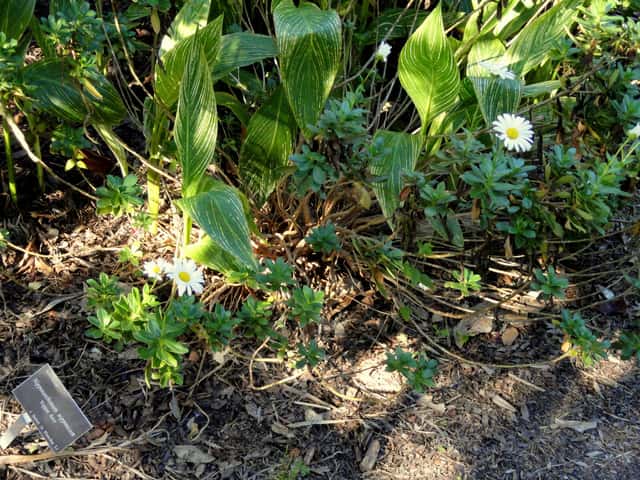
Montauk Daisy (Nipponanthemum nipponicum) is a easy-care plant from the Asteraceae family. Montauk daisy is a shrubby, clump-forming perennial native to coastal Japan, where its Japanese name, hamagiku, literally means "beach chrysanthemum." It bears thick, glossy, dark green, coarsely toothed leaves on woody stems, giving the plant a slightly succulent, evergreen-shrub appearance even th...
Montauk Daisy grows up to 90cm, spread of 90cm, watering every 7 days. It is not suitable for indoor environments and safe for pets.
Unlike many tropical plants, Montauk Daisy tolerates watering mistakes. Best for beginners. Unlike many popular species, Montauk Daisy is safe to keep around pets.
How to Care for Montauk Daisy?
TLDR: Montauk Daisy needs Direct sun, watering every 7 days, and temperatures between 15-30°C with 40-70% humidity.
How Often Should You Water Montauk Daisy?
Water new plantings weekly to help them establish, then taper off — established Montauk daisies are drought-tolerant and only need water during extended dry spells, roughly every 7 to 10 days.
How Much Light Does Montauk Daisy Need?
Provide full sun (6 or more hours of direct light daily) for the sturdiest growth and best flowering; in very hot climates, a little afternoon shade helps prevent stress.
What Is the Best Soil for Montauk Daisy?
Plant in average, dry to well-drained soil — sandy or loamy is ideal. Good drainage is essential, as constantly wet soil causes root and stem rot.
What Pot Should You Use for Montauk Daisy?
If growing in a container, choose a wide, sturdy pot with generous drainage holes and a gritty, fast-draining potting mix, since the plant's roots are intolerant of standing water.
Care Schedule
Fertilize
Every 365 days
What Is Montauk Daisy and Where Does It Come From?
Montauk daisy is a shrubby, clump-forming perennial native to coastal Japan, where its Japanese name, hamagiku, literally means "beach chrysanthemum." It bears thick, glossy, dark green, coarsely toothed leaves on woody stems, giving the plant a slightly succulent, evergreen-shrub appearance even though it is technically deciduous in colder climates. From late summer into fall it produces large, daisy-like flowers with bright white rays around a yellow-green center disk, providing valuable color after most other perennials have finished blooming. It is the sole species in its genus, having been split out from Chrysanthemum due to its distinct woody, salt-tolerant habit.
How to Propagate Montauk Daisy?
Divide every 2-3 years to maintain plant vigor and prevent the center of the clump from becoming woody and unproductive.
- 1 Dig up an established clump using a garden fork, keeping as much of the root ball intact as possible.
- 2 Use a sharp spade or knife to divide the clump into sections, ensuring each division has 2-3 healthy shoots and a portion of roots.
- 3 Replant divisions immediately at the same depth they were growing, spacing them 24-36 inches apart.
- 4 Water thoroughly after planting and keep the soil evenly moist until new growth appears.
Materials needed:
Maintain high humidity around the cutting and avoid direct sun until roots are established.
- 1 Select healthy, non-flowering stem tips and cut 4-6 inch sections just below a leaf node.
- 2 Remove the lower leaves and dip the cut end in rooting hormone if available.
- 3 Insert the cutting into a moist perlite-peat mix and cover with a humidity dome or plastic bag to retain moisture.
- 4 Keep in bright, indirect light until roots form, then transplant into the garden or a larger pot.
Materials needed:
How Big Does Montauk Daisy Grow?
TLDR: Montauk Daisy can reach up to 90cm tall with Medium growth rate.
Max height
90cm
Spread
90cm
Growth rate
Medium
Foliage
Deciduous
Plant Uses
Ornamental
Great for decoration
Is your plant showing symptoms?
Click on the symptom to discover possible causes:
What Diseases Commonly Affect Montauk Daisy?
TLDR: Montauk Daisy is susceptible to 4 known diseases. Monitor regularly for early detection.
Root Rot
Root rot is a serious fungal disease that affects the root system of plants, causing them to decay and die. It is primarily caused by overwatering, poor drainage, or soil-borne fungi such as Pythium, Phytophthora, Rhizoctonia, and Fusarium. The disease thrives in waterlogged conditions where roots are deprived of oxygen, making them susceptible to fungal infection.
Leaf Spot
Leaf spot is a common fungal disease caused by various pathogens including Alternaria, Ascochyta, Colletotrichum, Septoria, and Venturia. It primarily affects leaves, causing discolored spots that can lead to premature leaf drop if left untreated.
Aphids
Aphids are small, soft-bodied, pear-shaped insects (1/16 to 1/8 inch long) that feed by sucking nutrient-rich sap from plants. They reproduce rapidly and can quickly weaken plants, causing distorted growth and transmitting plant viruses. Aphids come in various colors including green, black, red, yellow, brown, and gray. They secrete honeydew, a sticky substance that attracts ants and encourages sooty mold growth.
Spider Mites
Spider mites are tiny arachnids (less than 1/20 inch long) related to spiders and ticks that feed on plant sap. They thrive in hot, dry conditions and can cause significant damage to ornamental and vegetable plants. During severe infestations, crop losses can reach 14% or higher as these pests disrupt vital plant processes including photosynthesis, carbon dioxide absorption, and transpiration.
Fun Facts
Montauk daisy is the only species in the genus Nipponanthemum; it was formerly classified as Chrysanthemum nipponicum before being split into its own genus.
Its Japanese name, hamagiku, means "beach chrysanthemum," reflecting its native habitat on the coastal cliffs and seashores of Japan.
The plant naturalized so successfully along the shoreline near Montauk, New York, that it earned its common English name there.
Its salt tolerance and drought resistance make it a favorite for seaside and xeriscape gardens where many other perennials struggle.
Frequently asked questions
How often should I water a Montauk daisy?
Is Montauk daisy toxic to cats or dogs?
When does Montauk daisy bloom?
How do I keep my Montauk daisy from getting leggy?
Does Montauk daisy have many pest or disease problems?
Compare with similar plants
| Attribute | Difficulty | Light | Watering | Pet Safe |
|---|---|---|---|---|
| Field Maple | Easy | Bright indirect | 14d | ✓ |
| Silver Birch | Easy | Direct sun | 14d | ✓ |
| Common Blanketflower | Easy | Direct sun | 10d | ✓ |
| Cushion Bush | Easy | Direct sun | 14d | ✓ |





