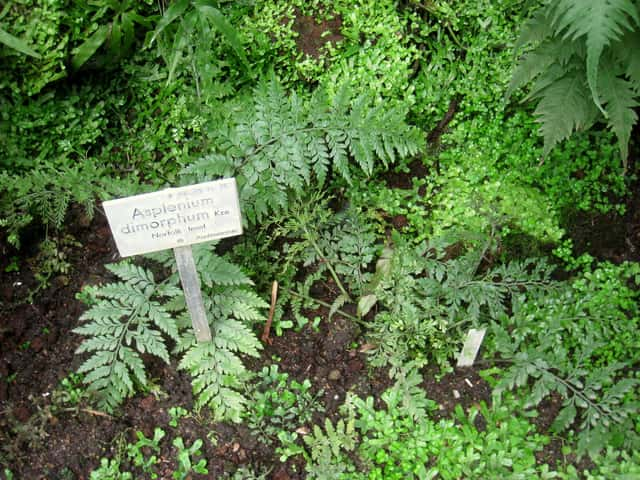
Aspleniaceae
Norfolk Island Spleenwort (Asplenium dimorphum): Care Guide
Asplenium dimorphum
Give it medium, indirect light and no direct sun. Water when the top inch of soil is dry, keeping it moist but never soggy. It prefers high humidity and temperatures between 10 and 29 °C. Feed monthly at half strength during the growing season.
Every 7 days
Partial shade
10° - 29°C
50% - 80%
Categories
What is Norfolk Island Spleenwort?
Norfolk Island Spleenwort (Asplenium dimorphum) is a medium-care plant from the Aspleniaceae family. Norfolk Island spleenwort (Asplenium dimorphum) is a fern endemic to Norfolk Island in the South Pacific. It forms a clump of glossy, dark green, finely divided fronds with a lacy look. The name dimorphum refers to its two frond types: broader sterile fronds and narrower, more finely cut fertile fro...
Norfolk Island Spleenwort grows up to 1.5m, watering every 7 days, 10°C – 29°C, 50–80% humidity. It is suitable for indoor environments and safe for pets.
Unlike many popular species, Norfolk Island Spleenwort is safe to keep around pets. Without adequate drainage, root rot can develop within 14 days.
How to Care for Norfolk Island Spleenwort?
TLDR: Norfolk Island Spleenwort needs Partial shade, watering every 7 days, and temperatures between 10-29°C with 50-80% humidity.
How Often Should You Water Norfolk Island Spleenwort?
Water about once a week, when the top of the soil feels dry. Let excess water drain away and never leave the pot standing in water: the roots rot if kept too wet or poorly ventilated.
How Much Light Does Norfolk Island Spleenwort Need?
Medium to bright indirect light. An east-facing window or a spot set back from sunny glass works well. Direct sun scorches the fronds; in the wild it grows under forest canopy.
What Is the Best Soil for Norfolk Island Spleenwort?
Use an indoor potting mix with added perlite for good drainage. It should hold some moisture without compacting.
What Pot Should You Use for Norfolk Island Spleenwort?
A plastic or ceramic pot with drainage holes, sized to the clump. Pots that hold a little moisture help keep the mix evenly damp.
Care Schedule
Fertilize
Every 30 days
What Is Norfolk Island Spleenwort and Where Does It Come From?
Norfolk Island spleenwort (Asplenium dimorphum) is a fern endemic to Norfolk Island in the South Pacific. It forms a clump of glossy, dark green, finely divided fronds with a lacy look. The name dimorphum refers to its two frond types: broader sterile fronds and narrower, more finely cut fertile fronds. Its closest relative is Asplenium difforme, and the two are the parents of the popular houseplant hybrid 'Parvati'.
How to Propagate Norfolk Island Spleenwort?
Clump division
Only divide large, well-established plants. Use clean tools and do not bury the crown.
- 1 Carefully remove a mature plant from its pot
- 2 Split the clump into sections, each with rhizome, roots and a few fronds
- 3 Pot each section in moist, well-draining mix
- 4 Keep shaded and humid until new growth appears
Materials needed:
Spores
A slow process that needs constant humidity and a sterile medium to avoid mold and algae.
- 1 Place a mature fertile frond on paper until it releases spores
- 2 Sprinkle the spores over sterile, moist mix
- 3 Cover with clear plastic and keep in indirect light
- 4 Transplant the young ferns once they have a few fronds
Materials needed:
How Big Does Norfolk Island Spleenwort Grow?
TLDR: Norfolk Island Spleenwort can reach up to 1.5m tall with Slow growth rate.
Max height
1.5m
Growth rate
Slow
Foliage
Evergreen
Plant Uses
Ornamental
Great for decoration
Is your plant showing symptoms?
Click on the symptom to discover possible causes:
What Diseases Commonly Affect Norfolk Island Spleenwort?
TLDR: Norfolk Island Spleenwort is susceptible to 6 known diseases. Monitor regularly for early detection.
Root Rot
Root rot is a serious fungal disease that affects the root system of plants, causing them to decay and die. It is primarily caused by overwatering, poor drainage, or soil-borne fungi such as Pythium, Phytophthora, Rhizoctonia, and Fusarium. The disease thrives in waterlogged conditions where roots are deprived of oxygen, making them susceptible to fungal infection.
Overwatering
Overwatering occurs when plants receive too much water, depriving roots of oxygen and causing root rot. This environmental stress is one of the most common causes of houseplant death, as waterlogged soil prevents roots from breathing and functioning properly.
Low Humidity Stress
Low humidity stress occurs when indoor air becomes too dry, causing plants to lose moisture faster than they can absorb it through their roots. This is especially common during winter heating periods, near radiators and heating vents, or in air-conditioned spaces. Tropical plants are particularly susceptible to low humidity damage.
Scale Insects
Scale insects are small sap-sucking pests that appear as brown, shell-like bumps on plant stems and leaves. There are over 25 species, divided into armored (hard) and unarmored (soft) scales. They feed by piercing plant tissue and extracting sap, which weakens the plant and can lead to yellowing, stunted growth, and even death if left untreated. They also excrete honeydew, which attracts ants and promotes sooty mold growth.
Fun Facts
It is endemic to Norfolk Island and grows naturally nowhere else in the world.
The name dimorphum refers to its two frond shapes: sterile and fertile.
Crossed with Asplenium difforme, it gave rise to the houseplant hybrid Asplenium 'Parvati'.
Frequently asked questions
How often should I water Norfolk Island spleenwort?
Can Norfolk Island spleenwort take direct sun?
Why are the frond tips turning brown?
Compare with similar plants
| Attribute | Difficulty | Light | Watering | Pet Safe |
|---|---|---|---|---|
| Dark Fieldcap | Medium | Low light | 2d | ⚠️ |
| Azalea | Medium | Partial shade | 3d | ⚠️ |
| Muriel's Bamboo | Medium | Partial shade | 3d | ✓ |
| Bougainvillea | Medium | Direct sun | 7d | ⚠️ |




