Pteridaceae
Northern Maidenhair Fern: Ground Cover Plant
Adiantum pedatum
A woodland fern that thrives in constant shade and evenly moist, humus-rich soil. It resents drought and direct sun, but otherwise asks for little beyond a sheltered spot and steady moisture.
Every 3 days
Low light
10° - 24°C
40% - 60%
Categories
What is Northern Maidenhair Fern?
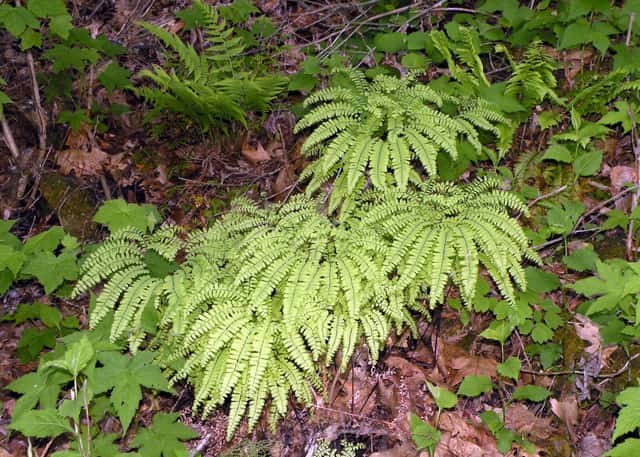
Northern Maidenhair Fern (Adiantum pedatum) is a medium-care plant from the Pteridaceae family. Adiantum pedatum, the northern maidenhair fern, is a deciduous, clump-forming fern native to moist deciduous woodlands across North America and temperate East Asia. It is prized for its wiry black stems and delicate, fan-shaped fronds that arch outward like open hands, dying back to the rhizome each...
Northern Maidenhair Fern grows up to 75cm, spread of 45cm, watering every 3 days, 10°C – 24°C, 40–60% humidity. It is suitable for indoor environments and safe for pets.
Unlike many popular species, Northern Maidenhair Fern is safe to keep around pets. Without adequate drainage, root rot can develop within 7 days.
How to Care for Northern Maidenhair Fern?
TLDR: Northern Maidenhair Fern needs Low light, watering every 3 days, and temperatures between 10-24°C with 40-60% humidity.
How Often Should You Water Northern Maidenhair Fern?
Keep the soil consistently moist but never waterlogged; letting it dry out even briefly can scorch or collapse the fragile fronds.
How Much Light Does Northern Maidenhair Fern Need?
Give it part to full shade — dappled woodland light is ideal. Direct sun will bleach and burn the delicate leaflets.
What Is the Best Soil for Northern Maidenhair Fern?
Plant in rich, humus-heavy, well-drained soil on the slightly acidic side; amend sandy or poor soils with compost or peat moss.
What Pot Should You Use for Northern Maidenhair Fern?
Use an unglazed clay or ceramic pot with generous drainage holes and a humus-rich potting mix; a wide, shallow container suits its shallow, spreading rhizomes.
Care Schedule
Fertilize
Every 30 days
What Is Northern Maidenhair Fern and Where Does It Come From?
Adiantum pedatum, the northern maidenhair fern, is a deciduous, clump-forming fern native to moist deciduous woodlands across North America and temperate East Asia. It is prized for its wiry black stems and delicate, fan-shaped fronds that arch outward like open hands, dying back to the rhizome each winter and returning each spring.
How to Propagate Northern Maidenhair Fern?
Rhizome Division
- Divide when new fiddleheads are just emerging for the least stress
- Keep divisions shaded and moist until established
- 1 Lift the clump and gently rinse soil from the rhizome
- 2 Cut the rhizome into sections with several fronds and root mass each
- 3 Replant divisions immediately in moist, humus-rich soil in shade
- 4 Water well and keep consistently moist for several weeks
Materials needed:
Spore Propagation
- Use sterilized medium to avoid mold competing with slow-germinating spores
- Keep covered and humid until prothalli develop
- 1 Collect brown spores from the underside of mature frond edges
- 2 Sow thinly on the surface of sterile, moist potting mix
- 3 Cover with clear plastic to maintain humidity and mist regularly
- 4 Transplant seedlings once large enough to handle, then grow on for up to two years before moving outdoors
Materials needed:
How Big Does Northern Maidenhair Fern Grow?
TLDR: Northern Maidenhair Fern can reach up to 75cm tall with Slow growth rate.
Max height
75cm
Spread
45cm
Growth rate
Slow
Foliage
Deciduous
Plant Uses
Ornamental
Great for decoration
Medicinal
Medicinal properties
Ground Cover
Soil coverage
Medicinal Uses
- Traditional tea or syrup for coughs and respiratory ailments
- Root decoction used for rheumatic joint pain
- Fronds applied topically as a traditional hemostatic to help stop bleeding
Is your plant showing symptoms?
Click on the symptom to discover possible causes:
What Diseases Commonly Affect Northern Maidenhair Fern?
TLDR: Northern Maidenhair Fern is susceptible to 5 known diseases. Monitor regularly for early detection.
Gray Mold (Botrytis Blight)
Gray mold, caused by the fungus Botrytis cinerea, is a widespread necrotrophic pathogen affecting over 1,400 plant species. It thrives in cool, humid conditions and attacks weakened or aging plant tissues, causing soft rot and characteristic gray fuzzy growth.
Sunburn (Sun Scorch)
Sunburn or sun scorch is an environmental condition that occurs when plants are exposed to intense, direct sunlight beyond their tolerance level. This causes the breakdown of chlorophyll in the leaves, resulting in bleached, dried, and damaged foliage. The damage can happen rapidly, sometimes within just a few hours of exposure.
Scale Insects
Scale insects are small sap-sucking pests that appear as brown, shell-like bumps on plant stems and leaves. There are over 25 species, divided into armored (hard) and unarmored (soft) scales. They feed by piercing plant tissue and extracting sap, which weakens the plant and can lead to yellowing, stunted growth, and even death if left untreated. They also excrete honeydew, which attracts ants and promotes sooty mold growth.
Spider Mites
Spider mites are tiny arachnids (less than 1/20 inch long) related to spiders and ticks that feed on plant sap. They thrive in hot, dry conditions and can cause significant damage to ornamental and vegetable plants. During severe infestations, crop losses can reach 14% or higher as these pests disrupt vital plant processes including photosynthesis, carbon dioxide absorption, and transpiration.
Meaning & Symbolism
In the Victorian language of flowers, maidenhair ferns symbolize sincerity, secrecy, and quiet devotion, fitting for a plant that hides in shaded woodland corners. Several North American Indigenous peoples also used it in basketry and traditional medicine.
Compare with similar plants
| Attribute | Difficulty | Light | Watering | Pet Safe |
|---|---|---|---|---|
| Dark Fieldcap | Medium | Low light | 2d | ⚠️ |
| Azalea | Medium | Partial shade | 3d | ⚠️ |
| Muriel's Bamboo | Medium | Partial shade | 3d | ✓ |
| Bougainvillea | Medium | Direct sun | 7d | ⚠️ |




