Poaceae
Oat: how to grow oats and cat grass
Avena sativa
An easy, fast-growing cool-season grass. Sow in spring (or autumn in mild climates) in full sun and average, well-drained soil, and keep it evenly moist until established. For cat grass, sow densely in a shallow tray, keep moist in a bright window and offer when 8-10 cm tall; start a new tray every 2-3 weeks. It dislikes heat above about 30 C, waterlogged soil and stagnant humid air, which favour mould and rust.
Every 3 days
Bright indirect
-7° - 30°C
40% - 70%
Categories
What is Oat?
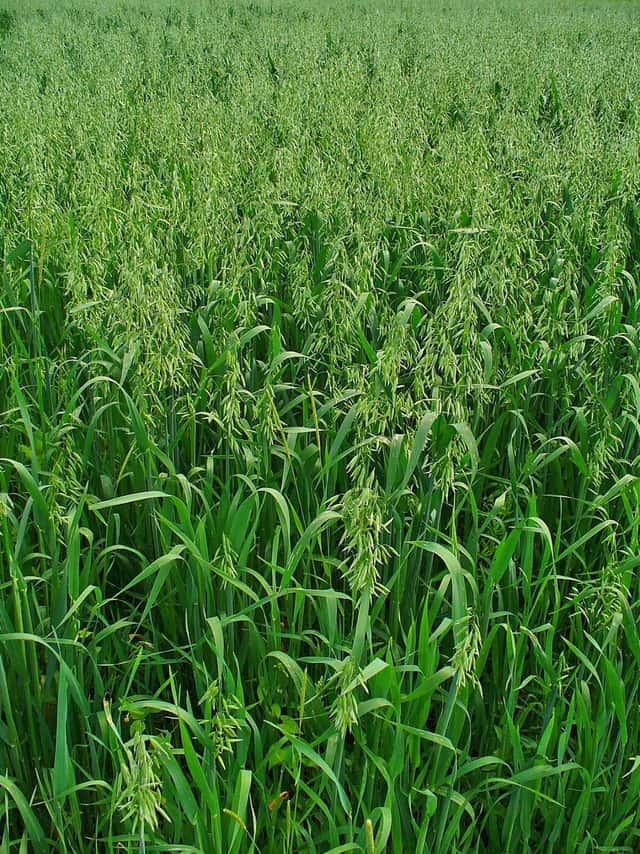
Oat (Avena sativa) is a easy-care plant from the Poaceae family. Oat (Avena sativa) is an annual cereal grass of the grass family (Poaceae), descended from a wild oat of the Fertile Crescent and domesticated in Europe about 3,000 years ago. It forms upright tufts of flat, bright green leaves and, when allowed to mature, hollow stems 60-120 cm tall (occasionally u...
Oat grows up to 1.2m, spread of 15cm, watering every 3 days, -7°C – 30°C, 40–70% humidity. It is suitable for indoor environments and safe for pets.
Unlike many tropical plants, Oat tolerates watering mistakes. Best for beginners. Unlike many popular species, Oat is safe to keep around pets. Without adequate drainage, root rot can develop within 7 days.
How to Care for Oat?
TLDR: Oat needs Bright indirect, watering every 3 days, and temperatures between -7-30°C with 40-70% humidity.
How Often Should You Water Oat?
Keep the soil evenly moist during germination and while the plants are young. Outdoors, oats need about 2.5 cm of water a week, letting the surface dry slightly between waterings. Cat grass trays dry out fast: water every 2-3 days, or when the top feels dry, but never leave the tray sitting in water, which causes mould and rotting roots.
How Much Light Does Oat Need?
Oats need full sun outdoors, at least six hours a day. Indoors, put cat grass in the sunniest window you have or under a grow light; pale, yellowing or flopping blades mean it needs more light.
What Is the Best Soil for Oat?
Any average, well-drained garden soil works, from slightly acidic to neutral (pH about 5-7); oats cope with poor and acidic soils better than most cereals but not with waterlogging. For cat grass, use a seed-starting or general potting mix, or a hydroponic mat.
What Pot Should You Use for Oat?
For cat grass, a shallow, wide tray or pot 8-10 cm deep with drainage holes, ideally heavy enough that the cat cannot tip it. For grain or ornamental oats, a large container at least 30 cm deep, or simply sow them in the ground.
What Is Oat and Where Does It Come From?
Oat (Avena sativa) is an annual cereal grass of the grass family (Poaceae), descended from a wild oat of the Fertile Crescent and domesticated in Europe about 3,000 years ago. It forms upright tufts of flat, bright green leaves and, when allowed to mature, hollow stems 60-120 cm tall (occasionally up to 1.8 m) topped by loose, nodding panicles of dangling spikelets that ripen from green to straw-gold. At home it is grown in three ways: as a small grain plot or ornamental in the garden, as a cover crop and green manure that protects and loosens the soil, and, most often, as cat grass, sown densely in a tray and offered to cats when the shoots are 7-14 days old.
How to Propagate Oat?
Sowing outdoors
Oats germinate in cold soil (from about 4 C), so early sowing works. As a cover crop, cut or dig the plants in before the seed ripens.
- 1 Sow in early spring as soon as the soil can be worked, or in autumn in mild-winter areas.
- 2 Loosen the soil and rake it level.
- 3 Scatter the seed thinly or sow in rows, about 2-5 cm deep.
- 4 Rake lightly to cover and water well.
- 5 Keep the soil moist until the seedlings are established.
Materials needed:
Cat grass in a tray
Start a new tray every 2-3 weeks for a continuous supply, and trim the grass to about 7 cm to keep it upright. Good airflow and not overwatering prevent mould.
- 1 Optionally soak the seed in water for 8-12 hours.
- 2 Fill a shallow pot or tray with 3-5 cm of moist potting mix.
- 3 Spread the seed densely so the grains almost touch and press them in.
- 4 Cover lightly with mix or paper and keep moist and warm until sprouts appear.
- 5 Move to a bright window and offer to your cat when the grass is 8-10 cm tall, about 7-14 days after sowing.
Materials needed:
How Big Does Oat Grow?
TLDR: Oat can reach up to 1.2m tall with Fast growth rate.
Max height
1.2m
Spread
15cm
Growth rate
Fast
Plant Uses
Edible
Can be consumed
Medicinal
Medicinal properties
Ground Cover
Soil coverage
Medicinal Uses
- Colloidal oatmeal made from oat grain is used to soothe itchy, dry and irritated skin
- Oat straw and green oat tops are used in traditional herbal teas
Culinary Uses
- Oat grain is eaten as porridge, oatmeal, muesli and granola and used in baking
- Oats are made into oat milk and oat flour
- Young oat grass is juiced or added to smoothies
Is your plant showing symptoms?
Click on the symptom to discover possible causes:
What Diseases Commonly Affect Oat?
TLDR: Oat is susceptible to 8 known diseases. Monitor regularly for early detection.
Rust
Rust is a common fungal disease caused by fungi in the order Pucciniales that affects a wide variety of plants. The disease gets its name from the characteristic orange, yellow, or reddish-brown pustules that appear on leaves, resembling metal rust. This obligate fungal parasite requires living plants to survive and can cause significant economic losses in agricultural crops.
Powdery Mildew
Powdery mildew is a common fungal disease caused by various fungi species including Erysiphe, Podosphaera, Oïdium, and Leveillula. It affects over 10,000 plant species worldwide. The disease thrives in warm, dry climates with high humidity and appears as a distinctive white powdery coating on plant surfaces.
Septoria
Septoria (often called septoria leaf spot) is a fungal disease that causes many small spots on leaves and can lead to early leaf drop. It spreads in cool, wet weather by splashing water, wind, tools, and hands. Spots are usually tiny, round, and numerous, with dark brown edges and pale gray centers; you may see tiny black dots in the middle of the spots. Leaves turn yellow and drop, usually starting on lower leaves and moving upward. It is common on tomatoes, peppers, eggplant, parsley, and many ornamental plants.
Aphids
Aphids are small, soft-bodied, pear-shaped insects (1/16 to 1/8 inch long) that feed by sucking nutrient-rich sap from plants. They reproduce rapidly and can quickly weaken plants, causing distorted growth and transmitting plant viruses. Aphids come in various colors including green, black, red, yellow, brown, and gray. They secrete honeydew, a sticky substance that attracts ants and encourages sooty mold growth.
Meaning & Symbolism
Nourishment, plenty and the harvest: oats were the staple grain of Scotland and northern Europe, and the English idiom "sowing one's wild oats" links them to youthful freedom.
Fun Facts
Samuel Johnson's 1755 dictionary defined oats as a grain which in England is generally given to horses, but in Scotland supports the people.
Oats germinate in soil as cold as about 4 C, earlier than many other crops.
Pure oats contain no gluten, but they are often contaminated with wheat or barley during processing.
Oat milk became the second most popular plant milk in the United States by 2020.
Frequently asked questions
Is oat grass safe for cats and dogs?
How long does oat cat grass take to grow?
Why is my cat grass going mouldy?
Can I use oats as a cover crop?
Why are my oat leaves getting orange spots?
Compare with similar plants
| Attribute | Difficulty | Light | Watering | Pet Safe |
|---|---|---|---|---|
| Field Maple | Easy | Bright indirect | 14d | ✓ |
| Muriel's Bamboo | Medium | Partial shade | 3d | ✓ |
| Iberian Houseleek | Easy | Direct sun | 14d | ✓ |
| Silver Birch | Easy | Direct sun | 14d | ✓ |