Asteraceae
Okinawa Spinach: How to Grow Gynura bicolor
Gynura bicolor
Bright indirect light or part shade, moist well-draining soil, warmth above 15 °C and frequent tip harvesting. It does not tolerate frost or waterlogged soil.
Every 3 days
Bright indirect
15° - °C
% - %
Categories
What is Okinawa Spinach?
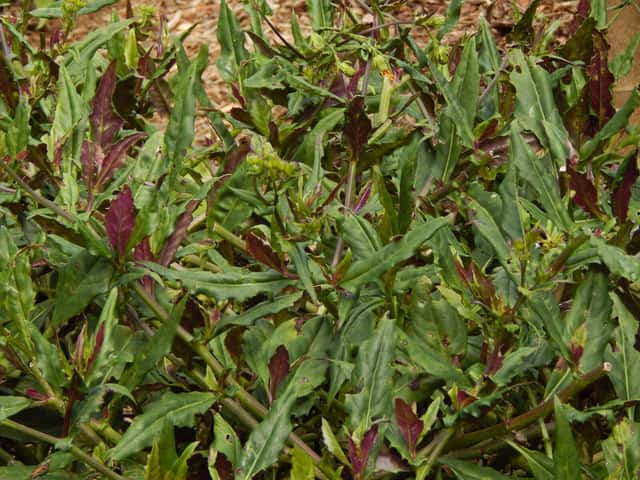
Okinawa Spinach (Gynura bicolor) is a easy-care plant from the Asteraceae family. Okinawa spinach (Gynura bicolor) is a perennial herb in the daisy family (Asteraceae), native to southern China, Thailand and Myanmar and grown as a leafy vegetable across much of Asia. Its leaves are green on top and purple underneath, and the stems root wherever they touch the ground. It reaches a...
Okinawa Spinach grows up to 1.0m, watering every 3 days. It is suitable for indoor environments and safe for pets.
Unlike many tropical plants, Okinawa Spinach tolerates watering mistakes. Best for beginners. Unlike many popular species, Okinawa Spinach is safe to keep around pets. Without adequate drainage, root rot can develop within 7 days.
How to Care for Okinawa Spinach?
TLDR: Okinawa Spinach needs Bright indirect, watering every 3 days, and temperatures between 15-30°C with 40-70% humidity.
How Often Should You Water Okinawa Spinach?
Keep the soil moist but never soggy; in pots, water every 2 or 3 days in warm weather. Standing water around the roots leads to root rot.
How Much Light Does Okinawa Spinach Need?
It grows well with 4 to 8 hours of bright indirect light or morning sun. More than 4 hours of strong direct sun can scorch the leaves.
What Is the Best Soil for Okinawa Spinach?
Sandy or loamy soil rich in organic matter with good drainage, at least 10 cm deep in containers.
What Pot Should You Use for Okinawa Spinach?
A well-draining pot or planter at least 10 cm deep; it also grows well directly in a garden bed.
Care Schedule
Fertilize
Every 30 days
Repot
Every 365 days
What Is Okinawa Spinach and Where Does It Come From?
Okinawa spinach (Gynura bicolor) is a perennial herb in the daisy family (Asteraceae), native to southern China, Thailand and Myanmar and grown as a leafy vegetable across much of Asia. Its leaves are green on top and purple underneath, and the stems root wherever they touch the ground. It reaches about 1 m and bears small tubular yellow to orange flowers. It grows fast and handles cut-and-come-again harvesting.
How to Propagate Okinawa Spinach?
Stem cutting
Root cuttings directly in soil: cuttings rooted in water tend to rot.
- 1 Cut a 10-15 cm stem tip.
- 2 Strip the lower leaves.
- 3 Push the cutting straight into moist soil with one or two nodes buried.
- 4 Keep the soil moist and the cutting in indirect light until it sprouts.
Materials needed:
How Big Does Okinawa Spinach Grow?
TLDR: Okinawa Spinach can reach up to 1.0m tall with Fast growth rate.
Max height
1.0m
Growth rate
Fast
Foliage
Evergreen
Plant Uses
Edible
Can be consumed
Medicinal
Medicinal properties
Ornamental
Great for decoration
Medicinal Uses
- Used in traditional Chinese medicine; claimed benefits for cholesterol and blood sugar are not established in humans.
Culinary Uses
- Young leaves raw in salads
- Stir-fried with garlic
- Steamed, blanched or added to soups
Is your plant showing symptoms?
Click on the symptom to discover possible causes:
What Diseases Commonly Affect Okinawa Spinach?
TLDR: Okinawa Spinach is susceptible to 4 known diseases. Monitor regularly for early detection.
Slugs and Snails
Slugs and snails are mollusks that feed on plant tissue, causing irregular holes in leaves and damage to young seedlings. They are most active at night and in moist conditions, leaving characteristic silvery slime trails. These pests can quickly devastate gardens, especially during wet seasons.
Aphids
Aphids are small, soft-bodied, pear-shaped insects (1/16 to 1/8 inch long) that feed by sucking nutrient-rich sap from plants. They reproduce rapidly and can quickly weaken plants, causing distorted growth and transmitting plant viruses. Aphids come in various colors including green, black, red, yellow, brown, and gray. They secrete honeydew, a sticky substance that attracts ants and encourages sooty mold growth.
Root Rot
Root rot is a serious fungal disease that affects the root system of plants, causing them to decay and die. It is primarily caused by overwatering, poor drainage, or soil-borne fungi such as Pythium, Phytophthora, Rhizoctonia, and Fusarium. The disease thrives in waterlogged conditions where roots are deprived of oxygen, making them susceptible to fungal infection.
Sunburn (Sun Scorch)
Sunburn or sun scorch is an environmental condition that occurs when plants are exposed to intense, direct sunlight beyond their tolerance level. This causes the breakdown of chlorophyll in the leaves, resulting in bleached, dried, and damaged foliage. The damage can happen rapidly, sometimes within just a few hours of exposure.
Fun Facts
The undersides of the leaves are purple, which gives the species its name bicolor.
In Japan it is called suizenjina, after a garden in Kumamoto.
The stems root wherever they touch the soil, so the plant spreads on its own.
Frequently asked questions
How do I harvest Okinawa spinach?
Can Okinawa spinach handle cold?
Is it safe to eat Okinawa spinach every day?
How do I propagate Okinawa spinach?
Compare with similar plants
| Attribute | Difficulty | Light | Watering | Pet Safe |
|---|---|---|---|---|
| Field Maple | Easy | Bright indirect | 14d | ✓ |
| Iberian Houseleek | Easy | Direct sun | 14d | ✓ |
| Silver Birch | Easy | Direct sun | 14d | ✓ |
| Common Blanketflower | Easy | Direct sun | 10d | ✓ |





