Podocarpaceae
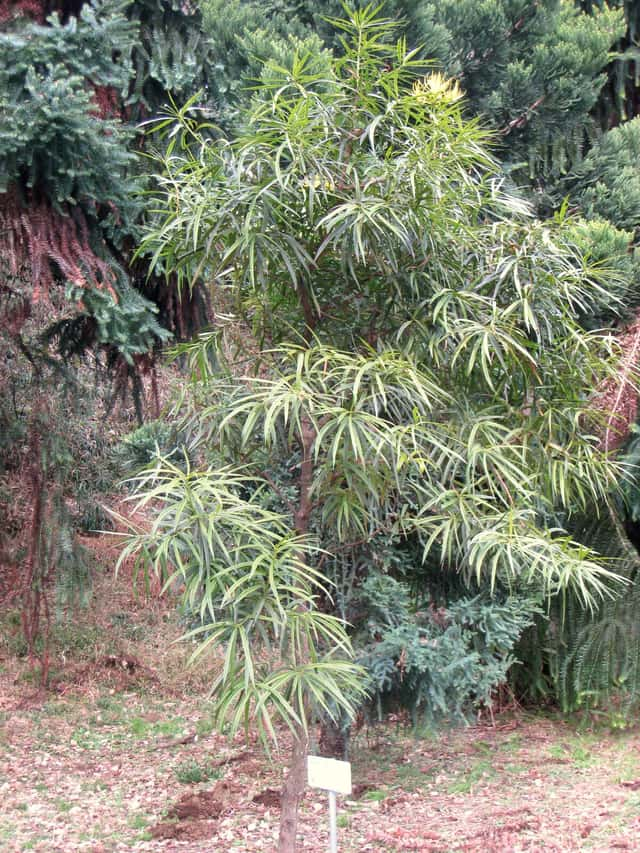
Oleander Podocarp (Podocarpus neriifolius)
Podocarpus neriifolius
A slow-growing tree for tropical and subtropical climates. It likes full sun to part shade (young plants tolerate light shade), acidic, fertile, well-drained soil and high humidity. It takes only brief light frost. In containers or as bonsai, water when the surface of the mix dries, feed in spring and summer and prune for shape. Keep away from dogs and cats.
Every 5 days
Bright indirect
-2° - 35°C
50% - 90%
Categories
What is Oleander Podocarp?
Oleander Podocarp (Podocarpus neriifolius) is a medium-care plant from the Podocarpaceae family. Podocarpus neriifolius is an evergreen conifer in the family Podocarpaceae, native to humid forests of South and Southeast Asia and parts of Oceania, from eastern Nepal to the Philippines, Borneo and the Solomon Islands, from sea level to about 2,000 m. In the wild it is a tree 15-25 m tall; in cult...
Oleander Podocarp grows up to 25.0m, watering every 5 days, -2°C – 35°C, 50–90% humidity. It is suitable for indoor environments and not safe for pets.
Without precautions, ingestion can cause irritation in pets. Keep out of reach of cats and dogs. Without adequate drainage, root rot can develop within 10 days.
How to Care for Oleander Podocarp?
TLDR: Oleander Podocarp needs Bright indirect, watering every 5 days, and temperatures between -2-35°C with 50-90% humidity.
How Often Should You Water Oleander Podocarp?
Water every 4 to 7 days in the warm season, when the top few centimeters of soil are dry, and less in winter. Avoid waterlogging: roots in saturated soil rot.
How Much Light Does Oleander Podocarp Need?
Full sun to part shade. Young and potted plants prefer bright filtered light; indoors, keep it by a very bright window.
What Is the Best Soil for Oleander Podocarp?
Fertile, acidic to neutral, well-drained soil with organic matter. In pots use a potting mix with pine bark and coarse sand.
What Pot Should You Use for Oleander Podocarp?
A large, deep pot with good drainage holes; for bonsai, a shallow ceramic pot with a free-draining mix.
Care Schedule
Fertilize
Every 60 days
Repot
Every 730 days
What Is Oleander Podocarp and Where Does It Come From?
Podocarpus neriifolius is an evergreen conifer in the family Podocarpaceae, native to humid forests of South and Southeast Asia and parts of Oceania, from eastern Nepal to the Philippines, Borneo and the Solomon Islands, from sea level to about 2,000 m. In the wild it is a tree 15-25 m tall; in cultivation it stays much smaller. Its glossy green, lance-shaped leaves are 5-16 cm long and resemble those of oleander (Nerium), hence the name. It is dioecious: female plants bear seeds on a fleshy receptacle that turns from orange-red to dark purple. The yellowish wood is used for furniture and boats.
How to Propagate Oleander Podocarp?
Seed
Use fresh seed, as it loses viability quickly. Both a female and a male plant are needed to get seed.
- 1 Remove the seed from the fleshy receptacle and soak it in water for 2 days.
- 2 Sow in well-drained loamy mix kept moist.
- 3 Keep at 24-26 °C and be patient: germination is slow and uneven.
Materials needed:
Stem cutting
Take cuttings from upright leader shoots; side branches tend to grow sideways. Rooting is slow and difficult.
- 1 Cut a 10-15 cm semi-ripe shoot tip.
- 2 Strip the leaves from the lower half and dip in rooting hormone.
- 3 Plant in a light mix and keep enclosed and moist in a warm, bright spot.
Materials needed:
How Big Does Oleander Podocarp Grow?
TLDR: Oleander Podocarp can reach up to 25.0m tall with Slow growth rate.
Max height
25.0m
Growth rate
Slow
Foliage
Evergreen
Warning: Toxic Plant
This plant can be toxic if ingested. Keep out of reach of:
Plant Uses
Ornamental
Great for decoration
Medicinal
Medicinal properties
Medicinal Uses
- Leaf decoction used in Asian folk medicine for rheumatic and joint pain
Is your plant showing symptoms?
Click on the symptom to discover possible causes:
What Diseases Commonly Affect Oleander Podocarp?
TLDR: Oleander Podocarp is susceptible to 7 known diseases. Monitor regularly for early detection.
Scale Insects
Scale insects are small sap-sucking pests that appear as brown, shell-like bumps on plant stems and leaves. There are over 25 species, divided into armored (hard) and unarmored (soft) scales. They feed by piercing plant tissue and extracting sap, which weakens the plant and can lead to yellowing, stunted growth, and even death if left untreated. They also excrete honeydew, which attracts ants and promotes sooty mold growth.
Mealybugs
Mealybugs are small, soft-bodied insects covered with a white, waxy, cottony material. They are common pests of houseplants and outdoor plants in mild climates. These sap-sucking insects feed on plant tissue, causing damage, stunted growth, and can lead to plant death if left untreated. They produce sticky honeydew which attracts sooty mold.
Aphids
Aphids are small, soft-bodied, pear-shaped insects (1/16 to 1/8 inch long) that feed by sucking nutrient-rich sap from plants. They reproduce rapidly and can quickly weaken plants, causing distorted growth and transmitting plant viruses. Aphids come in various colors including green, black, red, yellow, brown, and gray. They secrete honeydew, a sticky substance that attracts ants and encourages sooty mold growth.
Spider Mites
Spider mites are tiny arachnids (less than 1/20 inch long) related to spiders and ticks that feed on plant sap. They thrive in hot, dry conditions and can cause significant damage to ornamental and vegetable plants. During severe infestations, crop losses can reach 14% or higher as these pests disrupt vital plant processes including photosynthesis, carbon dioxide absorption, and transpiration.
Fun Facts
Neriifolius means oleander-leaved, after Nerium.
It is one of the most widespread and variable Podocarpus species.
At Nepal's request it was listed in CITES Appendix III to control exports.
Frequently asked questions
Is Podocarpus neriifolius cold hardy?
Can it be grown in a pot?
Is it toxic to pets?
How often should I water it?
Compare with similar plants
| Attribute | Difficulty | Light | Watering | Pet Safe |
|---|---|---|---|---|
| Dark Fieldcap | Medium | Low light | 2d | ⚠️ |
| Azalea | Medium | Partial shade | 3d | ⚠️ |
| Muriel's Bamboo | Medium | Partial shade | 3d | ✓ |
| Bougainvillea | Medium | Direct sun | 7d | ⚠️ |




