Asteraceae
Orange hawkweed: Ground Cover Plant
Pylosella aurantiaca
An undemanding, very hardy perennial for sunny to lightly semi-shaded locations in poor, well-drained soil. Once established, it is drought-tolerant and practically requires no fertilization; the primary care task is keeping the plant in check, as it spreads rapidly in the garden through runners and self-seeding.
Every 10 days
Direct sun
10° - 25°C
30% - 60%
Categories
What is Orange hawkweed?
Orange hawkweed (Pylosella aurantiaca) is a easy-care plant from the Asteraceae family. Orange hawkweed (Pilosella aurantiaca, syn. Hieracium aurantiacum) is a low-growing perennial herb from the Asteraceae family, native to the mountain meadows of central, eastern, and northern Europe. It forms a basal rosette of oblong, slightly hairy grayish-green leaves and, in spring and summer, s...
Orange hawkweed grows up to 30cm, spread of 90cm, watering every 10 days, 10°C – 25°C, 30–60% humidity. It is not suitable for indoor environments and safe for pets.
Unlike many tropical plants, Orange hawkweed tolerates watering mistakes. Best for beginners. Unlike many popular species, Orange hawkweed is safe to keep around pets.
How to Care for Orange hawkweed?
TLDR: Orange hawkweed needs Direct sun, watering every 10 days, and temperatures between 10-25°C with 30-60% humidity.
How Often Should You Water Orange hawkweed?
Water regularly after planting until the plant is established. Afterward, watering is only necessary during prolonged dry spells—allow the soil to dry out almost completely between waterings, as hawkweed does not tolerate waterlogged, heavy soil or root rot.
How Much Light Does Orange hawkweed Need?
It blooms best in full sun, though it can tolerate light partial shade. In overly shaded positions, flowering diminishes and the plant becomes leggy.
What Is the Best Soil for Orange hawkweed?
Prefers poor to moderately fertile, well-drained soil (sandy-loam) with a slightly acidic to neutral pH. Heavy, waterlogged, or overly fertile soils are unsuitable—in rich soil, the plant grows vigorously at the expense of flowering and spreads even faster.
What Pot Should You Use for Orange hawkweed?
Since it is a vigorously spreading species, it is recommended to grow it in a wide, shallow container or a bottomless pot sunk into the ground to prevent the rhizomes from spreading beyond the designated area. The container must have sufficient drainage holes; place a drainage layer (clay pebbles, pot shards) at the bottom.
What Is Orange hawkweed and Where Does It Come From?
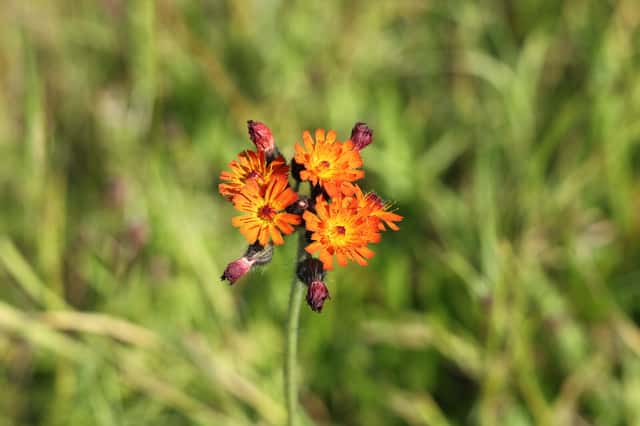
Orange hawkweed (Pilosella aurantiaca, syn. Hieracium aurantiacum) is a low-growing perennial herb from the Asteraceae family, native to the mountain meadows of central, eastern, and northern Europe. It forms a basal rosette of oblong, slightly hairy grayish-green leaves and, in spring and summer, sends up one to several hairy stems bearing clusters of striking fiery orange to brick-red flower heads. The plant spreads via above-ground runners (stolons) and creeping rhizomes, allowing it to quickly form dense mats—consequently, in North America and several other regions outside its native range, it is considered an aggressive invasive species that displaces native vegetation in meadows and pastures.
How Big Does Orange hawkweed Grow?
TLDR: Orange hawkweed can reach up to 30cm tall with Fast growth rate.
Max height
30cm
Spread
90cm
Growth rate
Fast
Foliage
Deciduous
Plant Uses
Ornamental
Great for decoration
Ground Cover
Soil coverage
Medicinal
Medicinal properties
Medicinal Uses
- Traditional tea made from leaves and flowers to support the respiratory tract during colds
- Folk use for digestive issues
- Leaf poultices for minor skin irritations
- Calming nighttime tea in Central European folk medicine
Is your plant showing symptoms?
Click on the symptom to discover possible causes:
What Diseases Commonly Affect Orange hawkweed?
TLDR: Orange hawkweed is susceptible to 1 known diseases. Monitor regularly for early detection.
Meaning & Symbolism
A symbol of unstoppable life force and expansion—its fiery orange flowers resemble small flames spreading across a meadow. In garden symbolism, it embodies tenacity, adaptability, and the speed of transformation, though its invasive nature also associates it with a warning against uncontrolled growth.
Compare with similar plants
| Attribute | Difficulty | Light | Watering | Pet Safe |
|---|---|---|---|---|
| Field Maple | Easy | Bright indirect | 14d | ✓ |
| Silver Birch | Easy | Direct sun | 14d | ✓ |
| Common Blanketflower | Easy | Direct sun | 10d | ✓ |
| Cushion Bush | Easy | Direct sun | 14d | ✓ |





