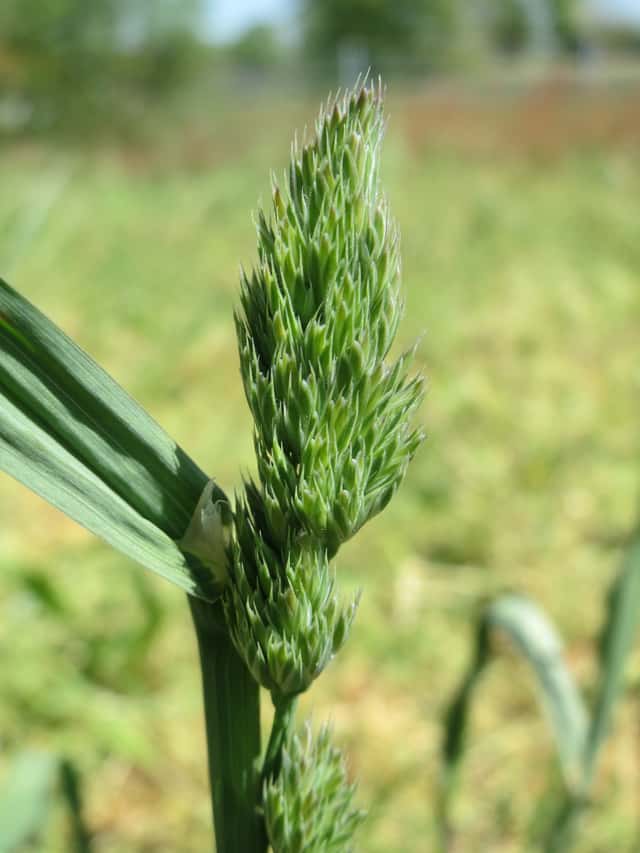
Poaceae
Orchard Grass (Dactylis glomerata)
Dactylis glomerata
A rugged, low-maintenance grass suited to pastures, slopes and erosion control. It grows quickly, tolerates poor and moderately wet soils, and benefits from regular cutting or grazing to stay vigorous.
Every 7 days
Bright indirect
-10° - 30°C
40% - 70%
Categories
What is Orchard Grass?
Orchard Grass (Dactylis glomerata) is a easy-care plant from the Poaceae family. Orchard grass (Dactylis glomerata) is a perennial, clump-forming cool-season grass native to Europe, temperate Asia and North Africa, now naturalized across much of the world. It is one of the most important forage grasses used in pastures and hay production, valued for tolerating both drought and p...
Orchard Grass grows up to 1.2m, spread of 60cm, watering every 7 days, -10°C – 30°C, 40–70% humidity. It is not suitable for indoor environments and safe for pets.
Unlike many tropical plants, Orchard Grass tolerates watering mistakes. Best for beginners. Unlike many popular species, Orchard Grass is safe to keep around pets.
How to Care for Orchard Grass?
TLDR: Orchard Grass needs Bright indirect, watering every 7 days, and temperatures between -10-30°C with 40-70% humidity.
How Often Should You Water Orchard Grass?
Prefers moist soil but is notably drought tolerant once established; water weekly while young.
How Much Light Does Orchard Grass Need?
Grows best in full sun, but is one of the few forage grasses that tolerates partial shade well.
What Is the Best Soil for Orchard Grass?
Adapts to sandy, clay or loamy soils, acidic to alkaline, as long as drainage is reasonably good.
What Is Orchard Grass and Where Does It Come From?
Orchard grass (Dactylis glomerata) is a perennial, clump-forming cool-season grass native to Europe, temperate Asia and North Africa, now naturalized across much of the world. It is one of the most important forage grasses used in pastures and hay production, valued for tolerating both drought and partial shade far better than most pasture grasses.
How to Propagate Orchard Grass?
Seed sowing
Sow in early spring or early autumn for best germination rates; avoid burying seeds too deep.
- 1 Prepare a well-drained seedbed or tray with loamy soil
- 2 Scatter seeds shallowly and press lightly into the soil
- 3 Keep the soil consistently moist until germination
- 4 Thin seedlings once established
Materials needed:
Clump division
Divide only mature, well-established clumps to avoid weakening the plant.
- 1 Dig up an established clump in early spring
- 2 Split the clump into smaller sections with roots attached
- 3 Replant divisions immediately at the same depth
- 4 Water thoroughly after replanting
Materials needed:
How Big Does Orchard Grass Grow?
TLDR: Orchard Grass can reach up to 1.2m tall with Fast growth rate.
Max height
1.2m
Spread
60cm
Growth rate
Fast
Foliage
Deciduous
Plant Uses
Ground Cover
Soil coverage
Is your plant showing symptoms?
Click on the symptom to discover possible causes:
What Diseases Commonly Affect Orchard Grass?
TLDR: Orchard Grass is susceptible to 4 known diseases. Monitor regularly for early detection.
Rust
Rust is a common fungal disease caused by fungi in the order Pucciniales that affects a wide variety of plants. The disease gets its name from the characteristic orange, yellow, or reddish-brown pustules that appear on leaves, resembling metal rust. This obligate fungal parasite requires living plants to survive and can cause significant economic losses in agricultural crops.
Leaf Spot
Leaf spot is a common fungal disease caused by various pathogens including Alternaria, Ascochyta, Colletotrichum, Septoria, and Venturia. It primarily affects leaves, causing discolored spots that can lead to premature leaf drop if left untreated.
Root-Knot Nematodes
Root-knot nematodes (Meloidogyne species) are microscopic roundworms that parasitize plant roots, causing characteristic galls or knots. These soil-borne pests are among the most economically damaging plant pathogens worldwide, affecting a wide range of ornamental and edible plants. The nematodes inject enzymes into root cells, causing abnormal swelling and disrupting water and nutrient uptake.
Caterpillars
Caterpillars are the larval stage of moths and butterflies that feed voraciously on plant foliage, stems, flowers, and fruits. Common species include cabbage loopers, tomato hornworms, armyworms, and cutworms. These pests can cause extensive damage by consuming large amounts of plant tissue in a short time. They vary in size from small (1/4 inch) to large (5 inches), with colors ranging from green to brown, often featuring stripes or spots. Caterpillars are highly mobile and can quickly spread throughout gardens, making them one of the most destructive common pests.
Fun Facts
Its common name "cock's-foot" comes from the shape of its flower cluster, which resembles a rooster's foot.
It is one of the most widely cultivated forage grasses in the world, prized for tolerating both drought and shade.
Orchard grass pollen is one of the most common triggers of grass-pollen hay fever.
Frequently asked questions
Does orchard grass need full sun?
How often should I water orchard grass?
Is orchard grass toxic to pets?
Can orchard grass become invasive?
Compare with similar plants
| Attribute | Difficulty | Light | Watering | Pet Safe |
|---|---|---|---|---|
| Field Maple | Easy | Bright indirect | 14d | ✓ |
| Muriel's Bamboo | Medium | Partial shade | 3d | ✓ |
| Silver Birch | Easy | Direct sun | 14d | ✓ |
| Common Blanketflower | Easy | Direct sun | 10d | ✓ |
Choose & Compare
Sources & References
- NC State Extension Gardener Plant Toolbox - Dactylis glomerata
- Plants For A Future - Dactylis glomerata
- PNW Plant Disease Management Handbook - Grass Seed Rhynchosporium Scald, Leaf Spot
- Emergence of Puccinia graminis Causing Orchardgrass Rust - Plant Disease journal
- K-State Turf - Orchardgrass
- Agronegocios.eu - Panasco (Dactylis glomerata)
- iNaturalist Spain - Dactylis glomerata (dactilo, pata de gallo)





