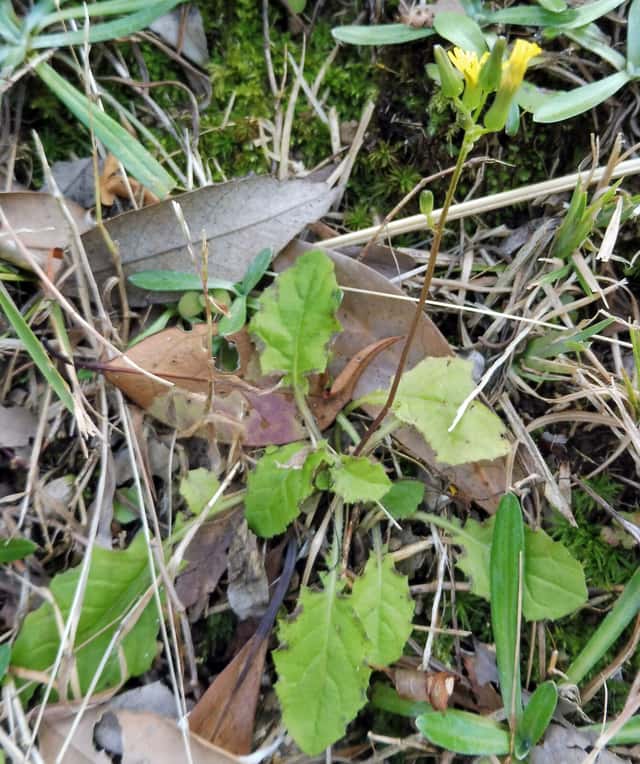
Asteraceae
Oriental False Hawksbeard: Edible Plant
Youngia japonica
An extremely hardy, low-maintenance plant that is tolerant of different soil types and light levels. It grows well in both full sun and partial shade, preferring fertile and slightly moist soil. It is not typically affected by serious pests or diseases.
Every 4 days
Partial shade
° - °C
% - %
Categories
What is Oriental False Hawksbeard?
Oriental False Hawksbeard (Youngia japonica) is a easy-care plant from the Asteraceae family. Oriental False Hawksbeard (Youngia japonica) is an annual or biennial herb in the Asteraceae family, native to East Asia (Japan, Korea, and China), and now naturalized in various tropical and subtropical regions worldwide, including Brazil. It forms a basal rosette of oblanceolate, lobed leaves from...
Oriental False Hawksbeard grows up to 60cm, watering every 4 days. It is not suitable for indoor environments and safe for pets.
Unlike many tropical plants, Oriental False Hawksbeard tolerates watering mistakes. Best for beginners. Unlike many popular species, Oriental False Hawksbeard is safe to keep around pets.
How to Care for Oriental False Hawksbeard?
TLDR: Oriental False Hawksbeard needs Partial shade, watering every 4 days, and temperatures between 15-30°C with 40-70% humidity.
How Often Should You Water Oriental False Hawksbeard?
Keep the soil slightly moist without waterlogging. The plant tolerates occasionally wet soils but grows best with constant, moderate moisture.
How Much Light Does Oriental False Hawksbeard Need?
Adapts well to partial shade (under tree canopies or diffused light) and also grows in full sun; it does not require special lighting conditions.
What Is the Best Soil for Oriental False Hawksbeard?
Grows in sandy, clay, or loamy soils, ranging from slightly acidic to alkaline. It prefers fertile, moist, and well-drained soil.
What Pot Should You Use for Oriental False Hawksbeard?
It is more commonly grown directly in garden beds than in pots. If grown in a container, prefer a wide, shallow pot with drainage holes to accommodate the basal rosette and the plant's rapid growth.
What Is Oriental False Hawksbeard and Where Does It Come From?
Oriental False Hawksbeard (Youngia japonica) is an annual or biennial herb in the Asteraceae family, native to East Asia (Japan, Korea, and China), and now naturalized in various tropical and subtropical regions worldwide, including Brazil. It forms a basal rosette of oblanceolate, lobed leaves from which branched stems emerge, bearing small yellow flower heads. It is a hardy, fast-growing plant commonly found in gardens, flowerbeds, nurseries, and sidewalk cracks, and is considered invasive in several countries. Its young leaves are edible, and the species has traditional uses in Asian folk medicine.
How Big Does Oriental False Hawksbeard Grow?
TLDR: Oriental False Hawksbeard can reach up to 60cm tall with Fast growth rate.
Max height
60cm
Growth rate
Fast
Foliage
Evergreen
Plant Uses
Edible
Can be consumed
Medicinal
Medicinal properties
Medicinal Uses
- Traditional use for colds and sore throats
- Diuretic and detoxifying action
- External application as a paste for boils, mastitis, and bruises
- Anti-inflammatory, febrifuge, and antitussive properties in Asian folk medicine
Culinary Uses
- Young leaves consumed raw in salads
- Leaves and stems cooked in stir-fries and soups
- Used in pies, dumplings, and green juices
Is your plant showing symptoms?
Click on the symptom to discover possible causes:
What Diseases Commonly Affect Oriental False Hawksbeard?
TLDR: Oriental False Hawksbeard is susceptible to 1 known diseases. Monitor regularly for early detection.
Compare with similar plants
| Attribute | Difficulty | Light | Watering | Pet Safe |
|---|---|---|---|---|
| Field Maple | Easy | Bright indirect | 14d | ✓ |
| Silver Birch | Easy | Direct sun | 14d | ✓ |
| Common Blanketflower | Easy | Direct sun | 10d | ✓ |
| Cushion Bush | Easy | Direct sun | 14d | ✓ |
Choose & Compare
Sources & References
- Youngia japonica | NC State Extension Gardener Plant Toolbox
- Youngia japonica - Plants For A Future (PFAF)
- Youngia japonica - PIER (Pacific Island Ecosystems at Risk)
- Crepe-do-japão - Horto Didático de Plantas Medicinais UFSC
- Crepis (Crepis japonica) - Agrolink
- Puccinia crepidis-japonicae (Lindr.) Dietel (Rust) - CDFA





